Wall Clock Trends 2026: Modern Styles, Colors & Best Picks
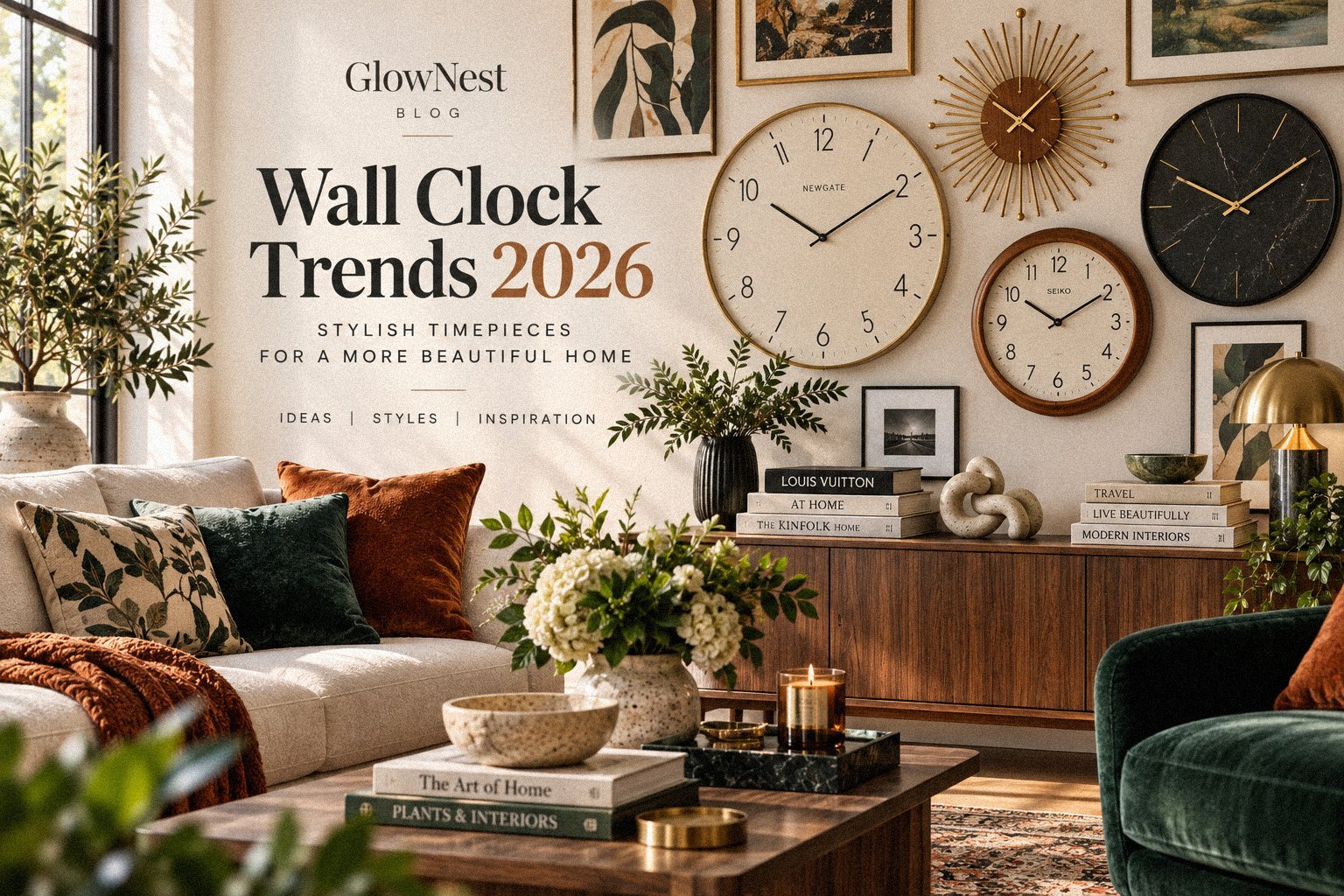
A wall clock can do much more than fill an empty space. In 2026, the strongest designs work almost like wall art: they add shape, texture, color and a focal point while still doing the simple job of telling time.
If you are updating a living room, kitchen, bedroom or home office, the best choice is not necessarily the trendiest clock. It is the one that fits the scale of the wall, works with the materials already in the room and is easy to read from where you will actually see it.
Wall Clock Trends to Watch in 2026
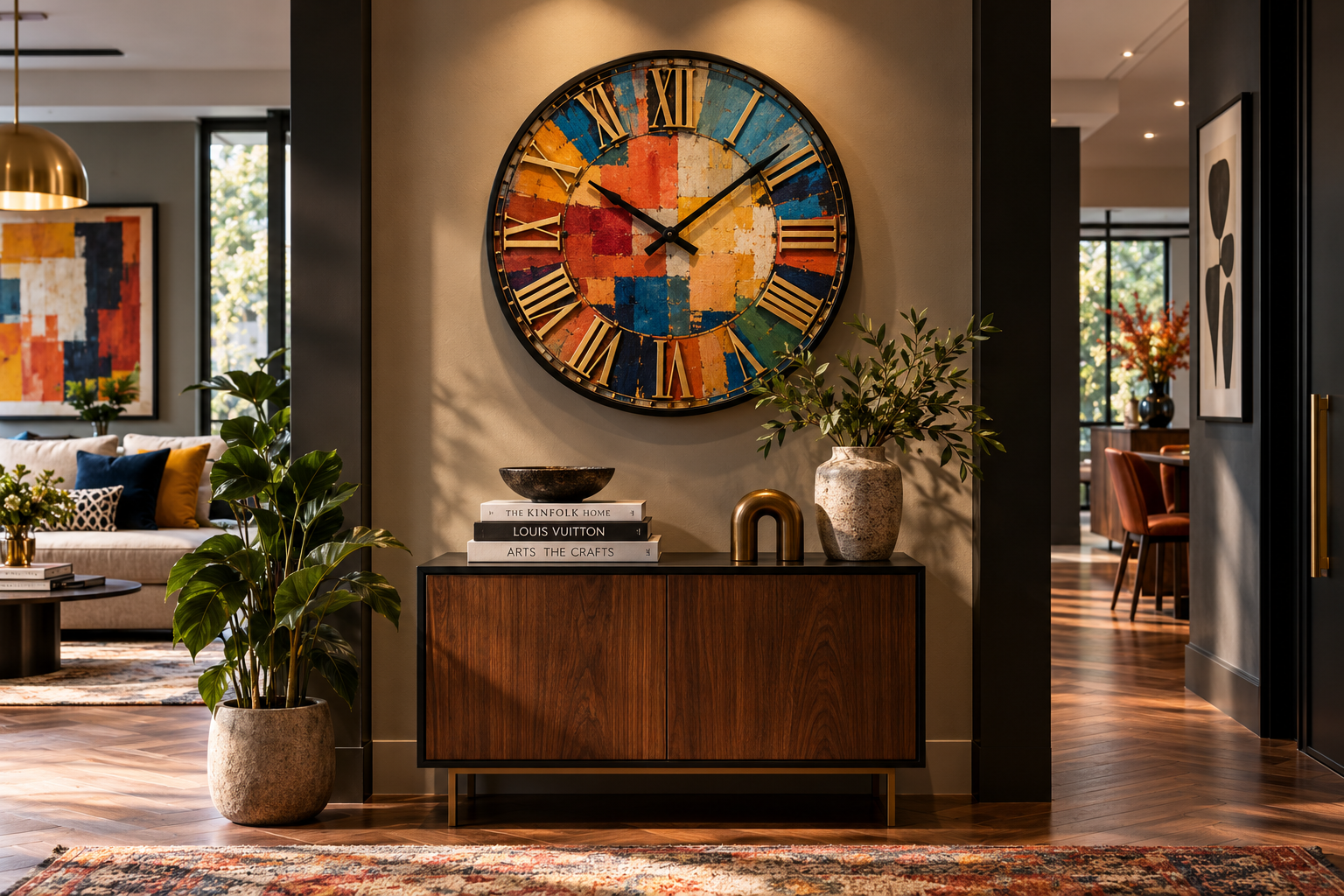
The biggest shift is away from decorative clutter and toward clocks with a clear visual identity. Sculptural metal, warm wood, simple faces, retro color and oversized proportions all work because they can carry a wall on their own.
1. Sculptural Metal Clocks
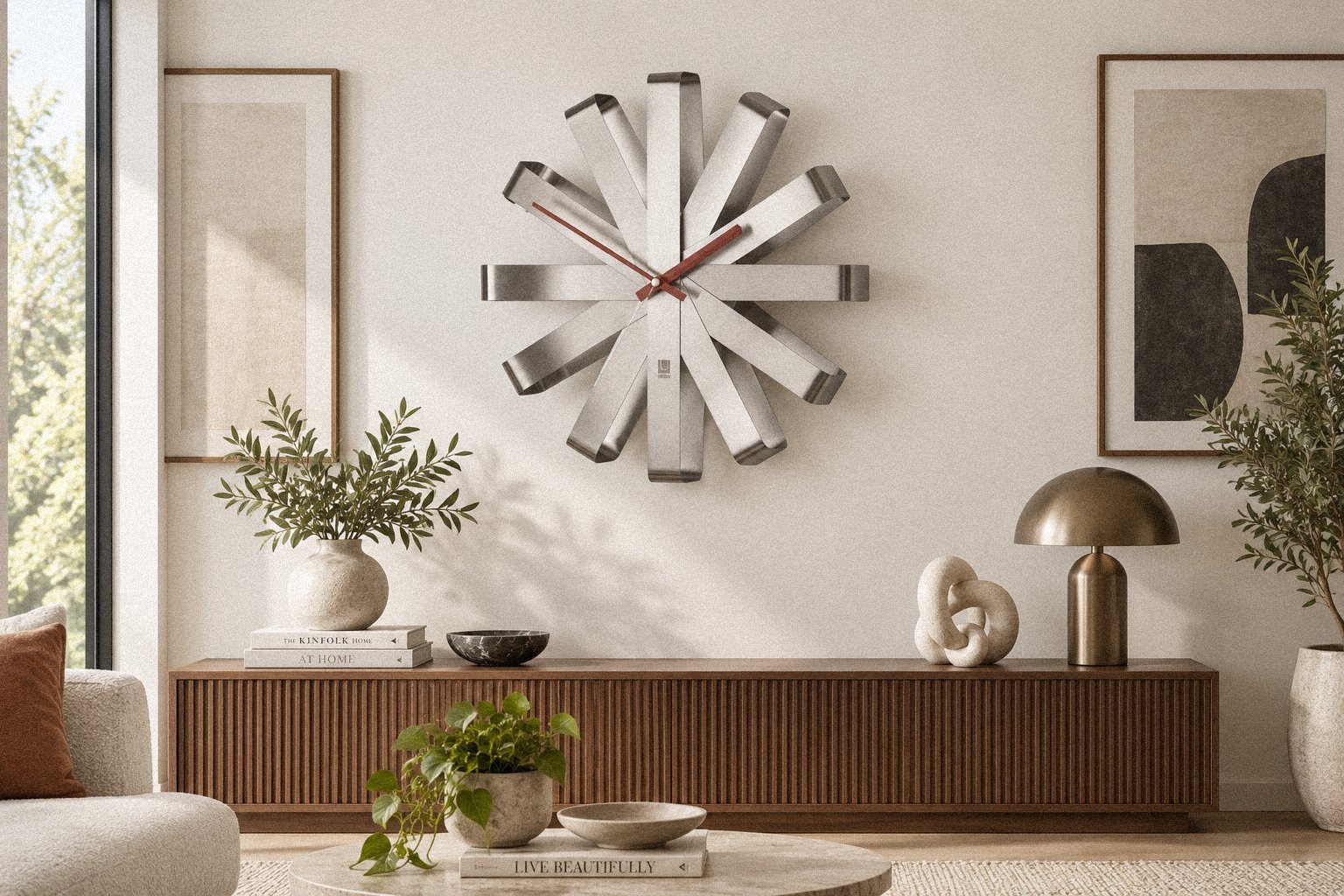
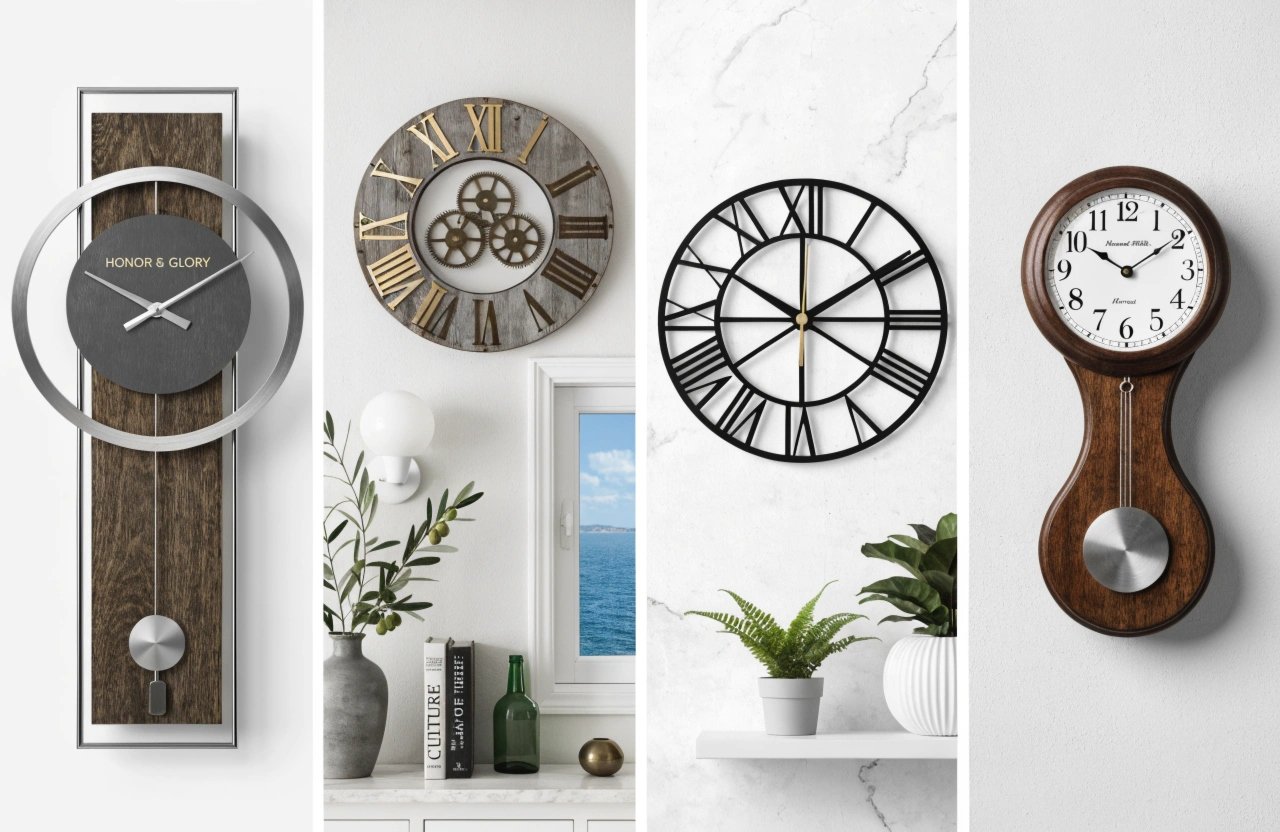
Minimalist metal clocks are one of the easiest ways to make a room feel more polished without adding visual weight. Look for brushed stainless steel, matte black, warm brass or bronze finishes with open shapes rather than heavy frames.
This style is especially effective in modern living rooms, kitchens and home offices where the furniture already has clean lines. The Umbra Ribbon Modern Wall Clock is a good example: its folded stainless-steel form reads more like a small sculpture than a traditional clock, while the silent sweeping movement makes it practical for quieter rooms. Current product data lists it at about 12 inches in diameter with a non-ticking quartz movement.
2. Warm Wood and Natural Finishes
Wood remains an easy counterpoint to rooms filled with painted walls, glass and metal. Instead of very rustic distressed finishes, look for cleaner profiles in oak, walnut, pale ash or medium brown tones.
A natural-finish clock works particularly well above a console, beside open shelving or in a kitchen with wood cabinetry. If you prefer a more traditional investment piece, Howard Miller wall clocks are worth browsing for wood frames, pendulum styles and larger statement pieces. The brand also makes clocks with real wood veneers and substantial furniture-style construction, so this is a better direction when you want something more permanent than a lightweight décor clock.
3. Mid-Century Color Is Back in a More Controlled Way
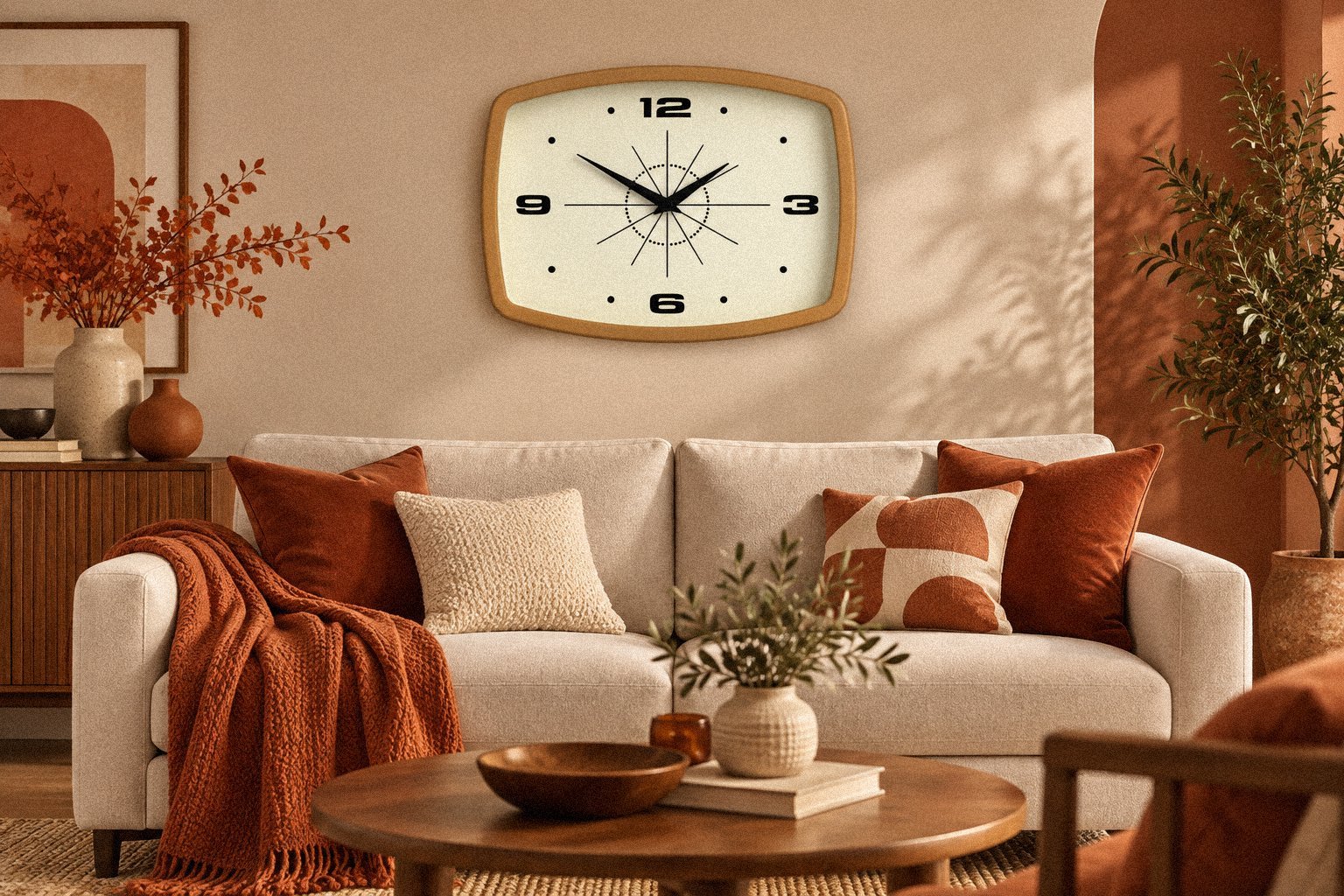
Colorful wall clocks are becoming more useful as small accent pieces, especially in kitchens, breakfast nooks and home offices. The key is to choose one strong color and repeat it somewhere else in the room rather than mixing several unrelated shades.
Mustard yellow, muted green, deep blue, warm orange and soft red all work well with walnut, cream and matte black. The JONES CLOCKS Movie Wall Clock in Mustard Yellow is a particularly good fit for this direction. Its rectangular shape and 1960s-inspired design give a room a retro note without making the entire interior feel themed.
4. Quiet-Sweep Clocks for Bedrooms and Offices
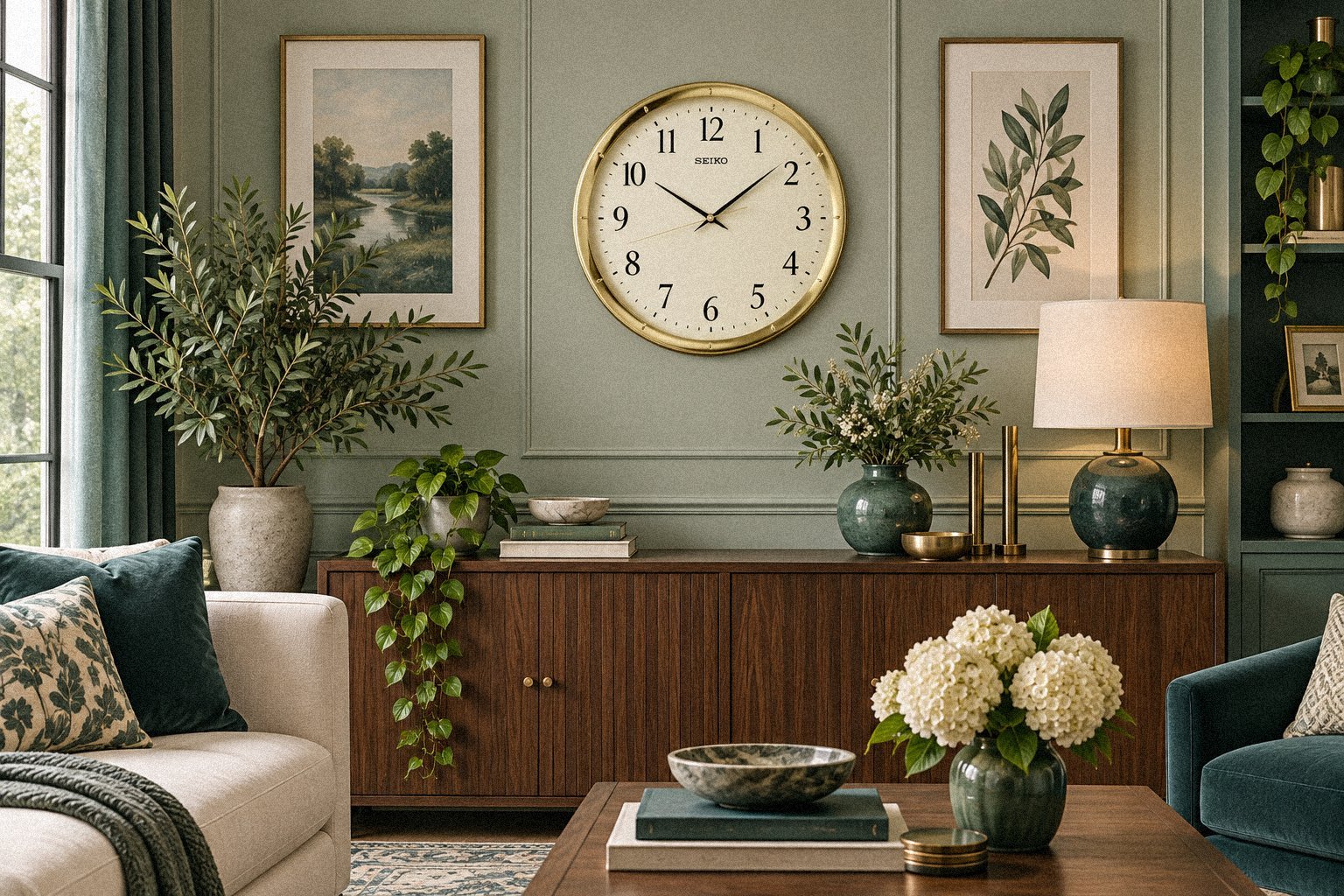
Design matters, but sound matters too. In a bedroom, study or home office, a silent or quiet-sweep movement is usually worth prioritizing over an elaborate face.
The Seiko 12-Inch Ultra-Modern Gold-Tone Wall Clock fits this category nicely. It has a simple round profile, a warmer metallic finish and a silent movement, making it easier to use in a bedroom or workspace than a clock with a pronounced step-tick.
5. Oversized Clocks as the Main Wall Feature
An oversized clock works best when it replaces other wall art instead of competing with it. Above a sofa, fireplace, sideboard or large dining table, one substantial clock can create a cleaner composition than several small frames.
Before ordering, measure the wall and the furniture below it. A clock that looks large in a product photo can feel surprisingly small above a long sofa. As a general styling rule, aim for enough visual width that the clock feels connected to the furniture rather than floating in empty space.
Best Wall Clock Colors for Different Rooms
The easiest way to choose a clock color is to connect it to one material or accent already present in the room.
| Room style | Clock finish to try | Why it works |
|---|---|---|
| Minimalist / Scandinavian | Black, white, pale wood, brushed steel | Keeps the room calm and graphic |
| Warm modern | Walnut, brass, bronze, cream | Adds warmth without looking rustic |
| Mid-century modern | Mustard, olive, orange, walnut | Creates a controlled retro accent |
| Contemporary glam | Gold, black, smoked metal | Adds contrast and a more polished finish |
| Industrial | Matte black, iron, charcoal | Works with exposed metal and darker furniture |
My Amazon Picks for This Look
As an Amazon Associate I earn from qualifying purchases.
| Pick | Best for | Why it fits the trend |
|---|---|---|
| Umbra Ribbon Modern Wall Clock | Modern living room, office, kitchen | Sculptural stainless-steel design with a silent sweep movement |
| Seiko Ultra-Modern Gold-Tone Wall Clock | Bedroom, office, warm modern interior | Simple round shape, gold-tone finish and silent operation |
| JONES CLOCKS Movie Wall Clock | Kitchen, breakfast nook, mid-century room | Compact rectangular shape and controlled retro color |
| Howard Miller Wall Clocks | Traditional-modern and premium interiors | Better suited to shoppers looking for wood, pendulum or furniture-style clocks |
Useful Accessories for Hanging a Wall Clock
Always follow the clock manufacturer’s mounting instructions and choose hardware for the actual wall type and clock weight. Lightweight adhesive products are not a substitute for proper anchors when the clock is heavy.
For a straightforward drywall installation, the 3M CLAW 15 lb Drywall Picture Hangers are a useful accessory for décor that falls within the stated weight limit. For heavier clocks or different wall materials, use the appropriate screw, anchor or professional installation method.
Most quartz wall clocks also need AA batteries. A bulk pack such as Energizer MAX AA Batteries is more practical than buying single replacement cells, especially if you already use AA batteries in other household devices.
How to Choose the Right Wall Clock Size
Scale is one of the most important details because it affects whether the clock looks intentional or accidental.
- Small walls and kitchens: compact 10–12 inch clocks are usually enough.
- Bedrooms and offices: 12–18 inches gives good readability without dominating the wall.
- Living rooms and dining rooms: 20–30 inches can work well when the clock is part of the main wall composition.
- Large blank walls: oversized clocks can go beyond 30 inches, but measure carefully and leave enough negative space around them.
If you are hanging the clock above furniture, keep it visually connected to the piece below. A small clock centered high above a long console will usually look weaker than a larger clock placed closer to the furniture grouping.
Where to Hang a Wall Clock
A clock is easiest to use when it can be seen naturally from the places where you spend time. In a kitchen, that may mean a wall visible from the prep area. In a living room, it might sit above a console or on the wall opposite the sofa. In an office, keep it within your normal line of sight so checking the time does not interrupt your work.
Avoid placing delicate finishes in strong direct sun, and think twice before putting a clock in a very humid bathroom unless the manufacturer specifically says it is suitable for that environment.
What I Would Skip
I would avoid buying a clock only because it is unusually ornate or very inexpensive. Highly detailed faces can become hard to read, while lightweight decorative clocks often look smaller and flatter on the wall than they do in product photos.
I would also avoid covering the entire wall around a statement clock. If the clock is large or sculptural, let it have enough empty space to do the visual work.
FAQ
What wall clocks are in style in 2026?
Sculptural metal clocks, warm wood finishes, quiet-sweep minimalist designs, controlled mid-century colors and oversized statement clocks are all strong directions for 2026 interiors.
Are large wall clocks still popular?
Yes, especially when they replace rather than compete with other wall art. The key is choosing a size that suits the furniture and wall width.
What type of wall clock is best for a bedroom?
A silent or quiet-sweep quartz clock is usually the most comfortable choice because it avoids an audible ticking sound at night.
Should a wall clock match the furniture?
It does not need to match exactly. It usually looks better when it repeats one existing element, such as black metal, warm wood, brass or a single accent color.
What is the easiest way to make a wall clock look expensive?
Choose the right scale, keep the surrounding wall uncluttered and repeat the clock’s finish somewhere else in the room. Good placement often matters more than adding extra décor.
Final Thoughts
The best wall clock trends for 2026 are less about novelty and more about presence. A sculptural metal clock can sharpen a modern room, a wood clock can add warmth, and a well-chosen retro color can give a neutral space personality.
Start with the wall, not the product. Measure the available space, decide whether you need quiet operation, choose a finish that connects to the room and then select a clock that feels substantial enough to belong there. Done well, it becomes one of the simplest ways to make an interior feel finished.