
How to Drape Fabric on a Bedroom Ceiling: 3 Easy Ways
To drape fabric from a bedroom ceiling, pick a lightweight fabric like voile, measure the distance between two secure mounting points, and add about 25 percent extra length for the curve. Fix the supports into ceiling joists with hardware rated for overhead loads, or use a ceiling track installed to the manufacturer’s instructions. If you can’t drill, a freestanding canopy frame gives a similar look. Keep the fabric away from lights, fans, heaters, smoke alarms, and sprinklers, and never rely on adhesive hooks above a bed.
This guide covers three mounting methods, how much fabric to buy, a step by step swag you can hang on two joists, and a few ways to style the result.
Affiliate disclosure: This post contains affiliate links. As an Amazon Associate I earn from qualifying purchases.
Choose a mounting method
The right method depends on your ceiling, the weight of the fabric, and whether drilling is allowed in your home.
| Mounting method | Best for | Main limit |
|---|---|---|
| Hooks fixed into ceiling joists | A shallow fabric swag | Needs a solid structural fixing point |
| Ceiling curtain track | Neat panels you can remove and wash | The track must suit the load and layout |
| Freestanding canopy frame | Renters and rooms where drilling isn’t allowed | Creates a canopy effect without touching the ceiling |
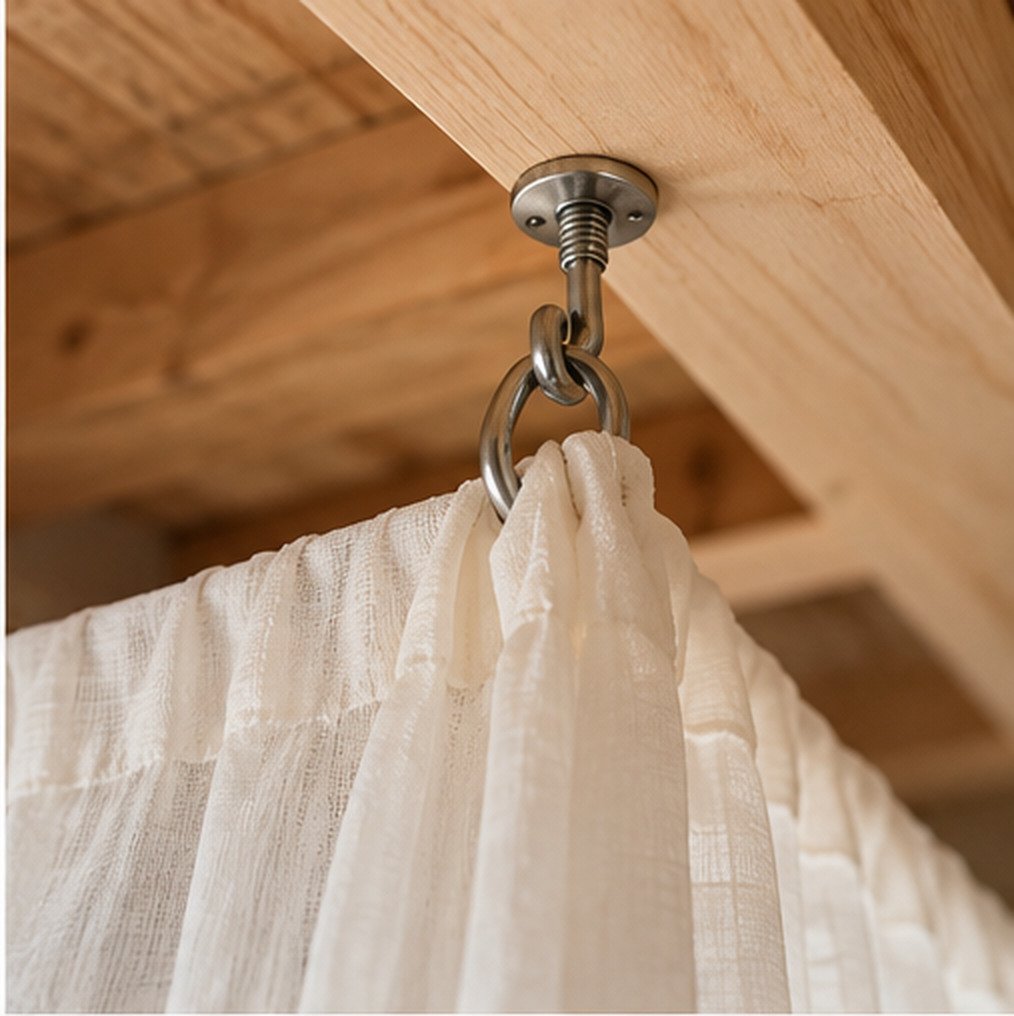
Option 1: Hooks fixed into ceiling joists
Joists are the strongest place to fix anything overhead. Find them with a stud finder, then confirm the location by checking a second point nearby. Before you drill, look for wiring and pipes in the area.
Use hooks or eye fittings rated for overhead loads, and fix them with the screws or lag bolts the manufacturer specifies. A cup hook in drywall alone isn’t built to carry a fabric swag, no matter how sturdy it looks in the package.
Option 2: Ceiling curtain track
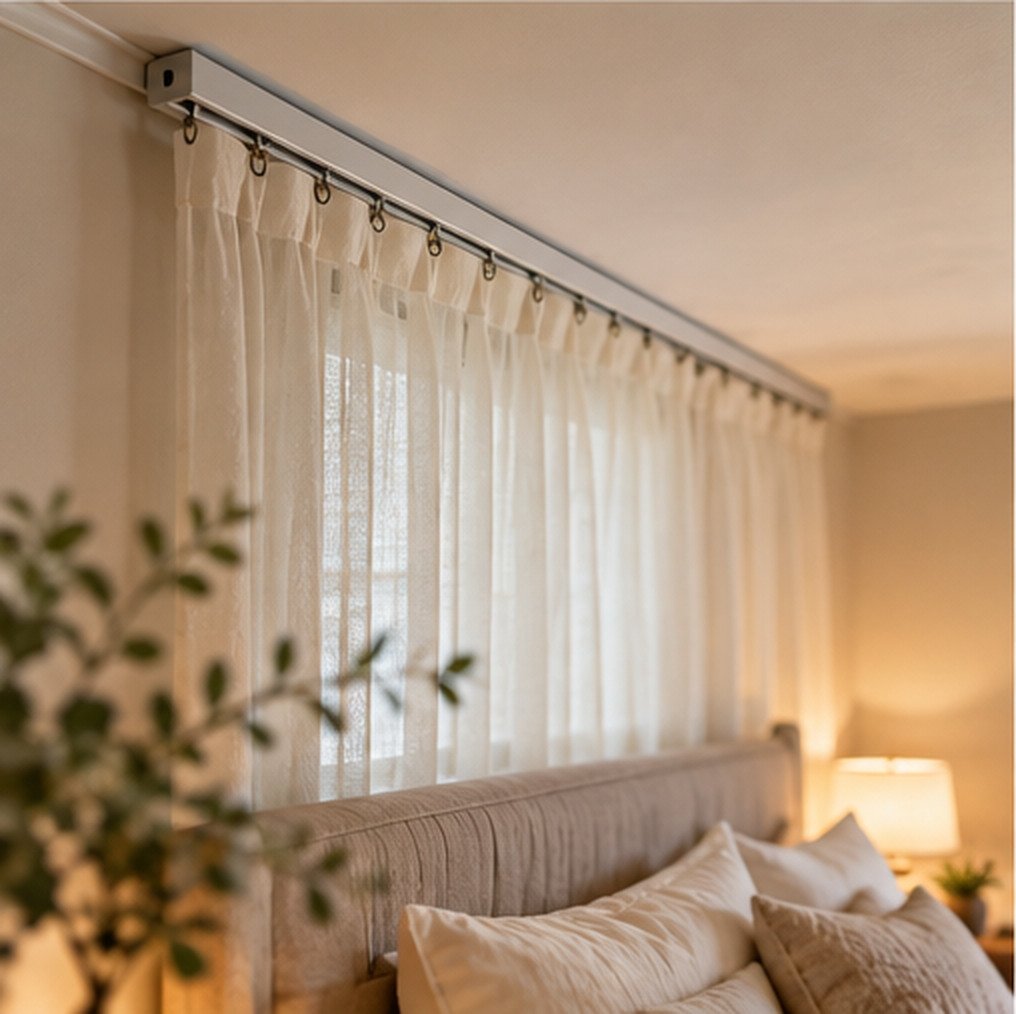
A slim ceiling track gives you neat panels that come down easily for washing. Choose a system made for ceiling mounting, with matching carriers, end stops, and fasteners.
Standard tracks hang curtains straight down. Don’t stretch fabric sideways across the ceiling unless the manufacturer approves that setup. For the most flattering result, place sheer panels near the headboard instead of covering the whole ceiling.
Ceiling track to consider: The ChadMade aluminum ceiling curtain track (9–12 ft) on Amazon (affiliate link) is an adjustable rail designed for vertically hanging curtain panels. Check the ceiling type, fixing instructions, dimensions, hardware, and load limits before ordering; do not use a curtain track to support a horizontal ceiling swag unless the manufacturer explicitly approves it.
Option 3: Freestanding canopy frame without drilling
A four poster bed or a freestanding canopy frame creates the same soft drape without touching the ceiling. Choose a frame sized for your bed, follow its assembly and weight instructions, and check its stability every few weeks.
Improvised tension pole setups are a gamble unless the complete product is rated for the arrangement you plan.

What fabric to buy
Lightweight fabric folds into soft shapes more easily and puts less strain on the hardware. Voile is the simplest starting point. You can buy it by the yard or as ready made sheer panels, so compare the cost per panel before you decide.
Ready-made curtain option: To create a similar linen-look effect with vertically hanging curtains, consider the PleatedDrapes semi-sheer pinch-pleat curtains in Birch (two 40 × 96 in. panels) on Amazon (affiliate link). These are finished panels intended to hang vertically, not uncut fabric for a ceiling swag. Confirm the curtain hooks and heading fit your chosen track before buying.
| Fabric | Look | Notes |
|---|---|---|
| Cotton voile | Airy and relaxed | Light, often washable, wrinkles easily |
| Polyester voile | Smooth and flowing | Common in sheer curtain panels; check the care label |
| Lightweight linen | Natural and textured | Heavier than voile, so use stronger hardware |
| Sheer chiffon | Fluid and romantic | Slippery; use sewn loops or clips to hold it |
Avoid buying heavy fabric until you’ve confirmed that your mounting system can carry it.
How much fabric do you need?
Measure the straight distance between the two secure mounting points. Then add about 25 percent of that distance for the curve, plus roughly 12 inches for attaching the ends.
The 25 percent figure is a planning estimate, not an installation standard. Mock up the drop with a tape measure or a spare sheet before you cut anything.
Say the mounting points sit 6 feet (72 inches) apart. Add 18 inches for the curve and 12 inches for finishing. That comes to 102 inches, or about 2.8 yards. Buy 3 yards, and check the fabric width separately, since a narrow bolt may not give you enough fullness. For more than one swag, measure each run on its own and add the lengths together.
What you’ll need
- Lightweight fabric or sheer curtain panels
- Overhead rated hooks or eye fittings, or a ceiling track kit with matching carriers
- A stud finder
- A drill, a pilot bit, and the fasteners the manufacturer specifies
- A tape measure, a pencil, and a level
- Fabric scissors
- A step ladder
Prices for fabric, hardware, and track kits vary widely by brand and region, so compare the total cost of each method before you commit to one.
Step by step: a simple swag on two joist hooks
- Choose the spot. Pick a place near the headboard where the swag won’t reach a fan, a light fixture, or anyone’s head in bed. Check the ceiling for fans, lights, smoke alarms, sprinklers, and vents.
- Find and mark the joists. Locate both joists with the stud finder and mark their centers. Look for wiring before you drill.
- Install the hooks. Drill pilot holes, then fix each rated hook into the wood with the specified screws. Give each hook a firm tug to confirm it doesn’t move.
- Prepare the fabric. Finish the raw edges with a narrow hem, or use the sewn loops or clips that match your hardware. Skip loose knots, which can slip over time.
- Hang and shape. Attach the fabric, then gently lower the center to the drop you measured. Don’t pull it tight. Soft folds look far better than a flat sheet.
- Test before you trust it. Leave a light load, such as a bag of sugar, on the fabric for a few hours, then check it again the next day. If anything shifts, take the swag down and fix the hardware before you try again.

Three looks to try
Warm minimalist
Ivory voile, cream bedding, pale oak furniture, and an oatmeal throw. Keep the swag shallow so it softens the ceiling without making the room feel lower.

Soft romantic
Blush or mauve sheers with ivory bedding and warm wood. A canopy frame gives you the layered look without any ceiling anchors.

Modern organic
Textured white or linen look panels on a ceiling track near the headboard, paired with walnut and clay tones. If your walls are dark, our black accent wall bedroom ideas show how to keep soft textiles from disappearing against them.

Safety first
- Keep fabric at least 3 feet away from portable space heaters. The U.S. Fire Administration’s home fire safety guidance gives this recommendation.
- Never cover or block smoke alarms, sprinkler heads, vents, or fans.
- Keep fabric out of reach of anyone sleeping in the bed. Don’t hang decorative canopy fabric above a crib or a child’s bed.
- Don’t use adhesive hooks above a bed. They aren’t designed for overhead loads that shift over time.
- A “fire resistant” label doesn’t guarantee safety in every setup. Read the product specifications and check any local rules.
Keeping it clean
Dust settles on sheer fabric quickly. Vacuum gently with a brush attachment every few weeks, or take the panels down and wash them on a gentle cycle in a mesh bag. Air dry them, since heat can shrink natural fibers and flatten the folds.
Check the hooks and fittings every few months, especially after a move or during a humid season.
Frequently asked questions
Can I hang fabric from a bedroom ceiling without drilling?
For a true ceiling swag, you usually need drilling or another approved fixing. For a no drill option, use a freestanding four poster bed or canopy frame. It creates a similar look without attaching anything to the ceiling. Check its weight limits and clearance first.
How much fabric do I need for one ceiling swag?
Measure the straight distance between the mounting points, then add about 25 percent for the curve and 12 inches for finishing. For a 6 foot span, that’s roughly 3 yards. Check the fabric width too, since a narrow bolt may not give you enough fullness.
What fabric works best for a bedroom ceiling drape?
Lightweight voile is the easiest choice. It folds softly, lets light through, and is easy to find by the yard or as sheer panels. Avoid heavy fabric unless your mounting system is rated for it.
Is it safe to hang fabric over a bed?
It can be, if the mounting is rated for overhead loads and the fabric stays clear of lights, heaters, and smoke alarms. Never use adhesive hooks above a bed, and don’t hang overhead fabric above a crib.