Floral Transfers vs Hand Painting: Which Should You Choose?
Floral transfers vs hand painting: both can add botanical detail to furniture, but they solve different problems. Transfers are faster and more predictable, while hand painting gives you more control over scale, placement and color. The better option depends on the surface, the amount of detail you want, your tolerance for mistakes and how much time you want to spend on the decorative stage.
If you’re deciding between floral transfers and hand painting for a dresser makeover, the sections below explain how each method works, when each option makes sense, and what type of result to expect.
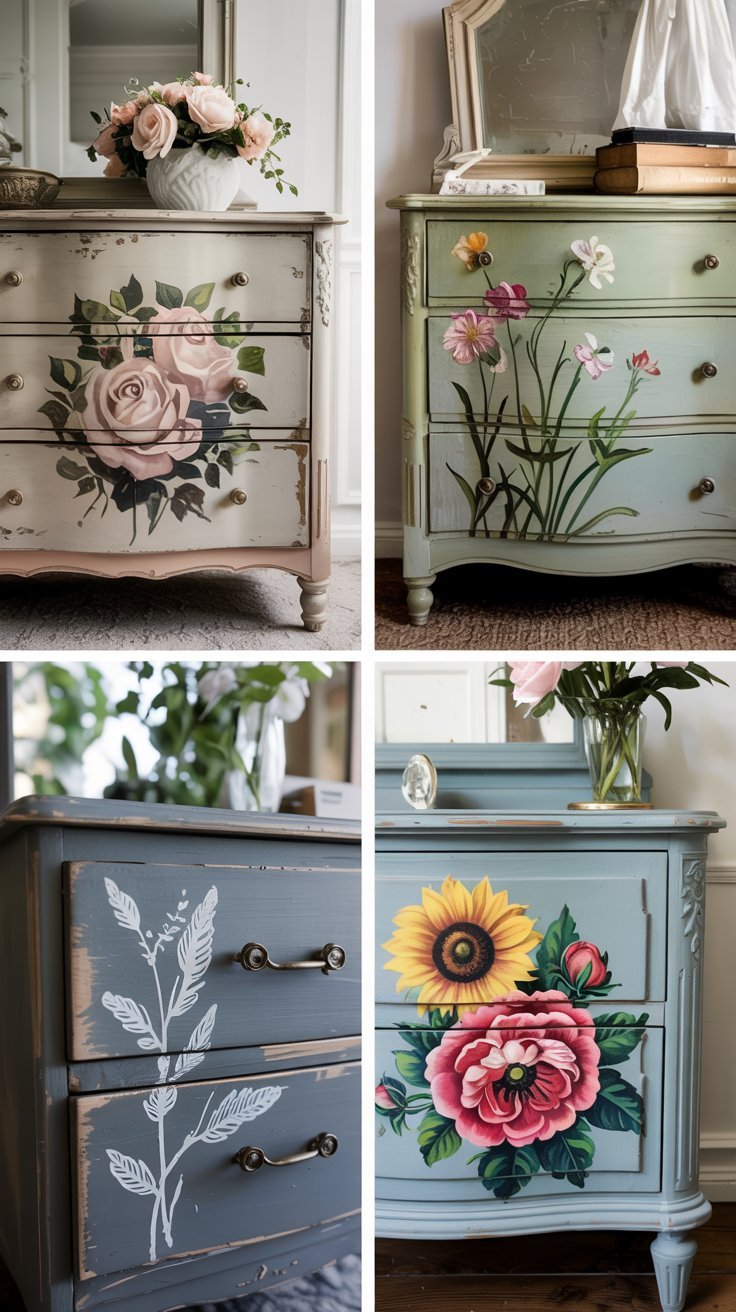
As shown in this guide to vintage painted dressers, floral details are one of the easiest ways to add personality and romance to an older piece of furniture.
Start with the Furniture, Not the Floral Motif
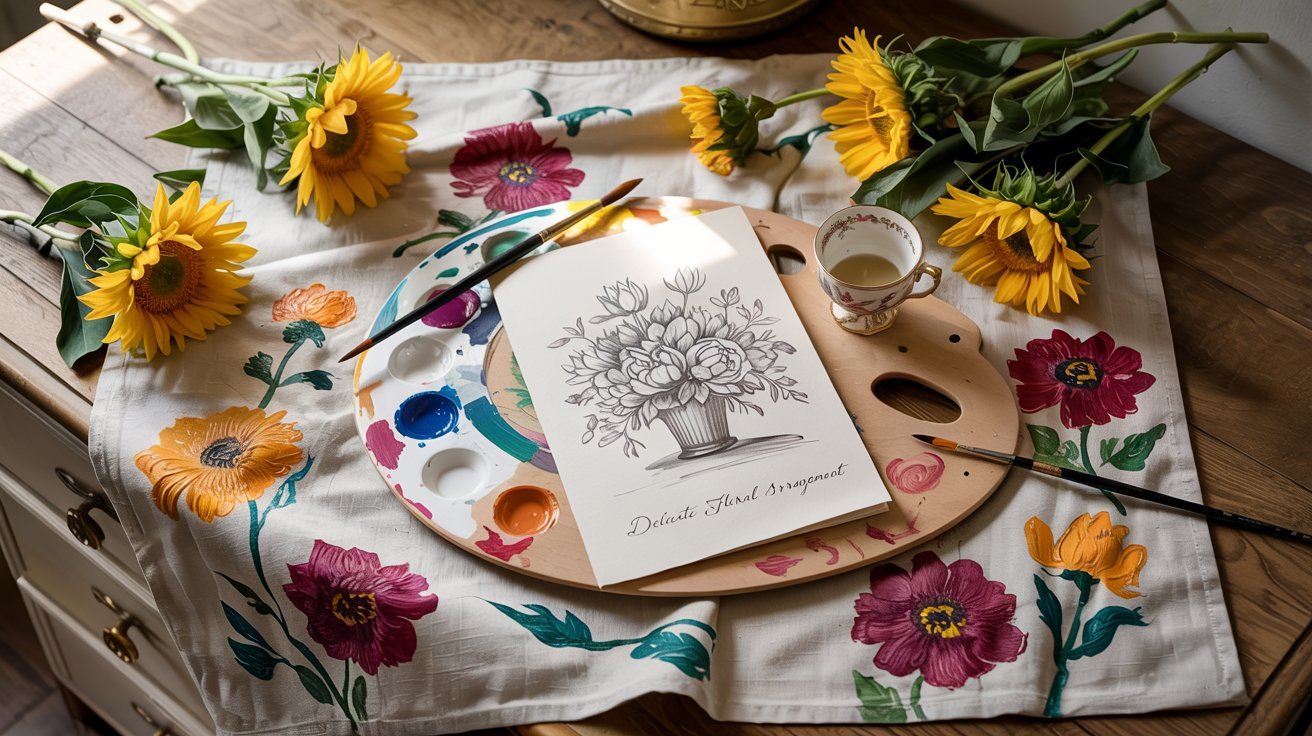
From romantic cottagecore to boho statement pieces, floral-painted furniture is everywhere. It’s charming, detailed, and instantly eye-catching.
According to Country Living, floral furniture is a top interior trend, especially when layered with vintage textures and soft pastel palettes. Whether it’s a bold sunflower across a drawer or delicate roses climbing up a vanity, floral designs always turn heads.
Floral Transfers: Best for Speed and Predictable Detail
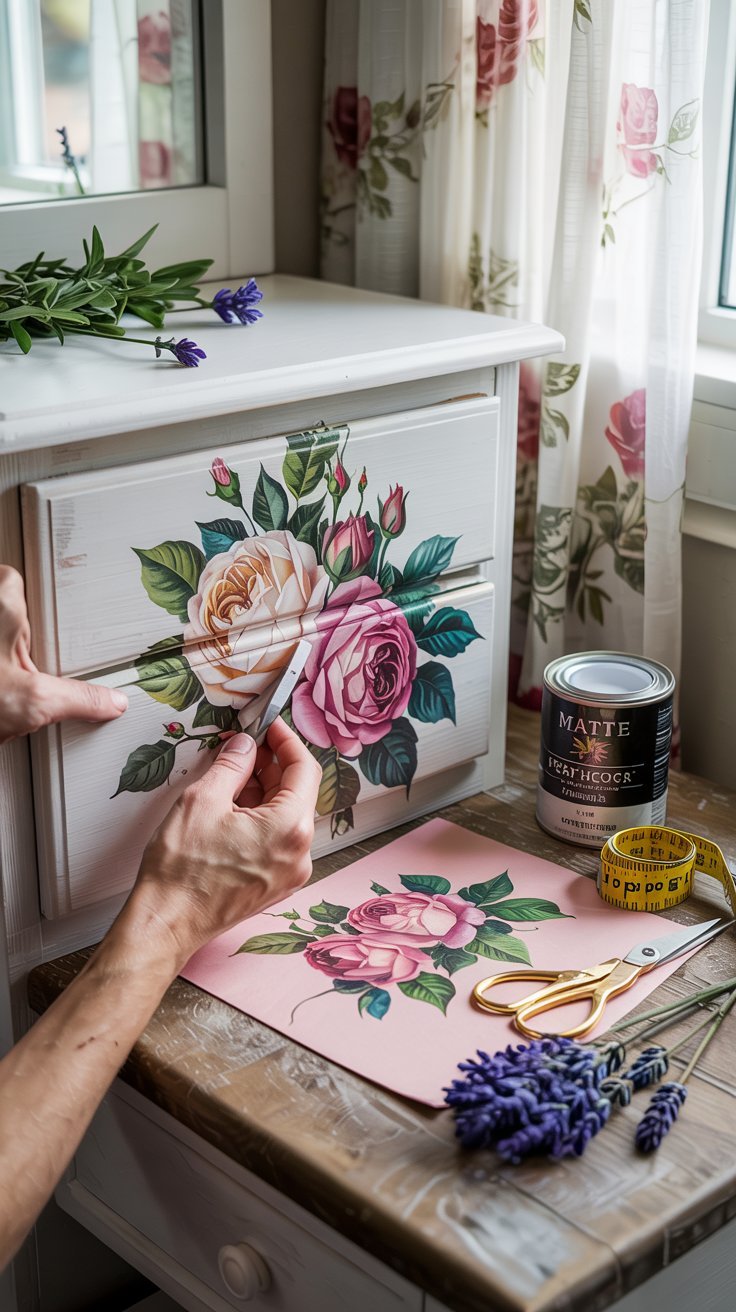
Floral transfers are pre-printed designs that are rubbed onto furniture. Brands such as Redesign with Prima offer detailed botanical designs that can create a polished look without freehand painting.
Transfers are useful when:
- You want detailed botanical artwork without drawing it freehand
- You want a repeatable result across several drawers or matching pieces
- You need a faster decorative step than building a floral composition with multiple paint layers
Application still needs care. The surface should be clean, smooth and fully cured before the transfer goes on. Position the design before burnishing, work gradually from one edge, and follow the transfer manufacturer’s instructions for sealing. Rushing placement is the easiest way to end up with misalignment, lifted edges or torn details.
Hand Painting: Best for Custom Placement and Color
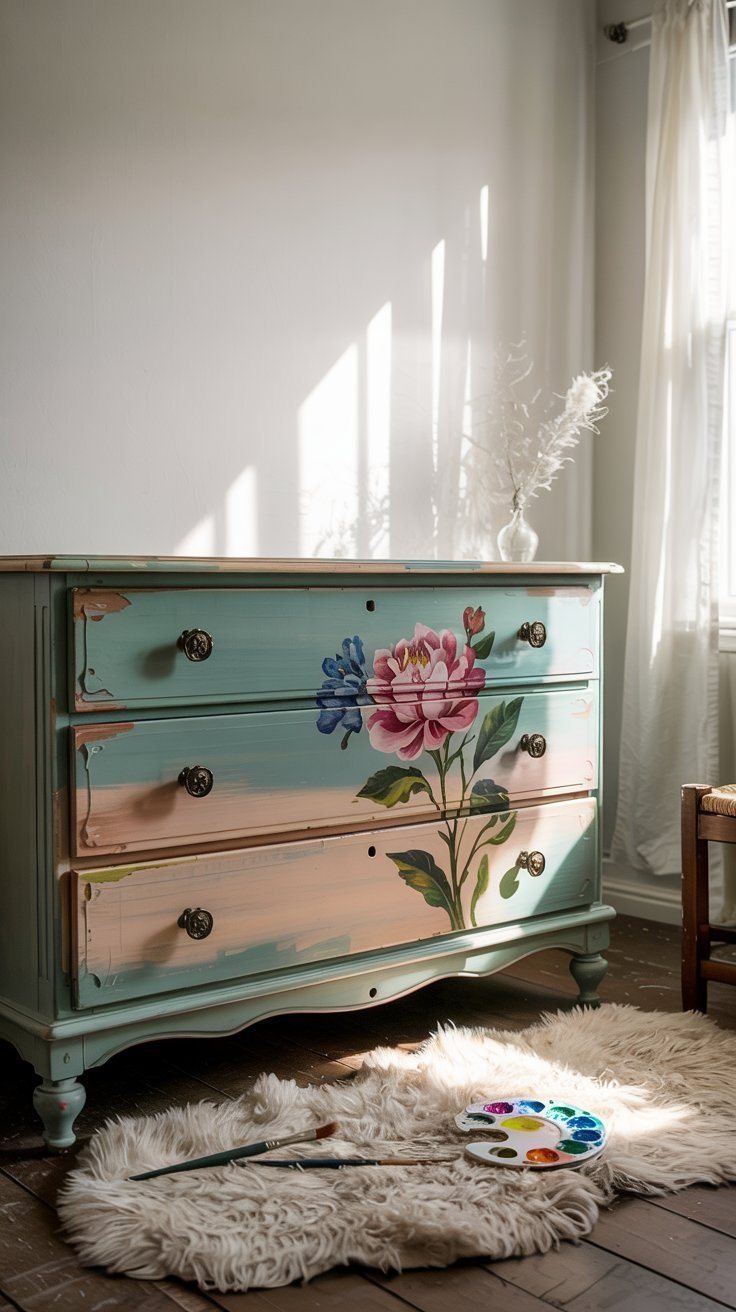
Hand painting is exactly what it sounds like: painting flowers freehand or with a stencil and brush. It takes more time and a little confidence, but the result is completely original.
Hand-painted wildflowers can make a dresser feel more like a one-of-a-kind art piece. The slight variation in each petal and brushstroke is part of the appeal.
Hand painting is useful when:
- You want the motif to fit around handles, moulding, curves or existing details
- You need exact control over color, scale and placement
- You want to extend the design later or repair one small area without replacing a full transfer
Floral Transfers vs Hand Painting: Practical Comparison
| Factor | Floral Transfers | Hand Painting |
|---|---|---|
| Learning curve | Lower, but placement requires care | Higher, especially for consistent petals and linework |
| Speed | Faster once the surface is ready | Slower because the design is built in stages |
| Customization | Limited to the purchased artwork and how you crop or combine it | Full control over color, size and composition |
| Best surfaces | Flat, smooth panels and drawer fronts | Flat or irregular areas, including edges and curved details |
| Fixing mistakes | Can require replacing or disguising part of the transfer | Small errors can often be painted over and corrected |
| Visual character | Crisp and detailed | More variation and visible brushwork |
Which Method Fits Your Project?
Choose a transfer when you want a detailed result on a mostly flat surface and do not want to spend time learning floral brushwork. It is especially practical for a dresser front, cabinet door or side panel where the artwork can sit on a clear, uninterrupted area.
Choose hand painting when the design needs to wrap around hardware, continue across moulding, fit an unusual shape or use colors that are difficult to find in a ready-made transfer. It is also easier to make very small accents by hand than to cut a large transfer into tiny fragments.
You can also combine both methods: apply a transfer first, then add hand-painted vines, leaves, or small accents around it for a more customized finish.
Match the Floral Style to the Furniture
The motif should support the furniture style rather than compete with it:
- Vintage roses: Classic and romantic
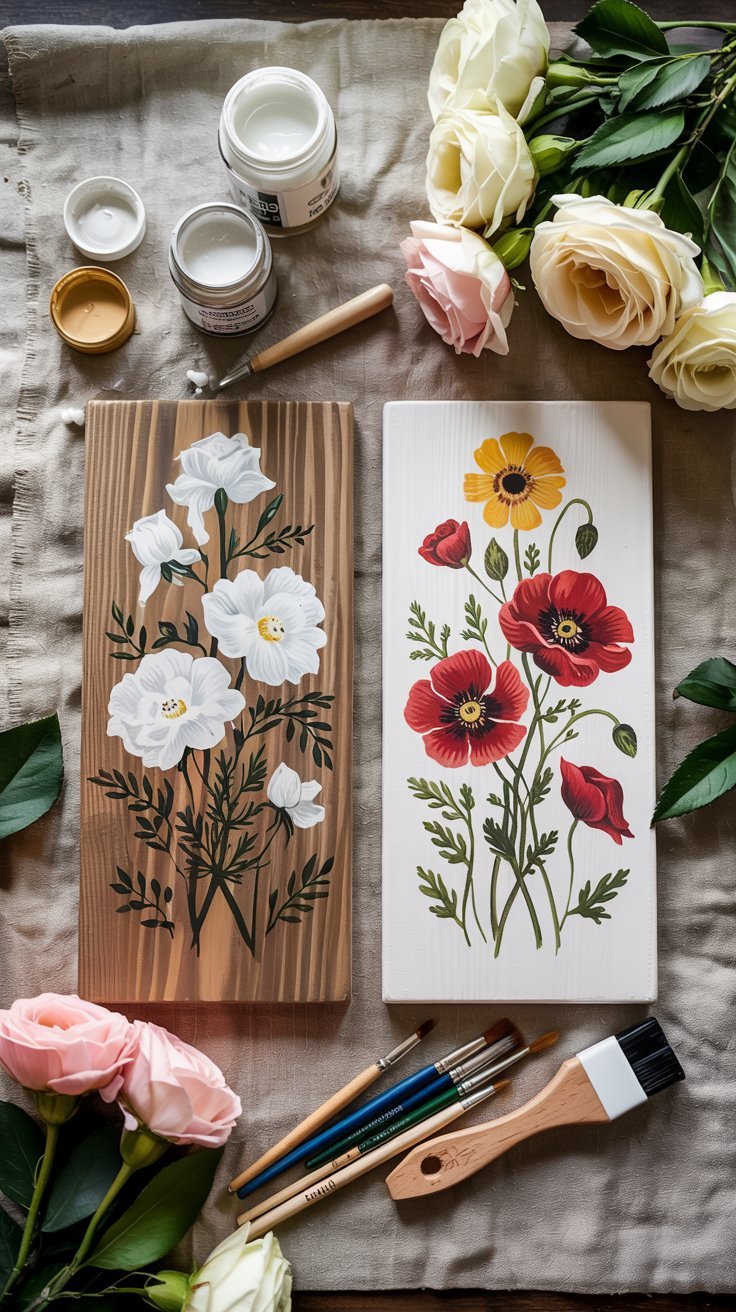
- Wildflowers: Perfect for a rustic or boho look
- Botanical linework: Great with dark or moody colors
- Sunflowers and peonies: Bold and cheerful
Keep the palette connected to the base color. A floral design usually looks more intentional when at least one flower, leaf or outline color repeats a tone already present in the furniture or nearby room decor.
Supplies and Surface Preparation
- For transfers: the transfer itself, a burnishing tool, scissors or a craft knife, and the sealer recommended for the product.
- For hand painting: detail brushes, compatible paint, a palette, and a protective finish suited to the base paint.
- For either method: a clean, stable and fully cured painted surface. Decorative work will not compensate for peeling base paint or poor adhesion underneath.
Do not apply one universal sealer rule to every project. Use a protective finish that is compatible with the base paint and decorative layer, and follow the transfer or paint manufacturer’s cure-time instructions before sealing.
Common Mistakes to Avoid
- Applying a transfer before the base paint has cured: this can affect adhesion or damage the finish during burnishing.
- Using a motif that is too large for the furniture: leave enough negative space for drawers, hardware and edges to remain readable.
- Skipping a placement test: tape paper templates in position first if you are unsure about scale.
- Painting florals with only one brush size: a small round brush for detail and a slightly larger brush for petals or leaves usually gives better control.
- Sealing too early: both the decorative layer and base coat should be ready for the chosen finish.
Floral Furniture FAQ
Are furniture transfers easier than hand painting?
Usually, yes. They remove the drawing and brush-control stage, but careful placement and burnishing are still important.
Can you combine a transfer with hand painting?
Yes. Apply the main transfer first, then add small painted leaves, lines or color corrections around it so the design fits the furniture more naturally.
Which method is easier to repair later?
Hand painting is generally easier to patch because a small area can be repainted. A damaged transfer may require a matching fragment, painted camouflage or replacement of a larger section.
Quick Decision Checklist
- Choose transfers if the surface is broad and flat, you want crisp detail, and speed matters.
- Choose hand painting if the design must wrap around hardware, curves or moulding.
- Choose hand painting if exact color matching matters.
- Choose transfers if you want a repeatable motif across several drawers or pieces.
- Combine both methods if you want a detailed focal image with custom painted extensions.
Final Thoughts
Transfers are the practical choice when speed, crisp detail and predictable placement matter most. Hand painting makes more sense when the design needs to fit an unusual surface or when exact color and scale matter more than speed.
For many furniture makeovers, the strongest result comes from combining the two: use a transfer for the main composition, then add a few painted details so it feels integrated with the piece rather than simply applied on top.
If you’re just starting your furniture makeover journey, see this guide on how to paint a vintage dresser. It breaks down the process from prep to sealing.