Layered Living: How to Master Maximalist Interior Design Without the Clutter
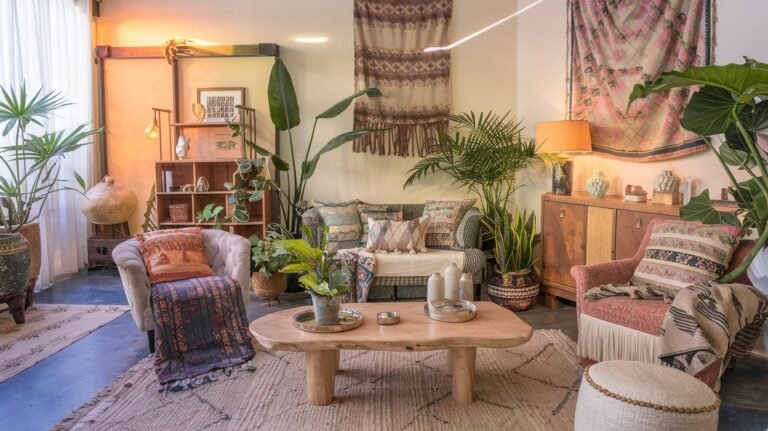
Maximalist interior design is often misunderstood as “more of everything.” The rooms that actually work are more disciplined than that. They feel collected, expressive, and layered because every color, texture, pattern, and object has a role. The goal is not to fill every surface; it is to create enough visual repetition that a richly decorated room still feels coherent.
As an Amazon Associate I earn from qualifying purchases.
1. Start With a Grounding Layer
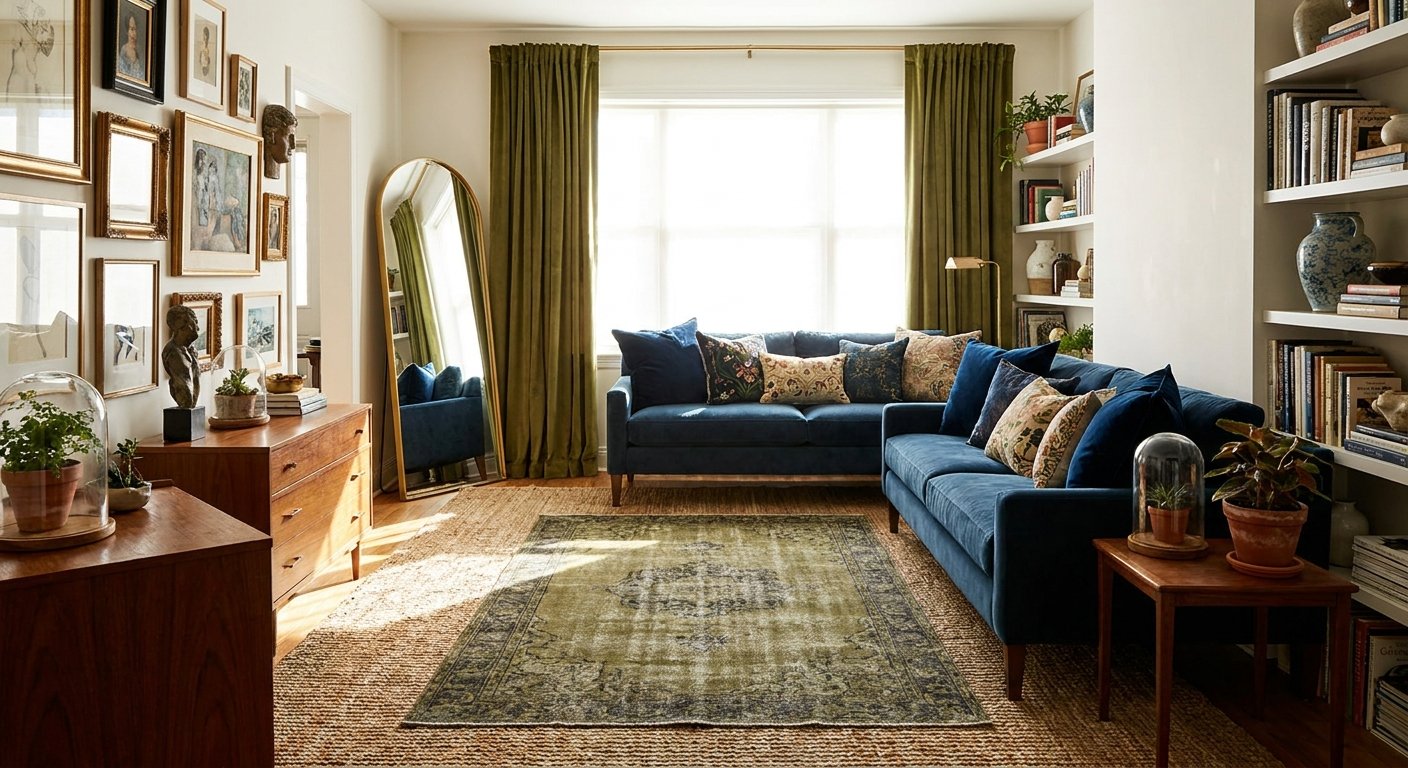
A layered room needs one element that visually settles everything else. Rugs are ideal because they establish texture and define the furniture plan before you begin adding smaller decor. For a maximalist living room, a quiet natural base topped with a more expressive pattern works especially well.
A nuLOOM Rigo hand-woven jute rug gives you that neutral, organic foundation. Over it, a smaller Loloi II Layla LAY-03 olive/charcoal vintage-inspired rug can introduce the faded pattern and old-world character maximalist interiors love. The contrast between rough natural fiber and a softer decorative rug creates depth before a single accessory is added.
Keep the top rug large enough to connect the seating area—ideally with at least the front legs of the main sofa and chairs resting on it. That simple placement makes two rugs look designed rather than accidental.
2. Layer Color With a Repeat Rule
Maximalism welcomes strong color, but random color is what makes a room feel chaotic. A useful rule is simple: repeat every important accent color at least three times, in different parts of the room and at different heights.
Deep blue, for example, can appear in sofa pillows, a small artwork, and a ceramic object on a shelf. Olive green might repeat in the rug, curtains, and a botanical print. This creates a visual path through the room. If you are still choosing a palette, the guide to living room colors for 2026 is a useful starting point; for a bolder direction, the color logic in the Memphis style interior design guide shows how repeated accents can make energetic color feel controlled.
Designer rule: choose one grounding neutral, two dominant colors, and one or two smaller accent colors. Before adding a new hue, ask whether it repeats something already in the room. If not, it may be the piece that turns “layered” into “busy.”
3. Mix Textures Before Adding More Objects
If a room feels flat, the answer is not always another vase or figurine. Often it needs a different texture. Successful layered interiors combine opposites: rough jute with smooth brass, matte pottery with glossy glass, crisp linen with plush velvet.
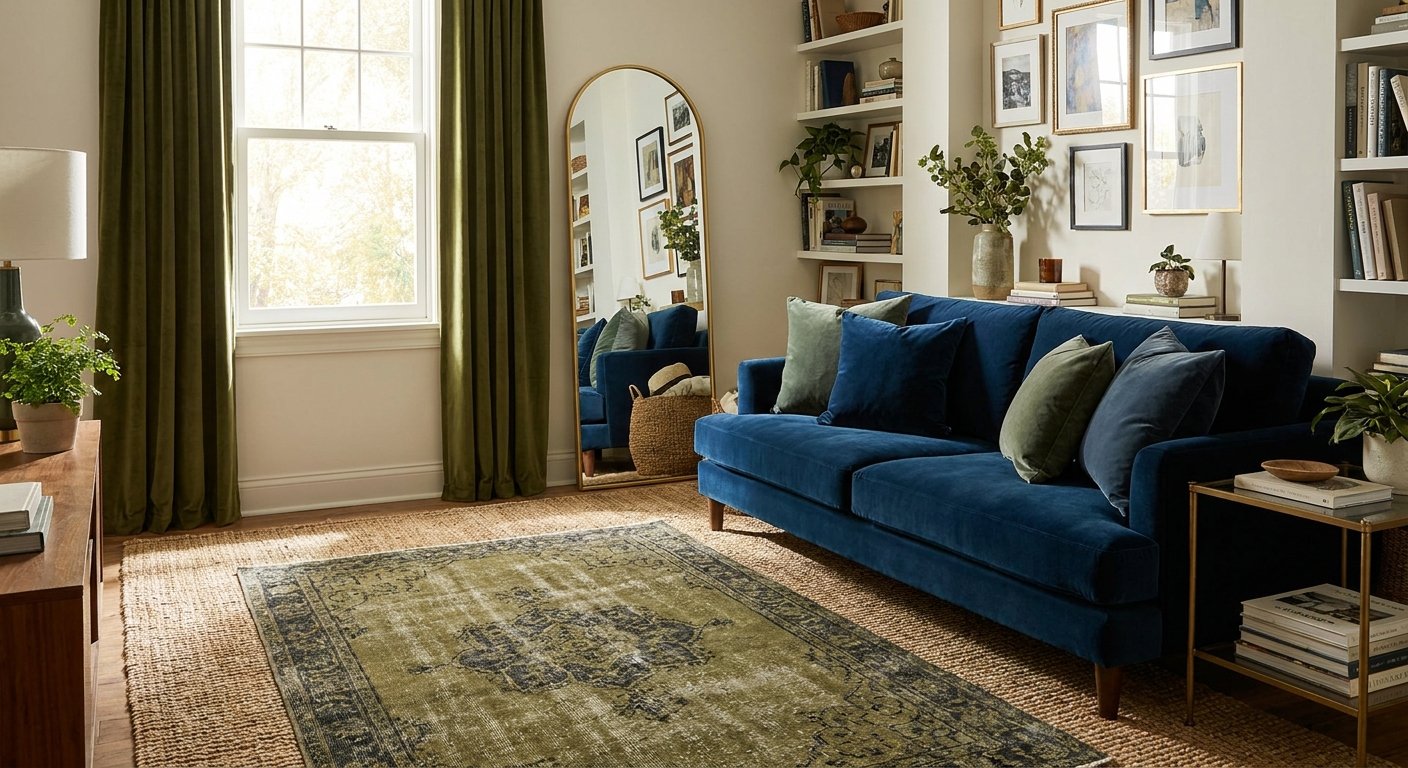
One easy way to introduce that tactile contrast is with MIULEE dark blue velvet throw pillow covers. Against a cream, linen, leather, or boucle sofa, velvet adds saturated color and a richer surface without taking up additional floor or shelf space. Mix them with one geometric or floral cushion rather than six unrelated prints.
The same principle applies to lighting and accessories. A glossy lamp beside a worn wood table or a colorful ceramic vessel next to stacked books creates contrast through material rather than clutter. For more examples, see the guides to styling table lamps and colorful ceramic vases.
4. Make Windows Part of the Composition
Windows occupy a huge amount of vertical space, so ignoring them can make an otherwise layered room feel unfinished. Hanging curtains high and wide gives the room height, softness, and another place to repeat your palette.
MIULEE olive green velvet curtains are a good example of how one textile can do several visual jobs at once: they bring a saturated green to eye level, introduce plush texture, and frame the room with a substantial vertical element. For even more depth, pair velvet drapes with a simple sheer panel behind them instead of adding another patterned object elsewhere.
5. Use One Oversized Reflective or Architectural Accent
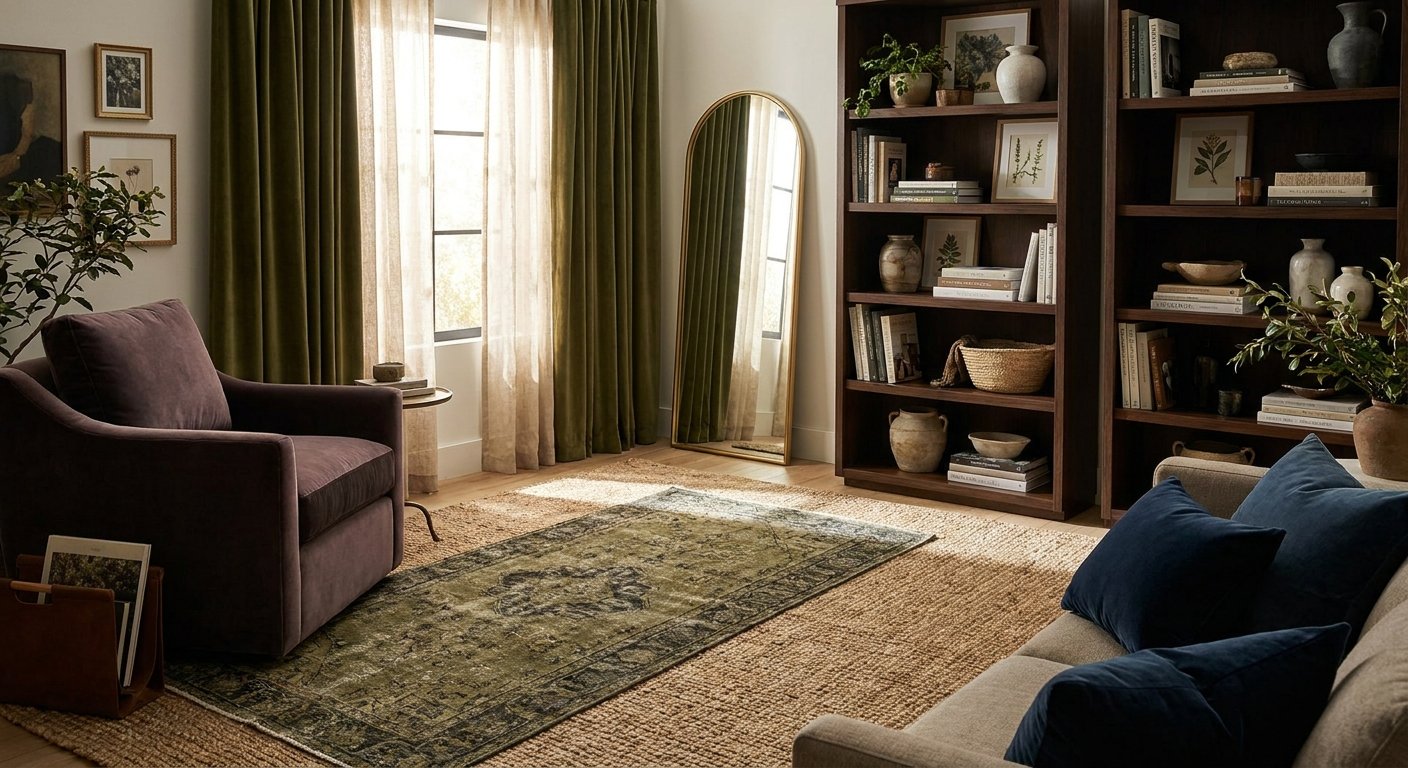
Maximalist rooms need breathing room just as much as minimalist ones. Instead of creating that pause with an empty wall, use one large reflective or architectural object. A tall mirror adds scale while reflecting light and the layers you have already created.
The HARRITPURE 64 x 21-inch gold arched full-length mirror works especially well for this role. Its slim gold outline introduces a warm metallic note without competing with patterned textiles. Lean it near a gallery wall, between two windows, or beside a reading corner where it can reflect art and color rather than more furniture.
6. Build Art and Objects in Visual Clusters
Scattered objects read as clutter; grouped objects read as a collection. On a console or shelf, build small clusters of three to five pieces that share at least one connection—color, material, subject, or shape. Leave a little open surface between clusters so each grouping has a boundary.
Apply the same logic to a gallery wall. Mix frame sizes, but repeat two or three frame finishes. Combine illustration, photography, and abstract work, but keep one or two colors recurring across the arrangement. The aim is variety inside a system.
7. Know When to Stop
The most useful maximalist decorating skill is knowing when a room has enough information. Stand in the doorway and look for three things: a clear focal point, repeated colors, and visible resting areas. If every surface, wall, and textile is demanding equal attention, remove one or two pieces rather than adding another “finishing touch.”
- Keep: pieces that repeat your palette, add a new texture, or carry personal meaning.
- Move: objects that are attractive but compete with the focal point.
- Remove: small fillers that do not contribute color, texture, shape, function, or story.
Quick Maximalist Layering Checklist
- Choose one grounding rug or neutral texture.
- Repeat each major accent color at least three times.
- Add contrasting textures before buying more decorative objects.
- Use curtains to carry color and softness vertically.
- Balance dense pattern with one large mirror or calmer architectural accent.
- Group smaller decor into intentional clusters instead of scattering it.
- Step back at the doorway and remove anything that competes with the focal point.
Maximalist Interior Design FAQ
How do I make maximalist decor look intentional?
Repeat colors, materials, and shapes across the room. Repetition creates visual rhythm, so even a space with many patterns and objects can feel connected rather than random.
Can a small living room be maximalist?
Yes. In a small room, focus on layered textiles, vertical art, curtains, and one strong statement piece instead of filling the floor with extra furniture. Maximalism is about visual richness, not the number of objects.
How many patterns should I mix in one room?
There is no fixed maximum, but it helps to vary scale. Combine one large pattern, one medium pattern, and one smaller motif while repeating at least one color between them. That shared color is what keeps the mix coherent.
Layered Living Is Curated, Not Crowded
The best maximalist interior design feels generous, not overloaded. Start with a strong floor layer, repeat color deliberately, build texture before objects, use windows and mirrors as part of the composition, and organize smaller pieces into clusters. Once those rules are in place, you can be far more adventurous with art, pattern, color, and collected decor—because the room already has a visual structure holding everything together.