10 Charming English Cottage Interiors and How to Recreate the Look
English cottage interiors combine comfortable furniture, garden-inspired patterns, warm wood and personal collections. They can be colorful, even a little eccentric, and are surprisingly adaptable to an ordinary apartment or modern house.
Picture a green sofa beside shelves of well-loved books, a gingham cushion on a reading chair and a ceramic lamp glowing beside the bed. You can create that feeling gradually, using pieces you already own and a few carefully chosen additions. The ten rooms below show where to begin, what to borrow from each arrangement and how to get a similar look without a complete renovation.
What defines English cottage style?
Comfort and informal layering are recurring themes in published examples of English country decorating. House & Garden’s interviews with interior designers discuss antiques, color and natural textures, while Architectural Digest’s English countryside decorating feature illustrates how different prints can coexist within a shared palette. The following visual examples translate those principles into practical choices for individual rooms.
1. Create a living room that feels collected over time
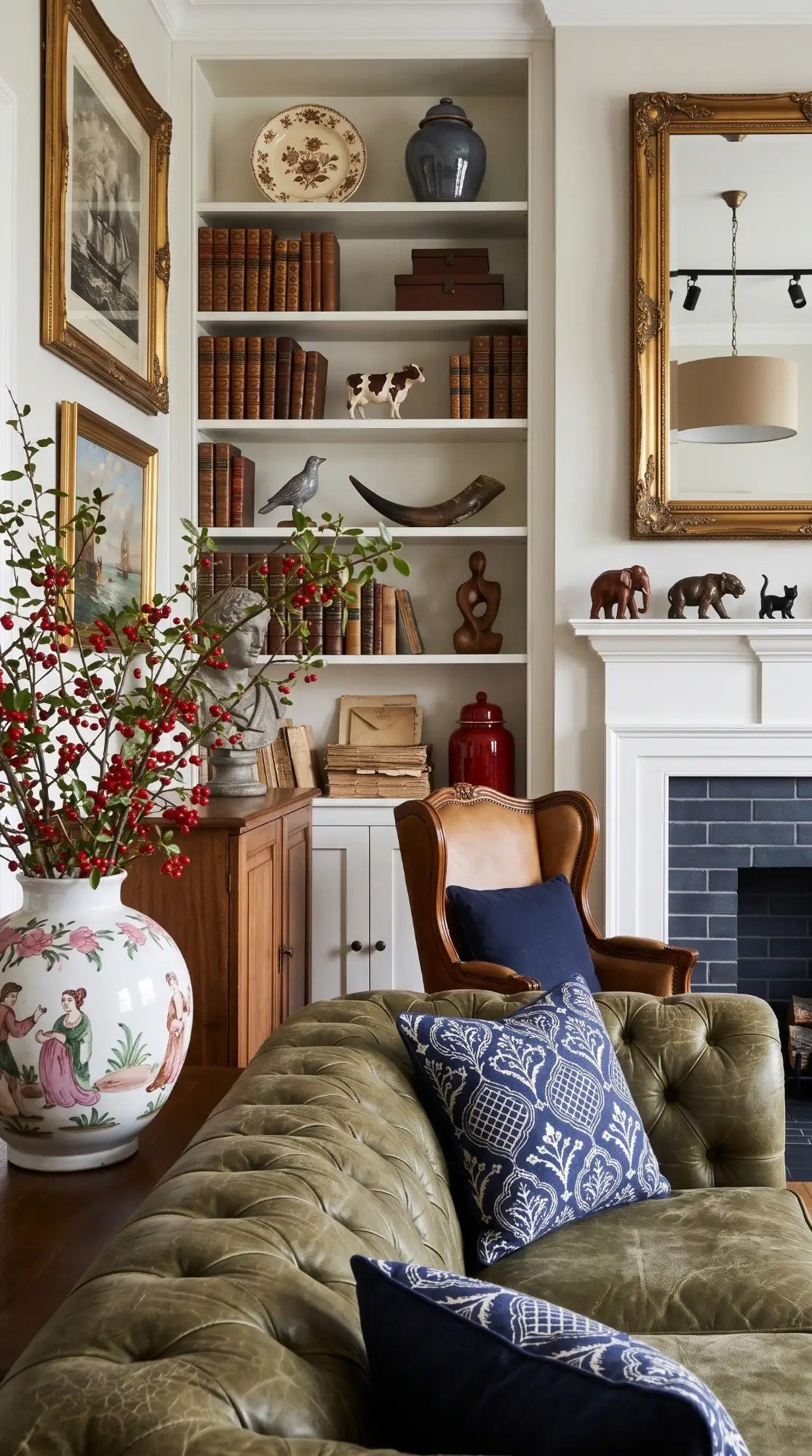
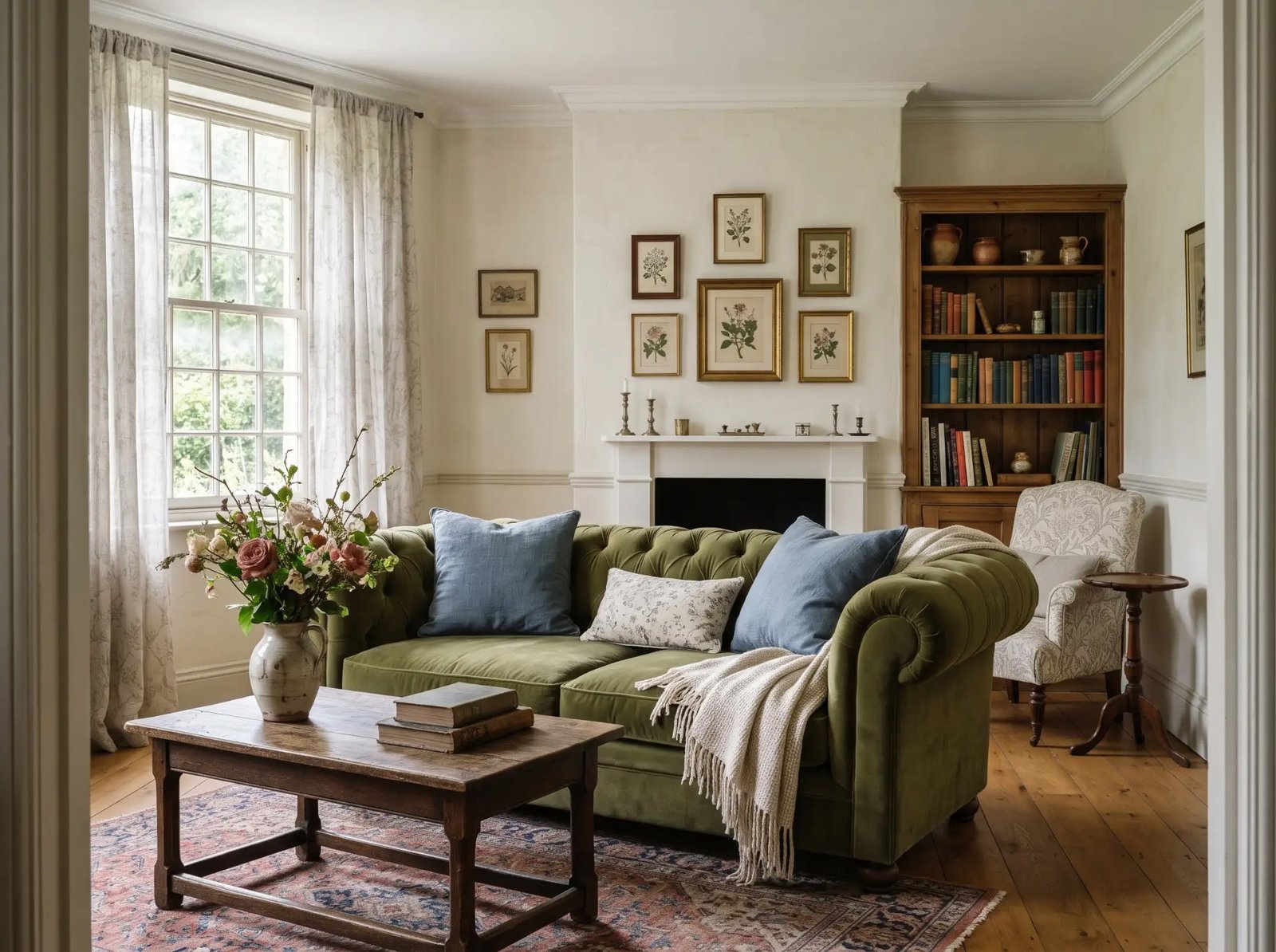
An olive-green tufted sofa, a fireplace, framed artwork and shelves of books give this room its character. The blue cushions interrupt the earthy palette just enough.
Start with the sofa you already own. Bring in a secondhand wooden side table, a ceramic vase and a few books you genuinely enjoy. Leave some space between objects on the shelves so each has room to breathe. If you have a mantel, try grouping objects of different heights. Our living room fireplace ideas offer more ways to arrange one.
2. Mix gingham with florals and geometric prints
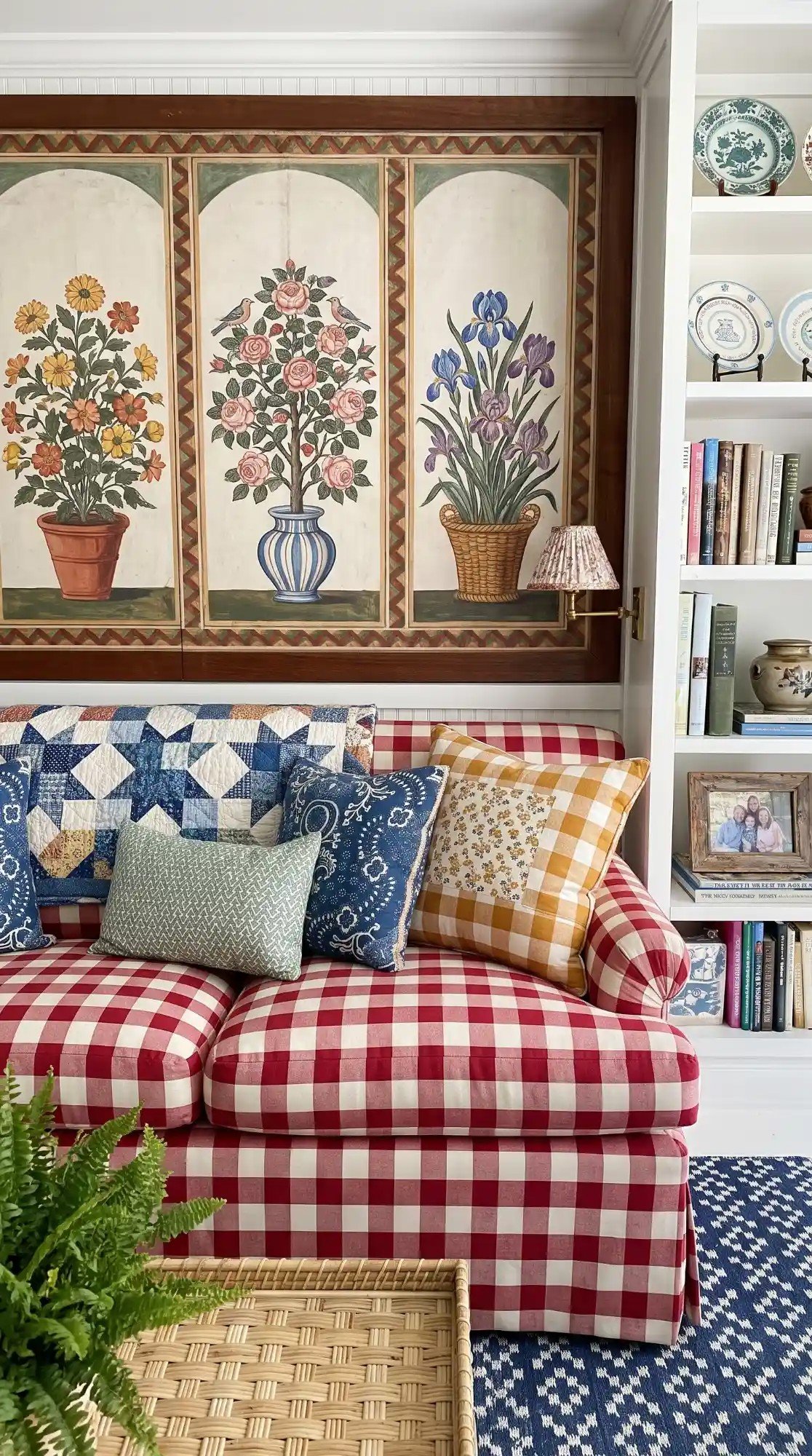
The red gingham sofa is the strongest pattern in this room. Blue and white geometric cushions, a yellow check and botanical artwork make the scheme feel playful.
Try a large check with a smaller floral or geometric print. Repeat one or two colors across the room and include a plain cushion to give the eye a rest. If a patterned sofa feels like too much of a commitment, use a washable gingham cushion cover instead. A patterned rug can work here, too; see our floral area rug styling guide.
3. Give a bedroom a storybook wall
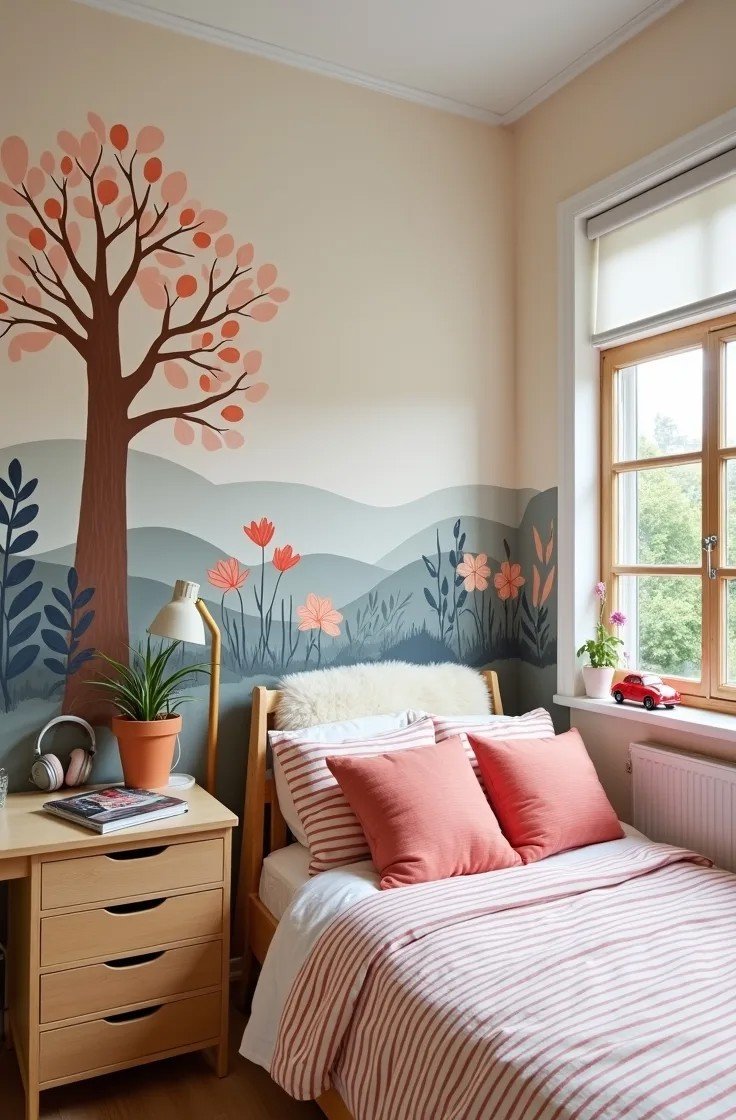
A painted tree, coral blossoms and blue-green hills frame a simple bed. The pink striped bedding picks up the flowers without copying the mural.
Sketch a loose botanical silhouette on paper before painting anything. A single tree or a few climbing stems can be enough. Renters can look for removable mural panels, checking the manufacturer’s instructions and testing an inconspicuous area first. Keep the furniture simple so the wall remains the focus.
4. Use a shared palette in a twin bedroom
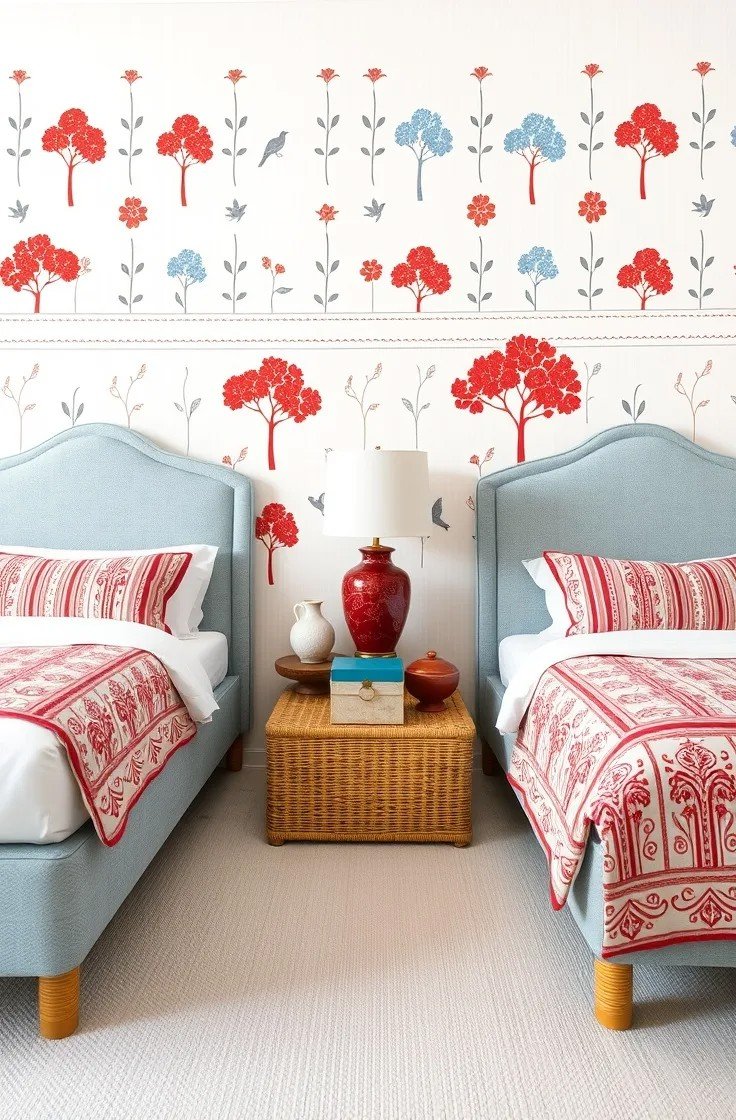
Pale blue headboards and red patterned bedding echo the red and blue flowers on the wall. A woven bedside table adds a different texture between the beds.
Choose two colors from a wallpaper sample and carry them into the bedding. Matching headboards are useful in a shared room, but the cushions can vary. For a cheaper update, keep existing headboards and use coordinated pillowcases and a small patterned throw at the foot of each bed.
5. Make a reading corner with oversized floral wallpaper
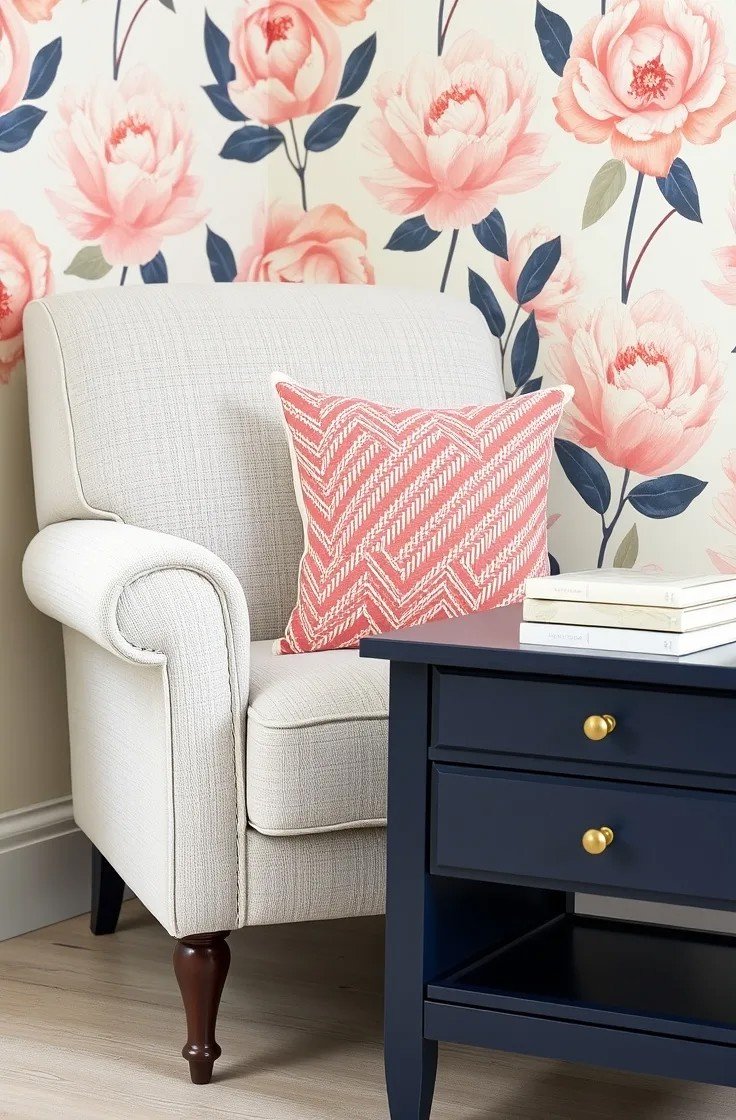
Large pink roses and dark leaves sit behind a cream armchair. The navy side table gives the corner a stronger outline.
A single papered wall or alcove is a manageable place to try a bold print. Order a sample and look at it in daylight and under your reading lamp before committing. Pair busy wallpaper with plain upholstery. A small cushion in a related color is enough to connect the two.
6. Turn a small bedroom into a comfortable retreat
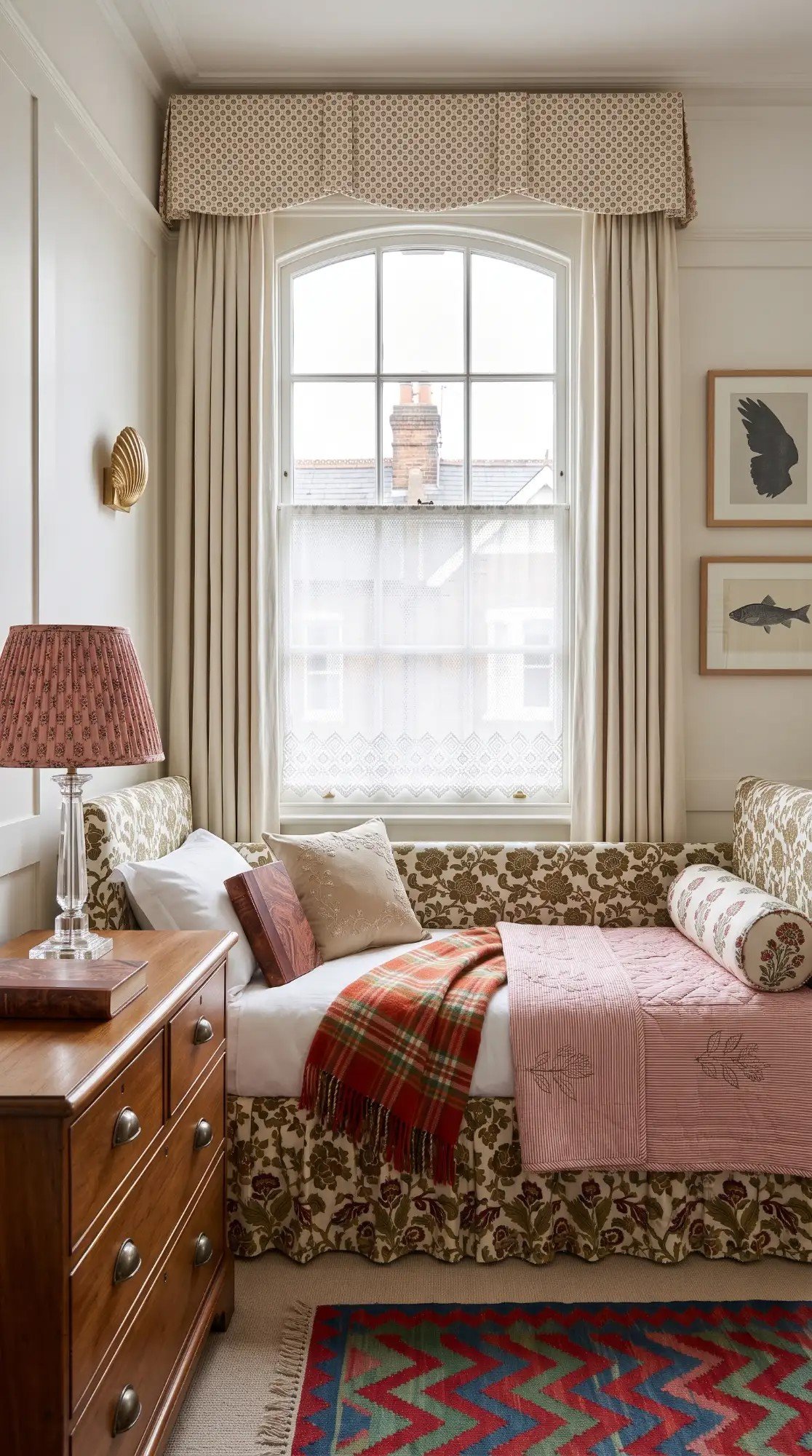
A patterned daybed sits beneath a tall window, with a wooden chest, soft pink bedding and a red checked throw. The window gives the compact room a natural focal point.
A daybed can be useful in a guest room that doubles as a reading space. Measure the walking route and drawer clearance first. Use a fitted cover, a couple of pillows and a folded blanket rather than piling textiles where someone needs to sit. Our blanket storage ideas can help keep extra bedding close without crowding the floor.
7. Pair warm wood with embroidered textiles
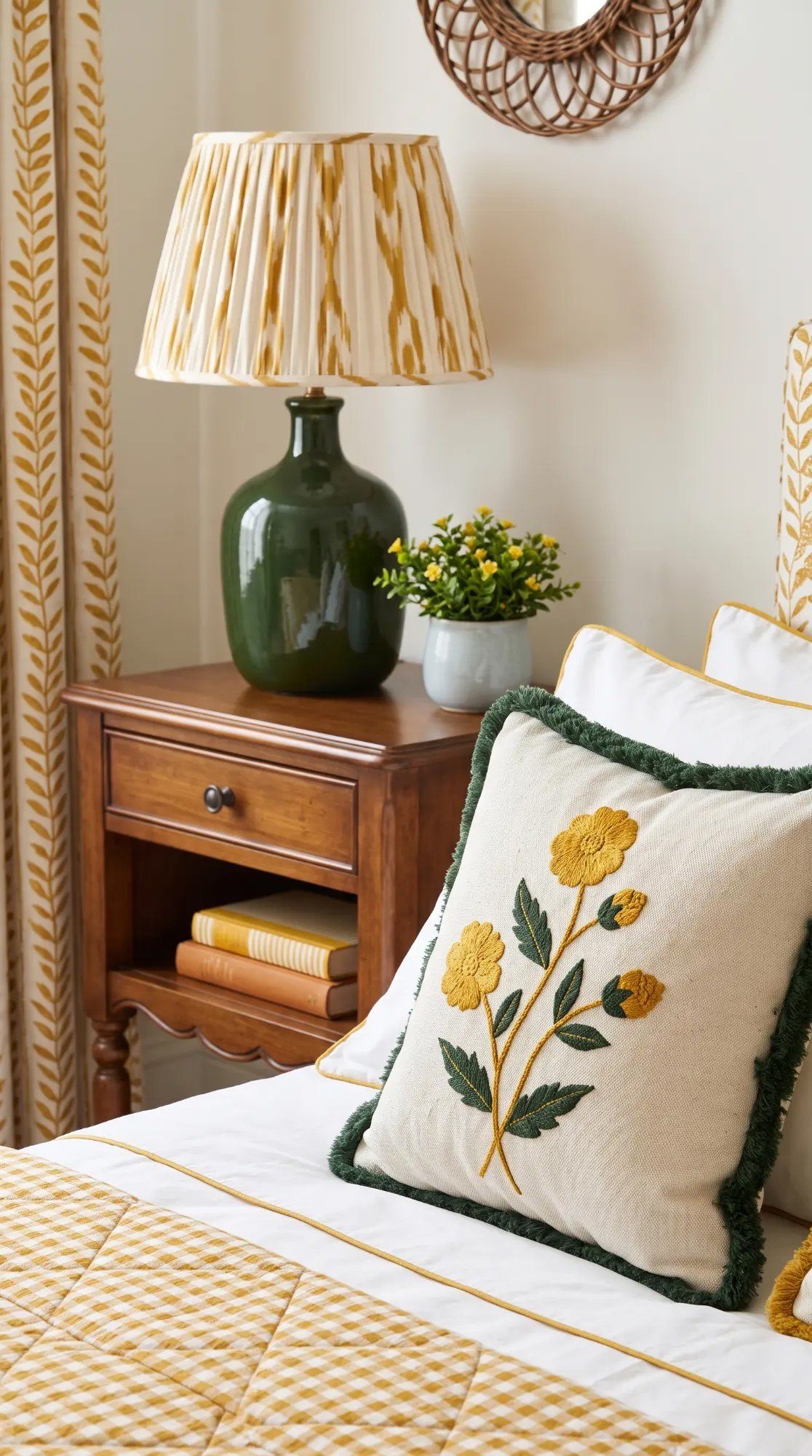
A wooden bedside table, green ceramic lamp, yellow patterned shade and embroidered flower cushion show how much character a small corner can hold.
Keep an older bedside table if it is sound, even when its wood tone differs from the bed. Add a botanical cushion or a small patterned lampshade. Check shade dimensions, fitting and bulb compatibility before purchasing. A plain secondhand lamp with a compatible new shade is often a simpler change than replacing the entire bedside arrangement.
8. Give the hallway its own botanical character
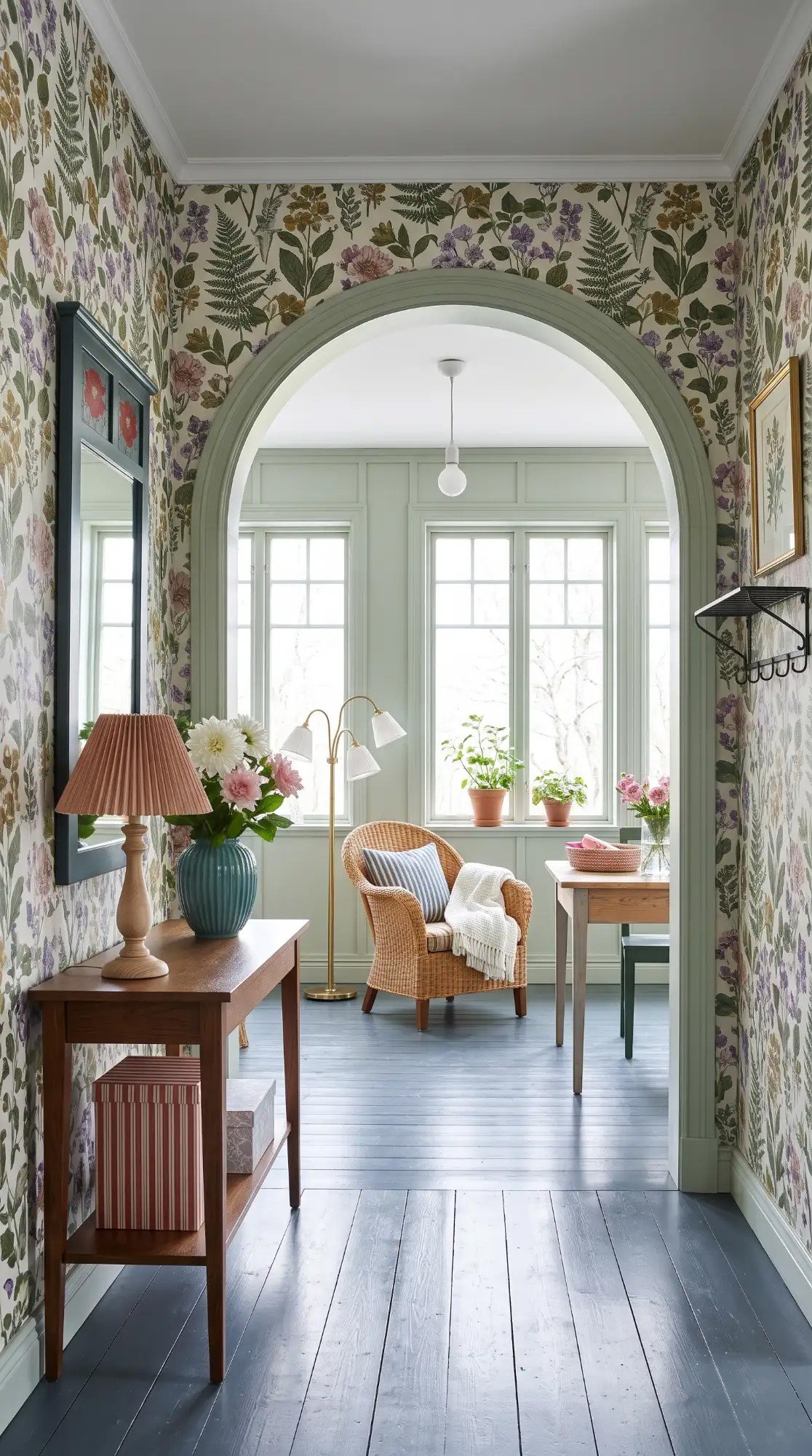
Dense leafy wallpaper frames an archway leading to a pale green room. A narrow wooden console and a lamp make the passage feel furnished.
In a narrow hall, prioritize clear circulation and use a shallow console only if it fits comfortably. Pick a color from the wallpaper for the trim or the adjoining room. If wallpapering the entire hall is beyond your budget, try a single wall or framed wallpaper remnants.
9. Bring English cottage character into the kitchen
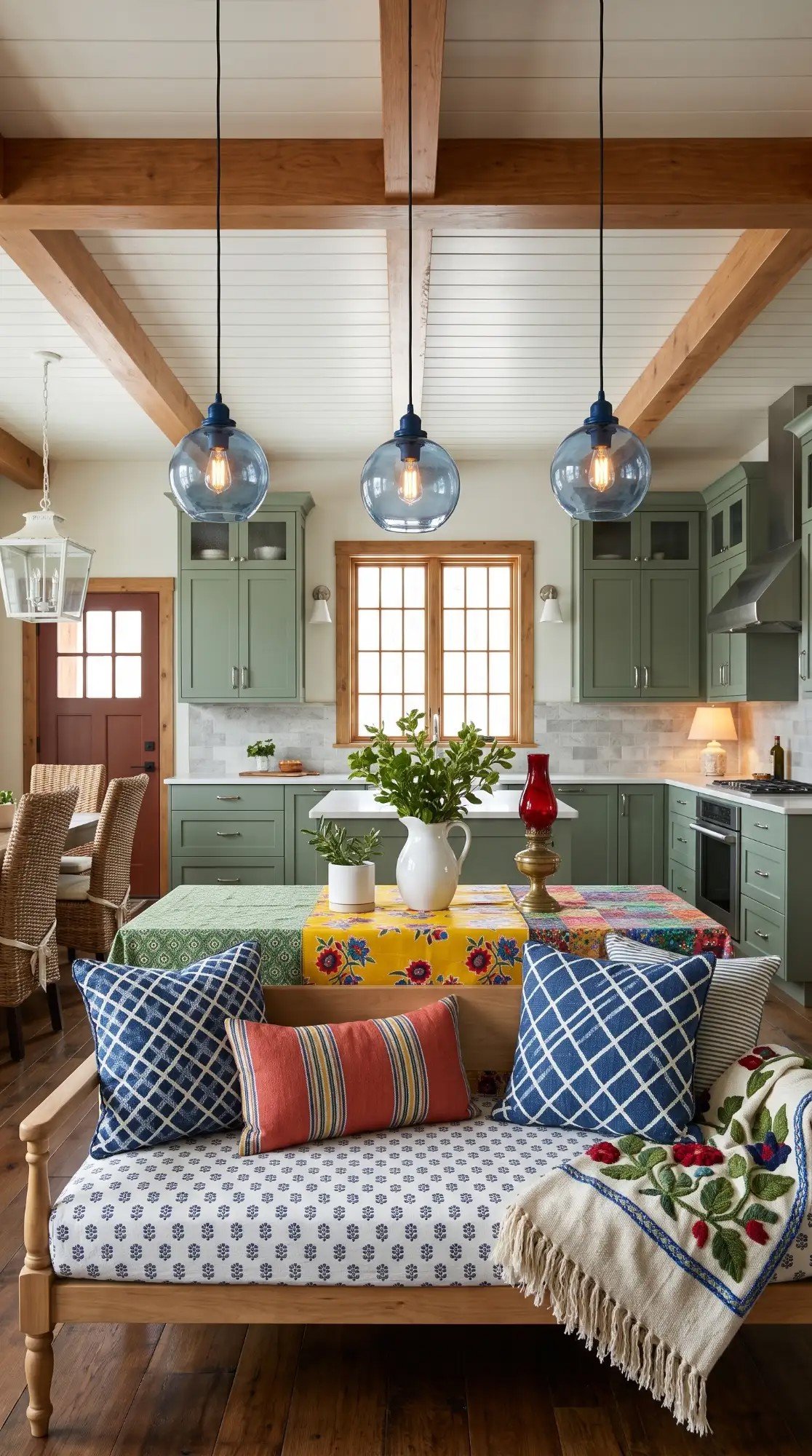
Muted green cabinetry, exposed timber, blue pendant lights and patterned bench cushions connect the kitchen with its sitting area.
You can borrow the color scheme without changing the kitchen layout. Try sage green on a freestanding cabinet, blue on washable seat covers and warm wood through a chopping board or tray. Keep decorative textiles away from cooking heat and choose easy-clean materials near food preparation. For more palettes, see how to choose kitchen colors.
10. Balance saturated colors with traditional details
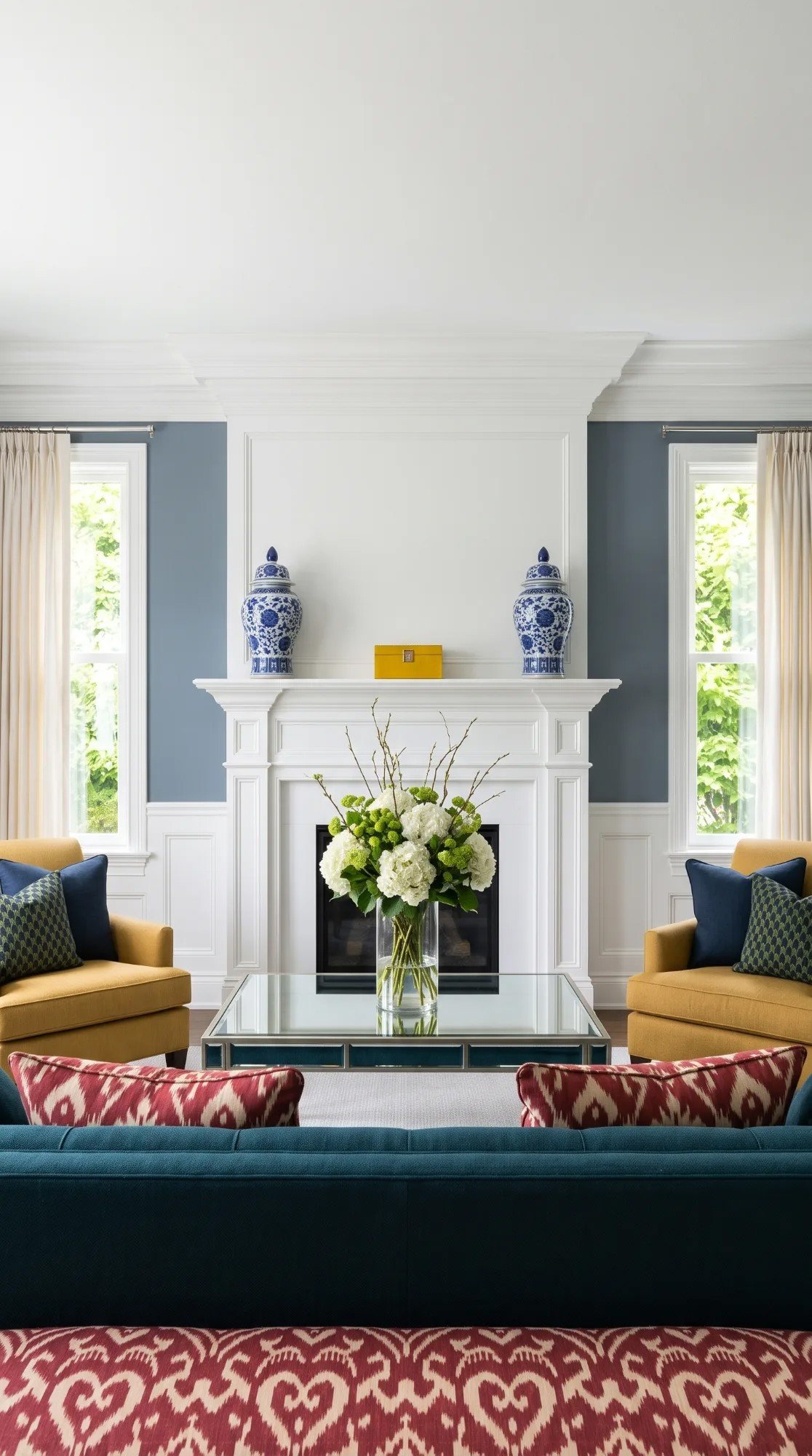
A teal sofa, mustard chairs and red patterned textiles surround a white fireplace. Blue-and-white ceramics on the mantel tie the stronger colors together.
Choose one deep color for a large piece and use the other shades in smaller accents. A light architectural feature such as a fireplace or window trim can give the scheme breathing room. If you already own neutral furniture, introduce color with cushion covers, a throw and artwork before considering reupholstery.
How to get the cottage look on a budget
Begin in one room. Take a picture of the furniture you plan to keep and choose a color from an existing rug, curtain or piece of art. Look for a patterned textile that repeats it. A secondhand wooden table or a ceramic lamp can come later. You may find that the room needs far fewer purchases than you expected.
When shopping, compare dimensions, cleaning instructions and material rather than relying on a cottage-style label. For wallpaper, get a sample; for cushions, measure the inserts; for used furniture, check joints, stability and condition. These are styling suggestions, not product tests.
Frequently asked questions
What colors work in English cottage interiors?
Sage, olive, dusty blue, cream, warm pink and muted red are useful starting points. Mustard or deep teal can add contrast. Choose a palette that suits your existing flooring and the light in the room.
Can a modern apartment have English cottage style?
Yes. Start with soft furnishings, a wooden side table, botanical artwork and warm lighting. You do not need exposed beams, a fireplace or period architecture.
What is the difference between English cottage and country cottage interiors?
Country cottage interiors are a broader family of relaxed rural-inspired decorating styles. English cottage style often draws on British floral and botanical textiles, traditional furniture and a layered approach to color and pattern. The categories overlap, and there is no strict rulebook.
Start with one corner
Choose the room in this guide that most resembles your home and borrow one detail this weekend. Try a patterned cushion on your existing sofa, rearrange the books beside your favorite chair or bring a wooden table back into use. Save your favorite idea for later and build the room at your own pace.