21 Clever Blanket Storage Ideas That Look Beautiful in Any Room
Blanket storage should suit the way you actually live. A basket beside the sofa works for throws you reach for every evening; a closed bench or chest is better for spares you want out of sight. These 21 blanket storage ideas cover living rooms, bedrooms and small spaces, with styling details, practical measurements to check and a few easy DIY projects.
Start with a simple decision: display the blankets you love, and hide the ones you rarely use. Then choose a solution based on the space you have, not just the nicest-looking product photo.
At a glance: which blanket storage solution fits your room?
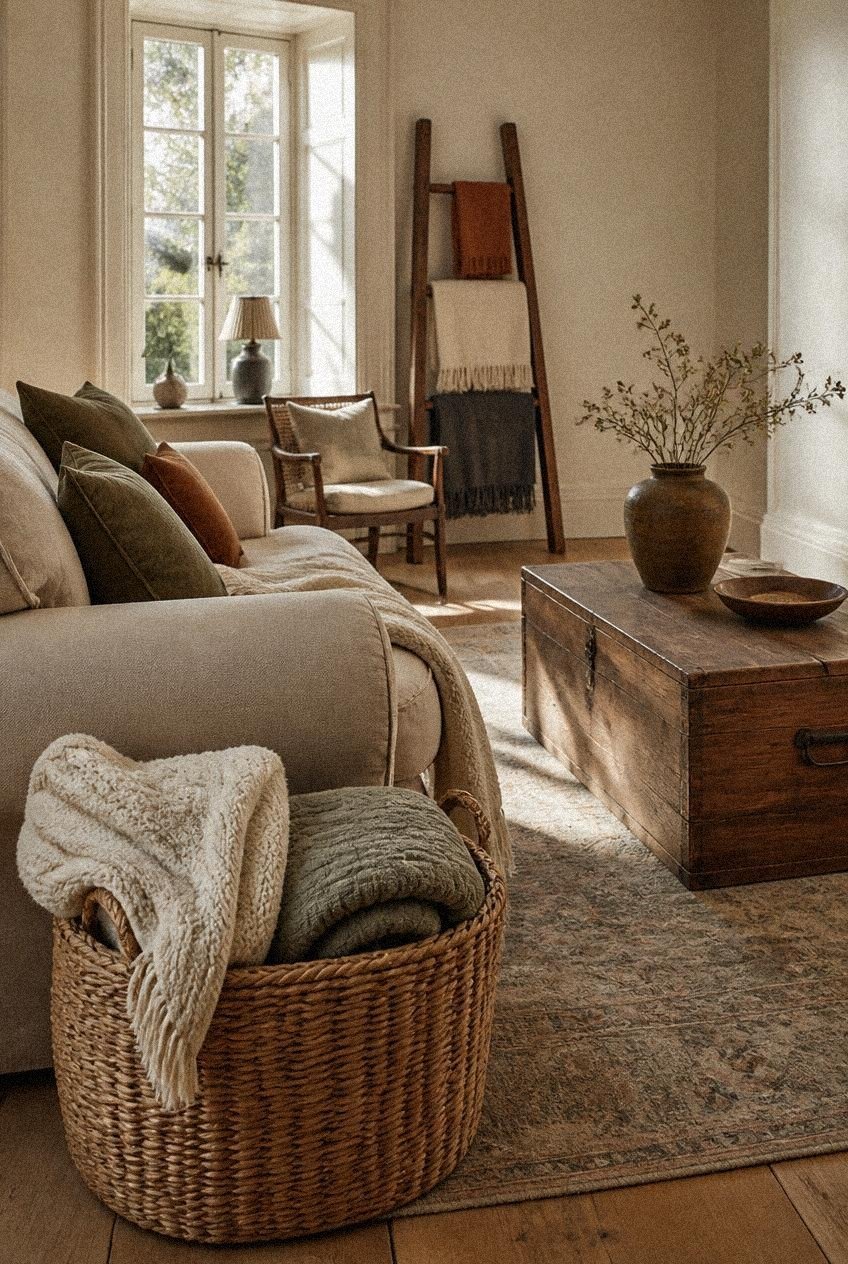
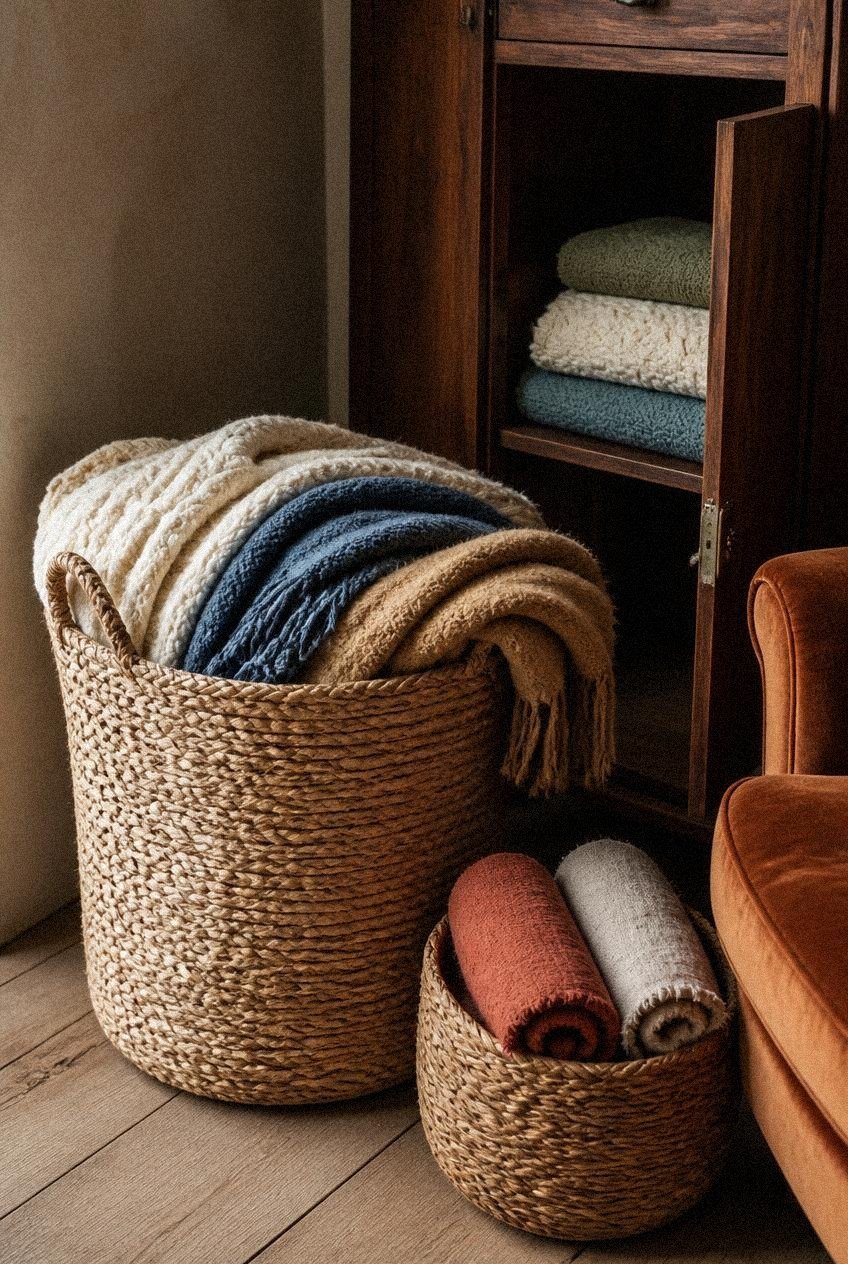
| Storage solution | Best for | Open or hidden? |
|---|---|---|
| Large woven basket | Everyday living-room throws | Open |
| Storage ottoman | Small living rooms | Hidden |
| Blanket ladder | Pretty, lightweight textiles | Open |
| Window bench | Reading nooks and bedrooms | Hidden |
| Under-bed drawer | Guest and seasonal blankets | Hidden |
| Vintage armoire | Large blanket collections | Hidden |
For a quick starting point, count the blankets you need to store and fold the largest one the way you plan to keep it. Use that folded bundle as your guide when checking a basket opening, drawer height or storage ottoman interior.
Beautiful blanket storage ideas for living rooms
1. Go oversized with a woven blanket basket
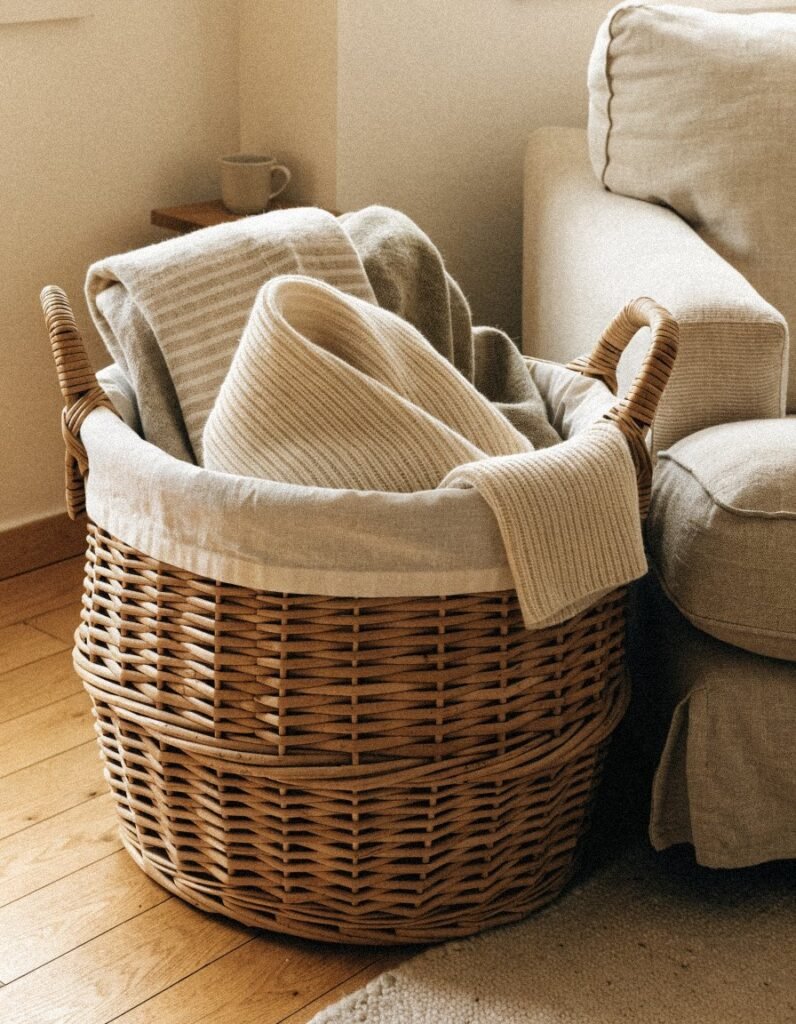
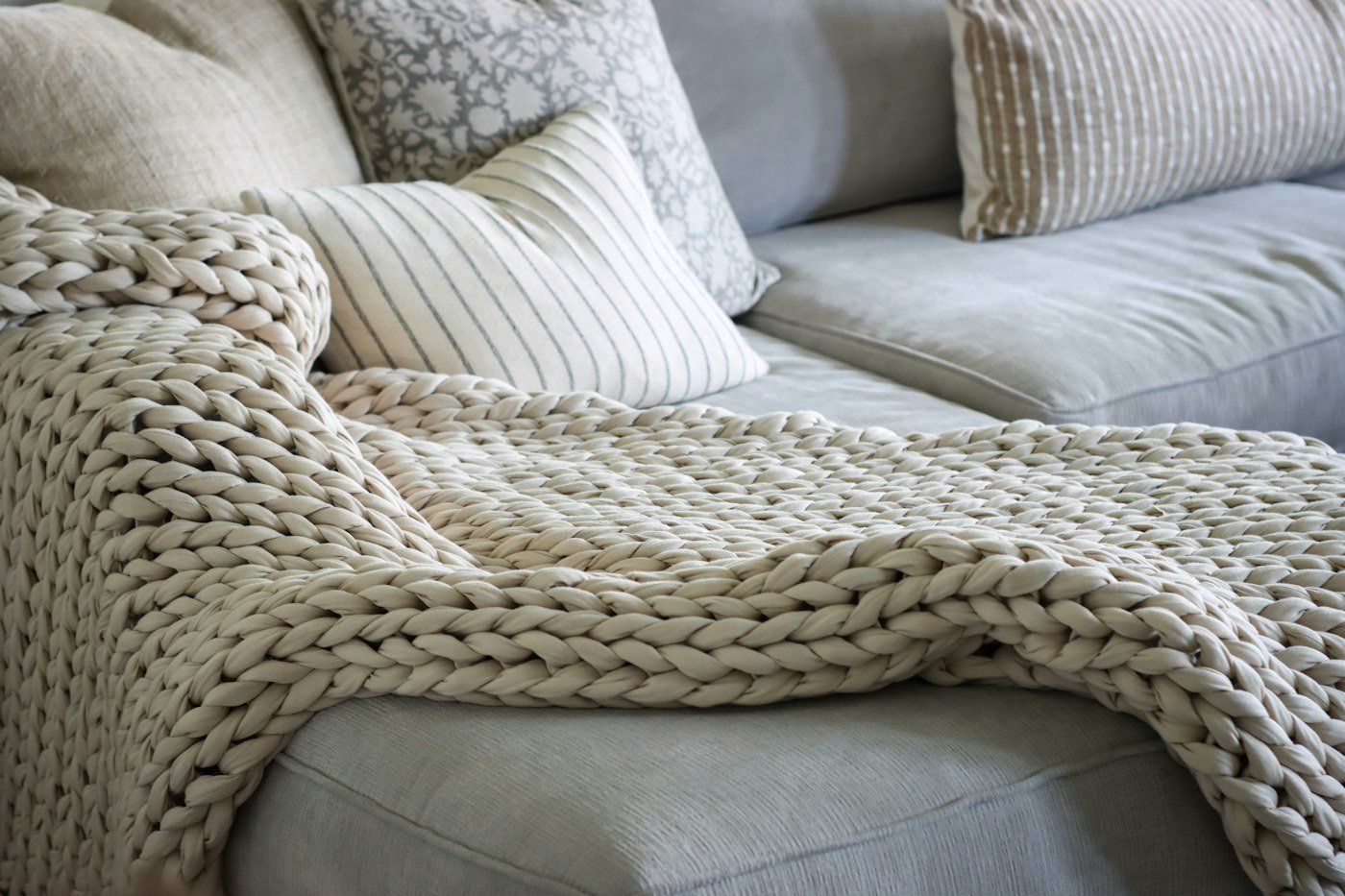
A generous woven basket beside the sofa makes a pile of throws look deliberate. Choose a wide opening so chunky knits do not catch on a tight rim, and look for a smooth inner surface or removable liner if you own delicate wool. A broad, low basket feels relaxed in a country cottage room; a taller, structured basket suits modern organic interiors.
Best for: two or three everyday throws. Watch for: rough fibers snagging loose-knit fabric.
Affiliate disclosure: As an Amazon Associate, GlowNestBlog earns from qualifying purchases. If you buy through the Amazon links below, we may earn a commission at no additional cost to you.
Shop this idea: The OIAHOMY 75L woven cotton-rope blanket basket on Amazon offers a soft-sided, generously sized alternative to rough wicker. Check its dimensions and color against your room before ordering.
2. Let a vintage trunk double as your coffee table
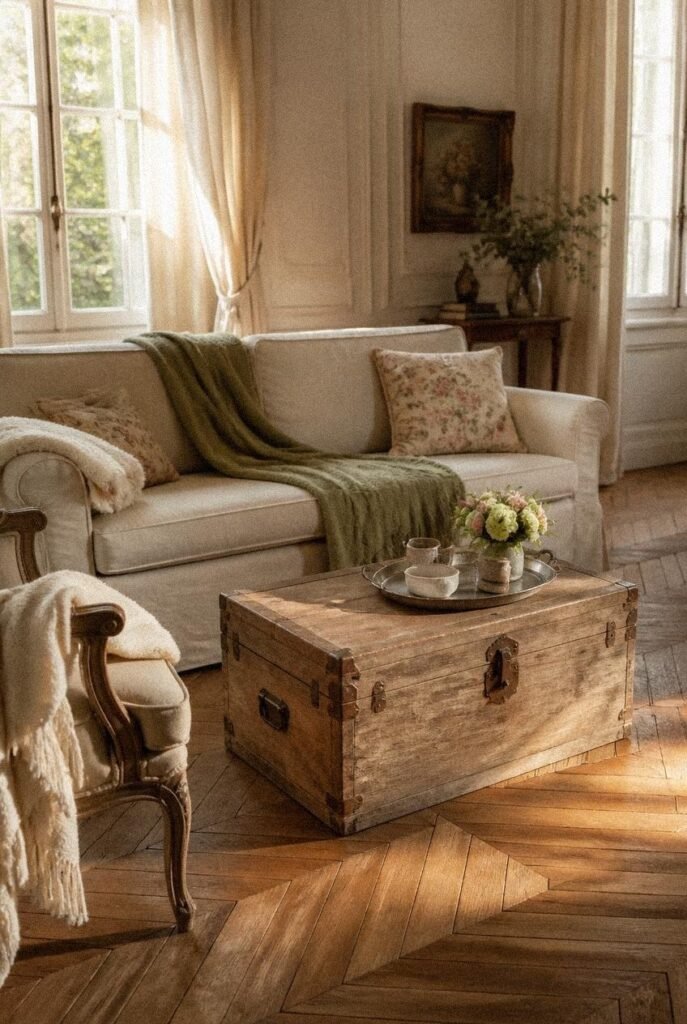
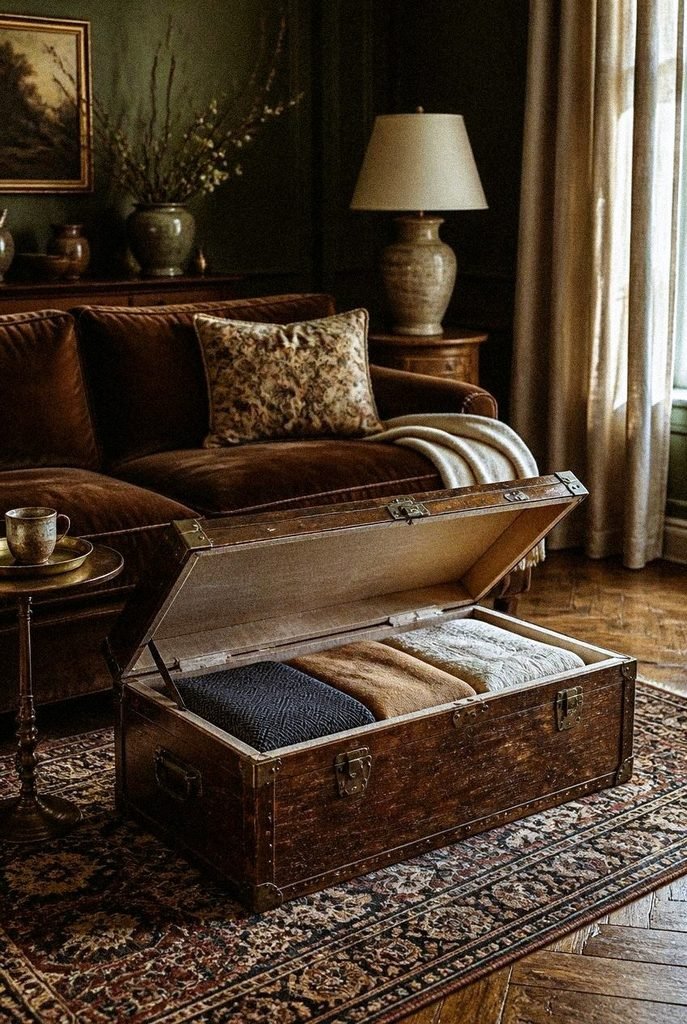
A weathered trunk adds history to a room and offers a place to put blankets away after movie night. The trick is scale: leave room to walk around it and keep the height comfortable relative to your sofa seat. Before storing textiles, check the inside for splinters, odors, dampness and exposed metal; use a clean, removable liner when appropriate.
Best for: extra throws you want completely out of sight. Watch for: heavy lids, pinched fingers and musty interiors.
3. Choose an upholstered storage ottoman
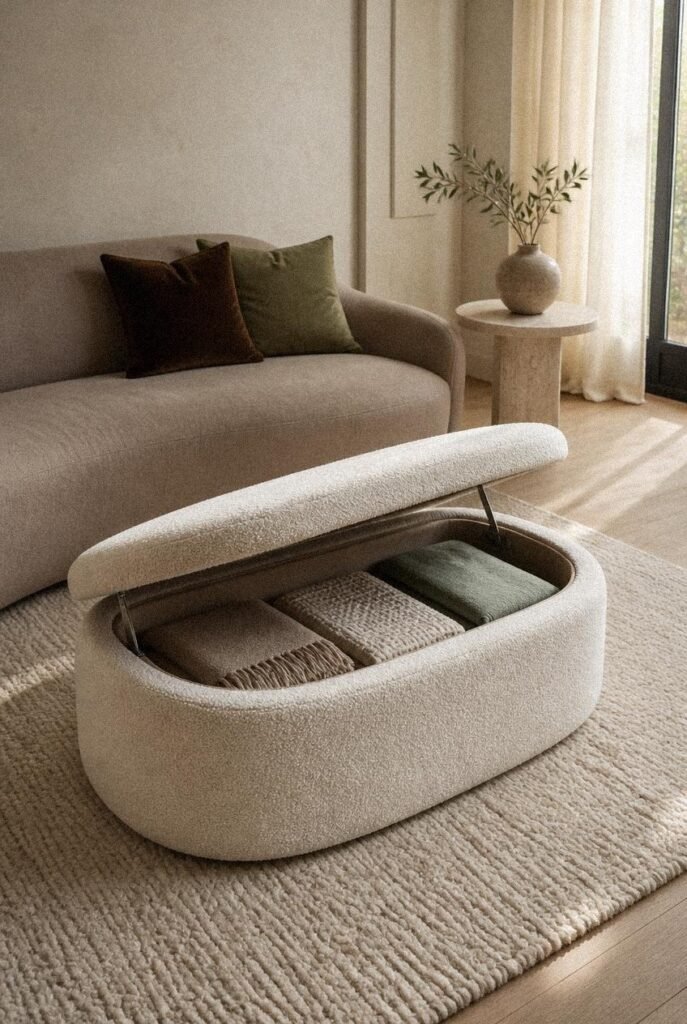
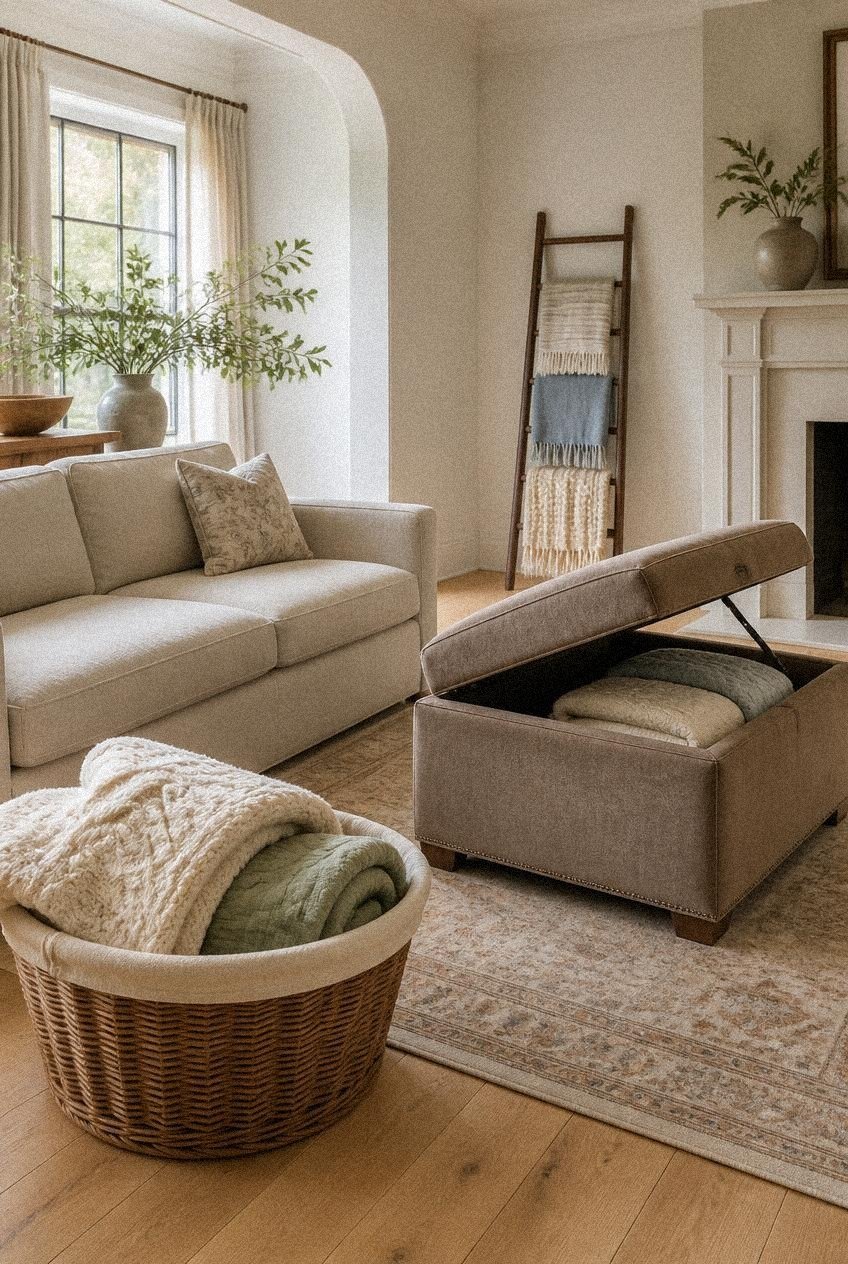
An ottoman can serve as a footrest, occasional seat and blanket compartment. In a colorful living room, a velvet or patterned upholstery can look like a statement piece instead of utility furniture. Measure the interior dimensions, not only the overall width, and check whether the lid stays open safely while you reach inside.
Best for: compact living rooms. Watch for: shallow compartments and lids without a stay-open mechanism.
Shop this idea: The SONGMICS 43-inch folding storage ottoman bench on Amazon is a practical option for folded throws and occasional seating. Its boxy foldable construction looks more utilitarian than the upholstered bouclé ottoman pictured above, so consider whether that suits your decor.
4. Turn a blanket ladder into a textile display
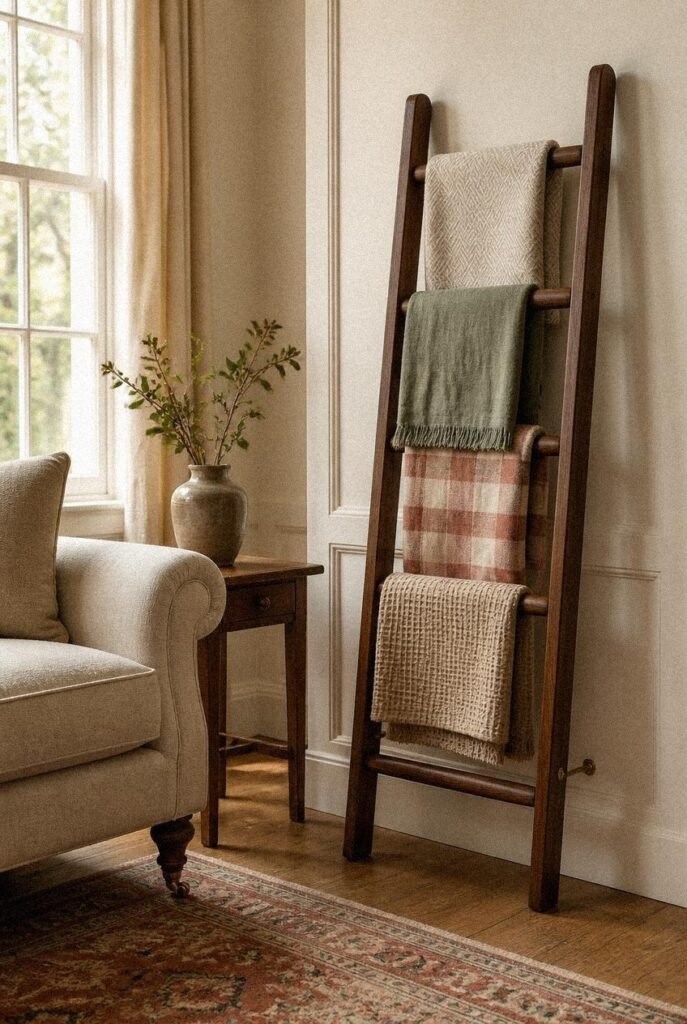
A purpose-made decorative ladder lets pretty blankets do some of the decorating. Fold each throw to a similar width, then stagger colors so the top rung does not carry all the visual weight. A dark walnut ladder against warm ivory paint feels traditional; black metal with striped cotton throws looks more graphic. Secure the ladder as specified by its manufacturer, especially where children or pets might pull it.
Best for: lightweight, frequently used throws. Watch for: unstable leaning ladders and fabrics brushing the floor.
Shop this idea: Consider the HOOBRO five-tier decorative blanket ladder on Amazon. Its rustic brown and black finish is better suited to industrial or farmhouse spaces than a traditional solid-walnut look. Check wall-positioning and stability guidance before use.
5. Use the space behind the sofa
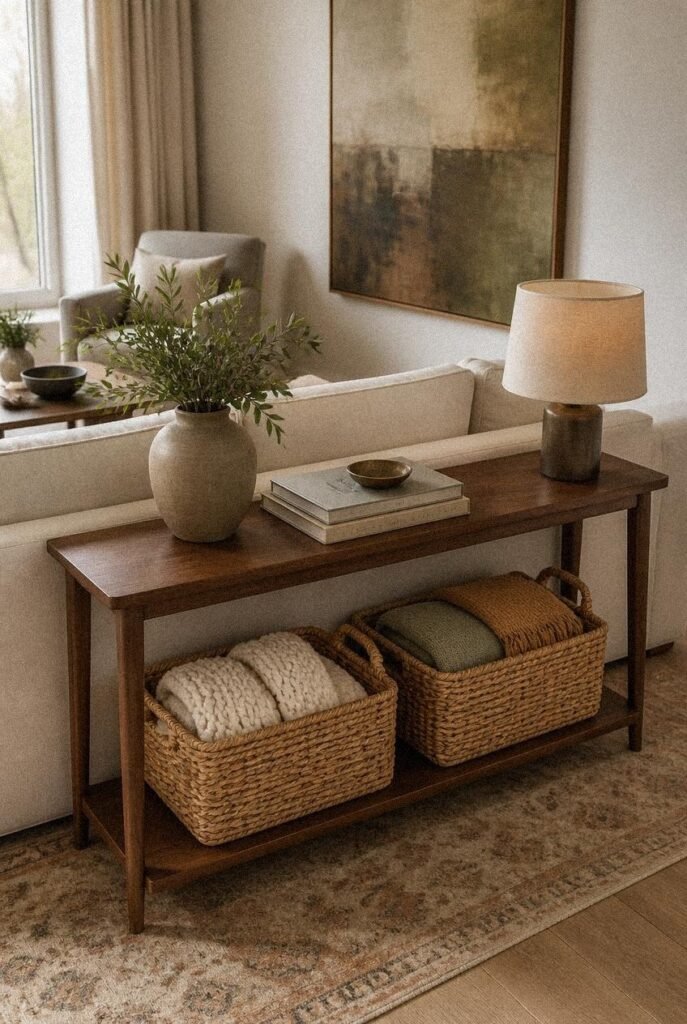
A slim console with a low shelf can hide a pair of matching baskets without forcing you to rearrange the room. This works especially well when the sofa floats away from the wall. Keep the console clear of walkways and measure the depth of both the furniture and baskets before buying.
Best for: open-plan living rooms. Watch for: baskets blocking traffic or electrical outlets.
6. Create a fireplace-side blanket station
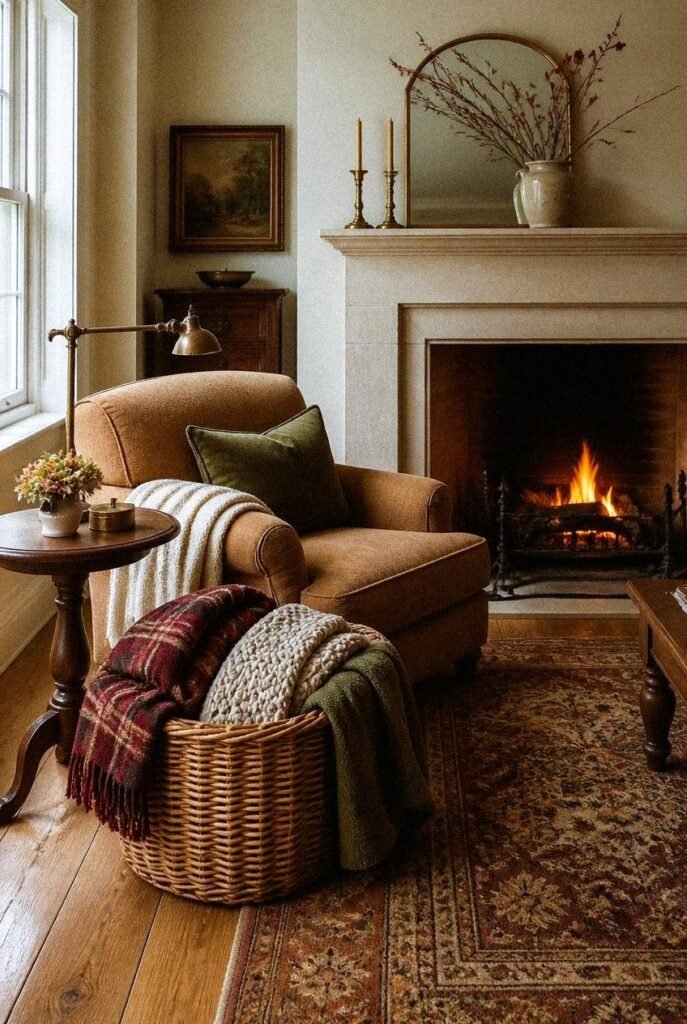
A basket beside an armchair can make the fireplace area feel inviting, especially with checked wool or deep-colored woven throws. Keep all textiles and baskets well away from the firebox, heaters, candles and manufacturer-defined clearances. If the only available spot is near a heat source, choose a different location for the blankets.
Best for: a reading corner near, but safely separated from, the fireplace. Watch for: heat and spark exposure.
For ideas on arranging the rest of the hearth area, see our living room fireplace ideas.
Hidden blanket storage ideas that keep rooms calm
7. Try a coffee table with a concealed compartment
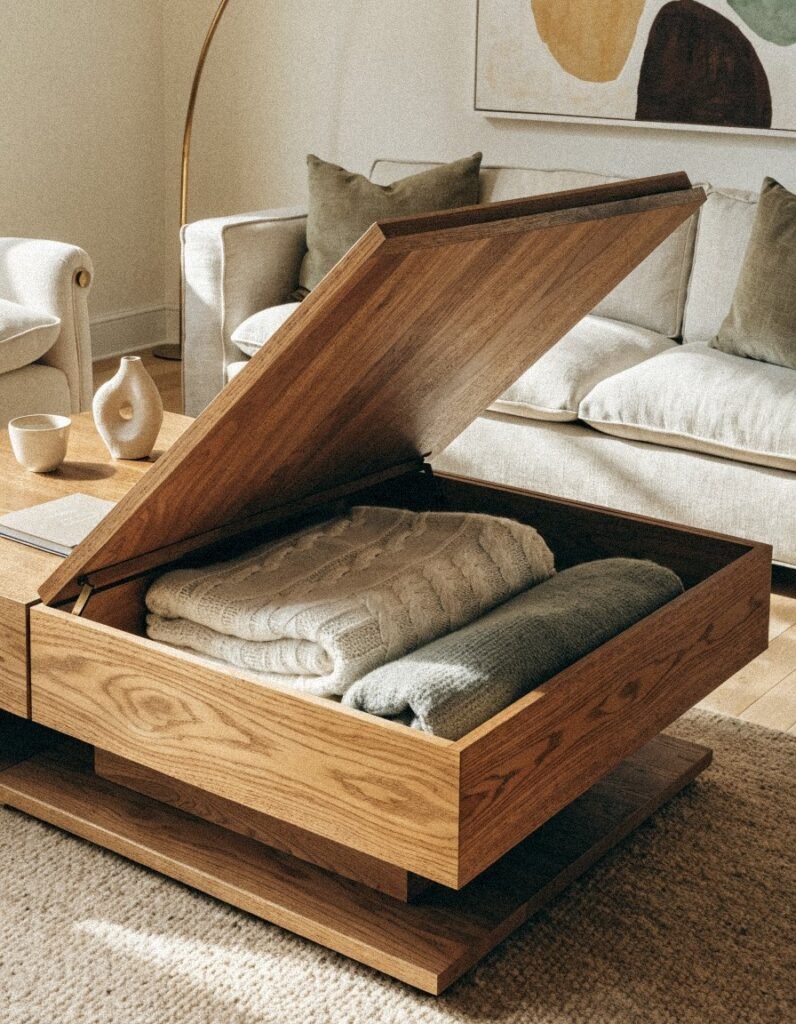
Lift-top and drawer coffee tables can hold smaller folded throws without changing the room’s footprint. A table with divided storage is easier to keep tidy than one deep cavity. Check whether the lid mechanism leaves adequate clearance for your hands and whether the table surface is stable in its raised position.
Best for: families who use throws every evening. Watch for: narrow openings and complicated lifting mechanisms.
Shop this idea: The VASAGLE lift-top coffee table with hidden and open storage on Amazon combines concealed space beneath the top with accessible shelving. A lower open shelf can hold bulkier folded throws; check the hidden compartment’s usable depth before relying on it for blankets.
8. Add a storage bench beneath a window
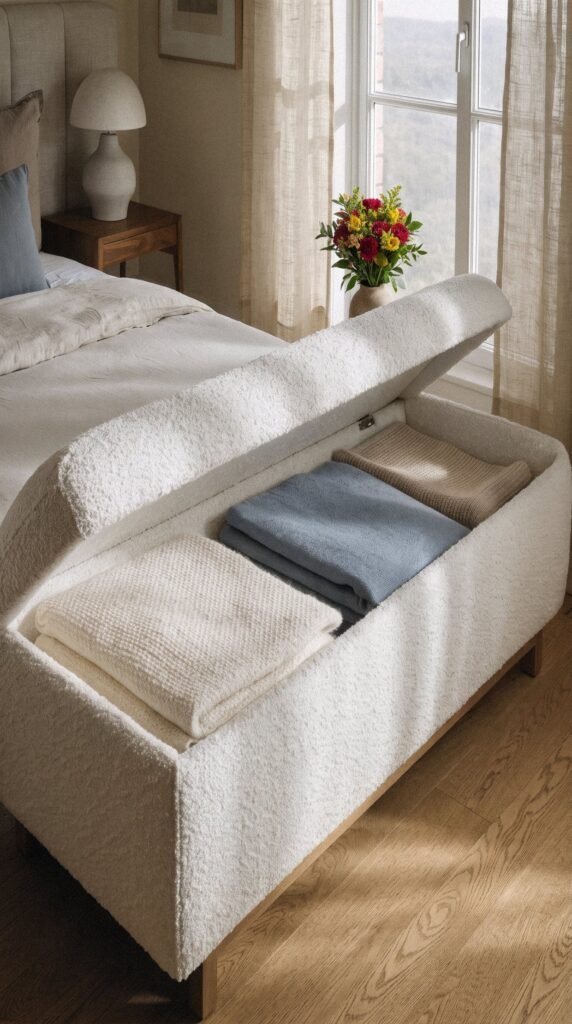
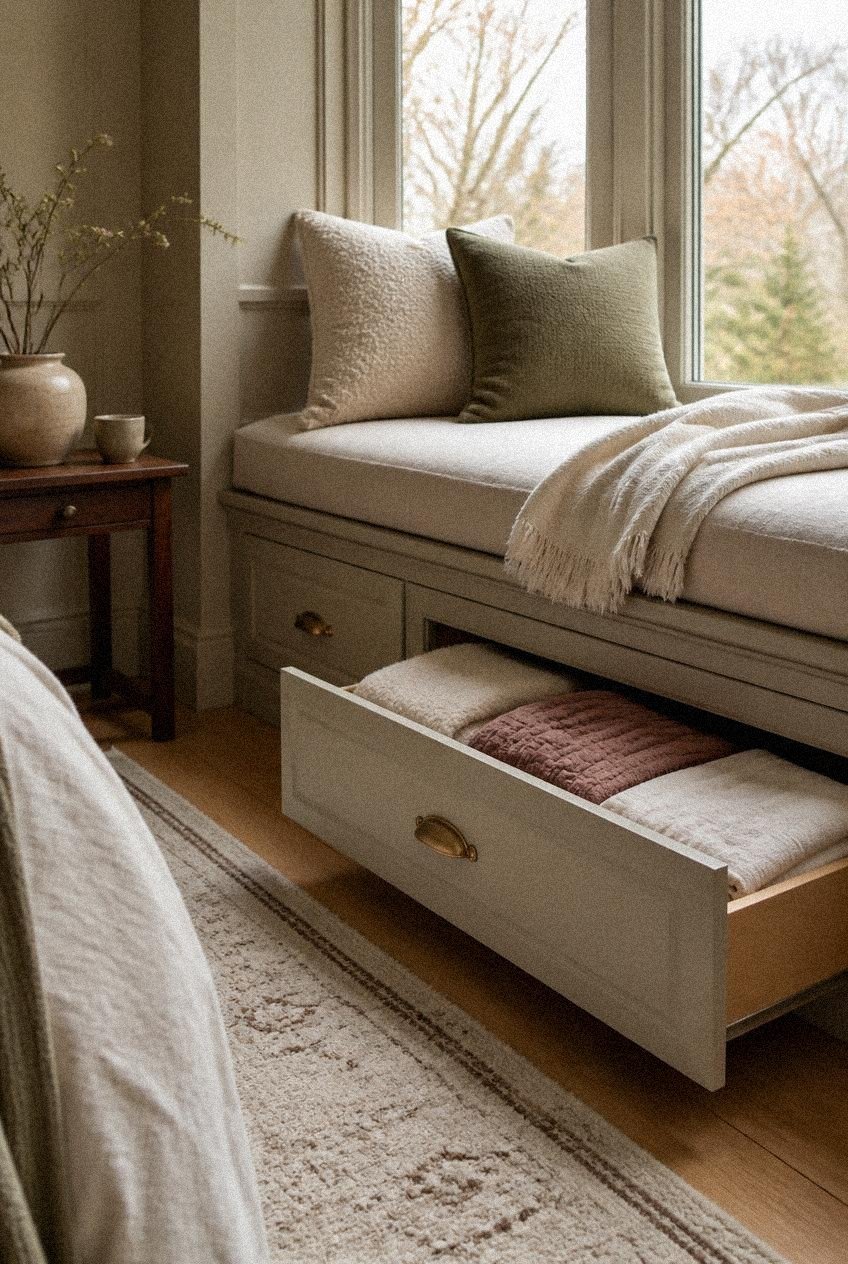
A window bench can turn an awkward recess into a comfortable reading spot. Use a hinged bench or drawers below the seat for spare blankets. Sunlight can fade exposed textiles, so a closed compartment is useful for throws that stay there for months. Make sure the seating structure is designed to support people if it will be used as a seat.
Best for: bedrooms and bay-window nooks. Watch for: blocked ventilation or inaccessible handles.
9. Give under-bed storage a proper job
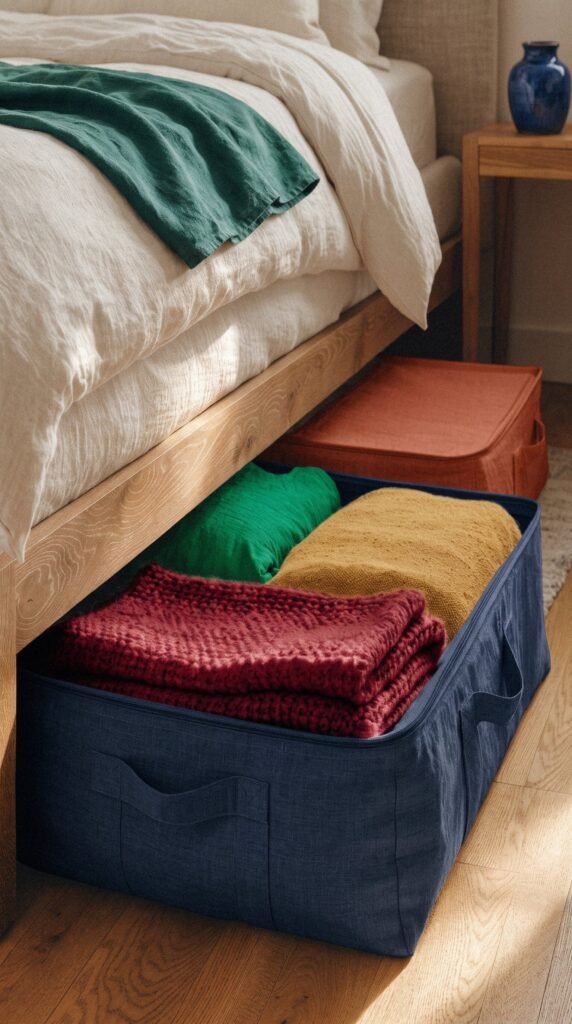
A rolling drawer or low-profile fabric case is practical for bulky guest blankets. Measure the actual clearance below the bed, including any center supports, and leave a little room to slide the container out. Store only completely dry, clean blankets; a breathable cover is preferable for many natural textiles when they are not exposed to dust or pests.
Best for: extra bedding used occasionally. Watch for: moisture, dust and overpacked containers.
10. Dedicate one cabinet shelf to blankets
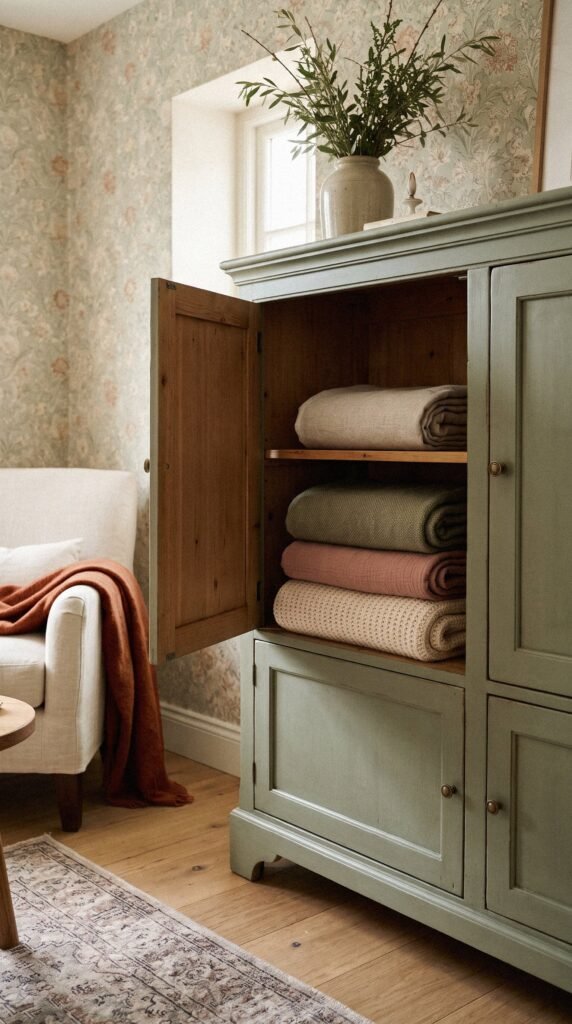
A sideboard or low cabinet offers a surprisingly useful alternative to a linen closet. Roll casual throws for quick access or fold them loosely by fabric type. Reserve the best-ventilated, cleanest shelf for textiles and avoid storing them alongside scented cleaners.
Best for: apartments without a separate linen cupboard. Watch for: lingering cabinet odors.
11. Place a storage chest at the foot of the bed
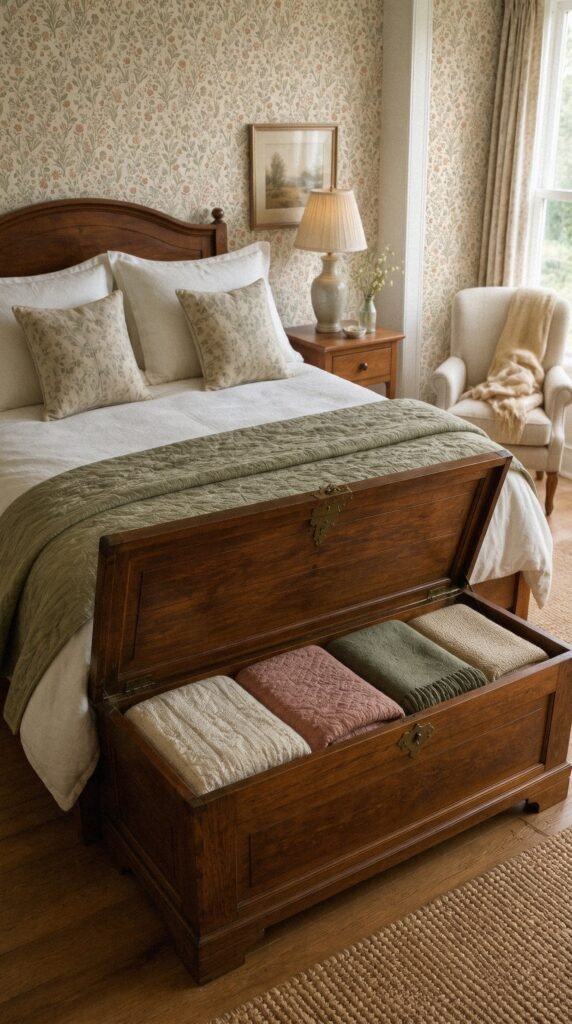
A chest can balance a large bed visually and tuck away a guest duvet or a stack of folded throws. Painted wood works well in cottage bedrooms, while a simple upholstered chest feels quieter in a modern space. Choose a lid with appropriate safety features and never use an old lockable trunk as children’s storage.
Best for: bedrooms with enough clearance at the foot of the bed. Watch for: awkward lid access and pinch points.
Clever blanket storage for small spaces
12. Move storage onto the wall
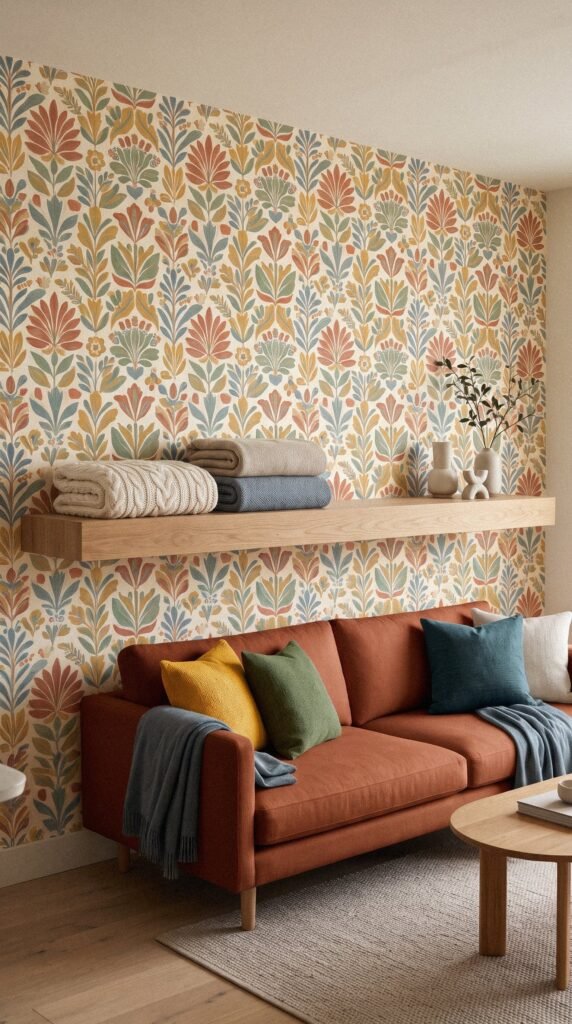
A row of carefully positioned wall hooks or a rail with fabric loops can hold lightweight throws without using floor space. Choose mounts appropriate to your wall and the weight of the textiles. Keep the arrangement away from door swings and avoid draping heavy bedding over a single decorative hook.
Best for: small rooms with clear wall space. Watch for: overloaded anchors.
13. Use a slender corner rack
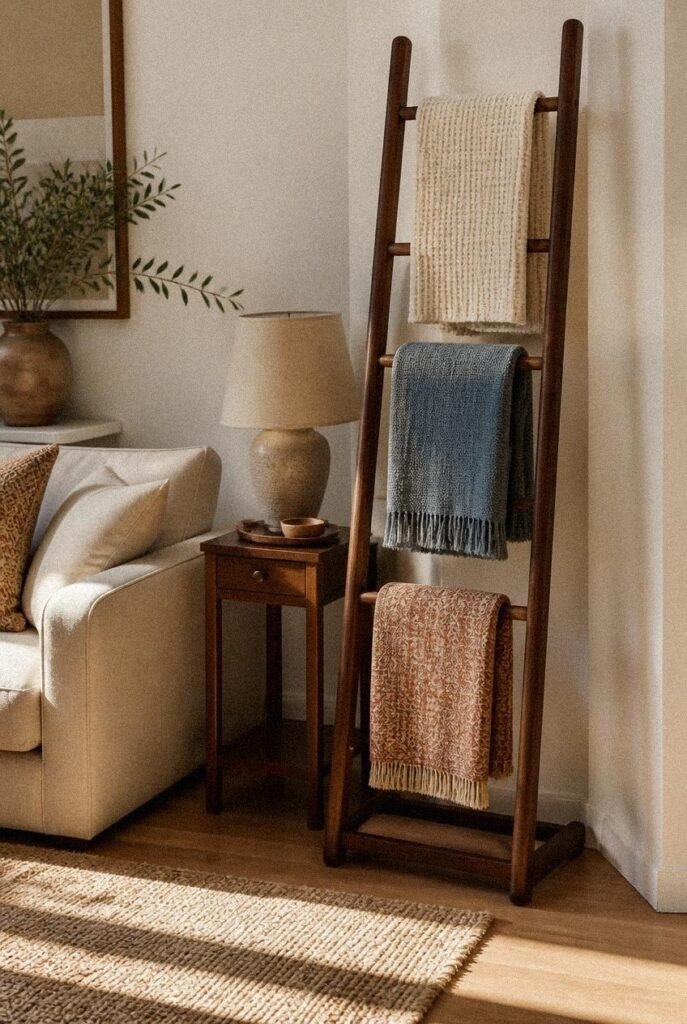
An otherwise empty corner can hold a narrow blanket stand. Choose a rack with a stable base and enough space between bars for bulky folds. In a Japandi-inspired room, pale oak and a limited palette of warm whites can make the rack feel like part of the furniture.
Best for: awkward corners next to reading chairs. Watch for: top-heavy racks.
14. Store throws under a console table
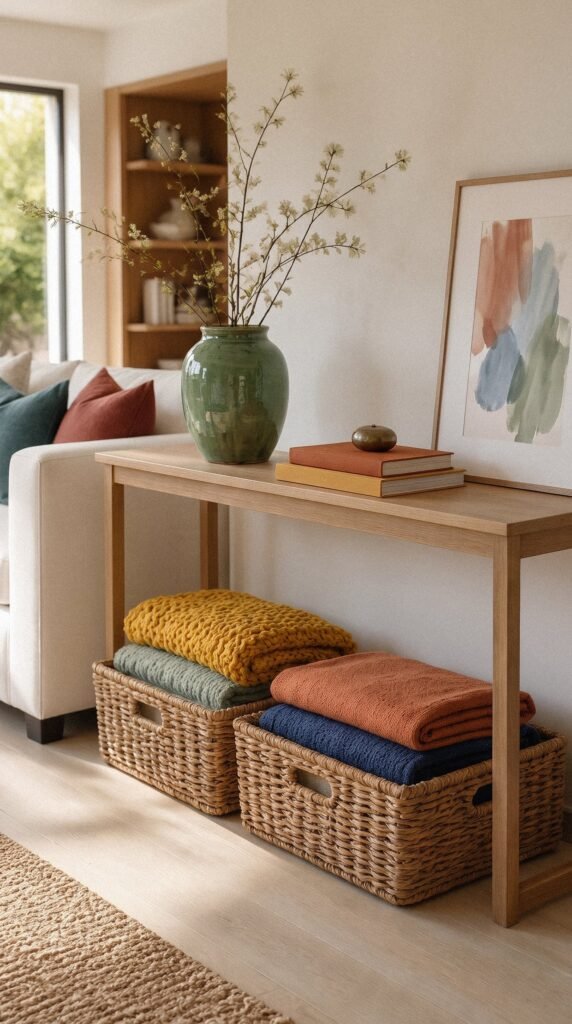
Low baskets under an entry or living-room console are easy to reach and do not require buying another large piece of furniture. Leave enough clearance above each basket to lift the throws out without scraping the shelf. Matching baskets create a tidy look, although their dimensions matter more than their color.
Best for: narrow rooms and multifunctional spaces. Watch for: baskets that cannot slide out.
You can borrow more low-footprint organizing tricks from our small living room storage ideas.
15. Pick a side table with room inside
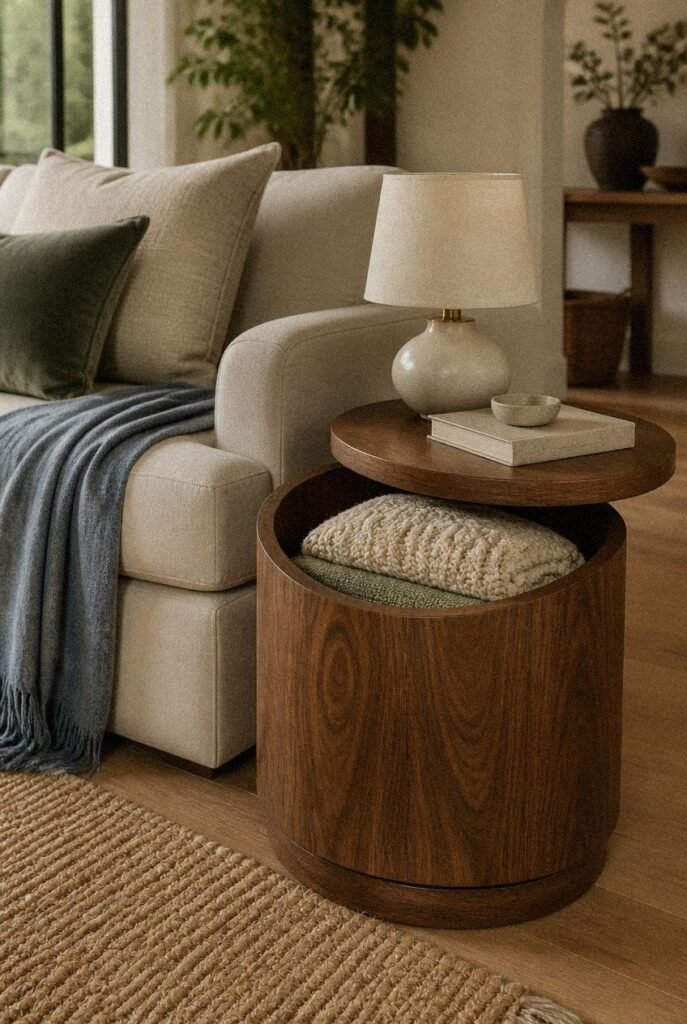
Drum-shaped storage tables and end tables with doors do double duty next to a sofa. They are particularly useful when a regular basket would crowd the floor. Bring a folded throw’s dimensions with you when shopping: a beautiful side table is of little use if its opening cannot accommodate the blanket.
Best for: one or two medium throws. Watch for: tiny interior openings.
16. Organize a small linen closet by frequency of use
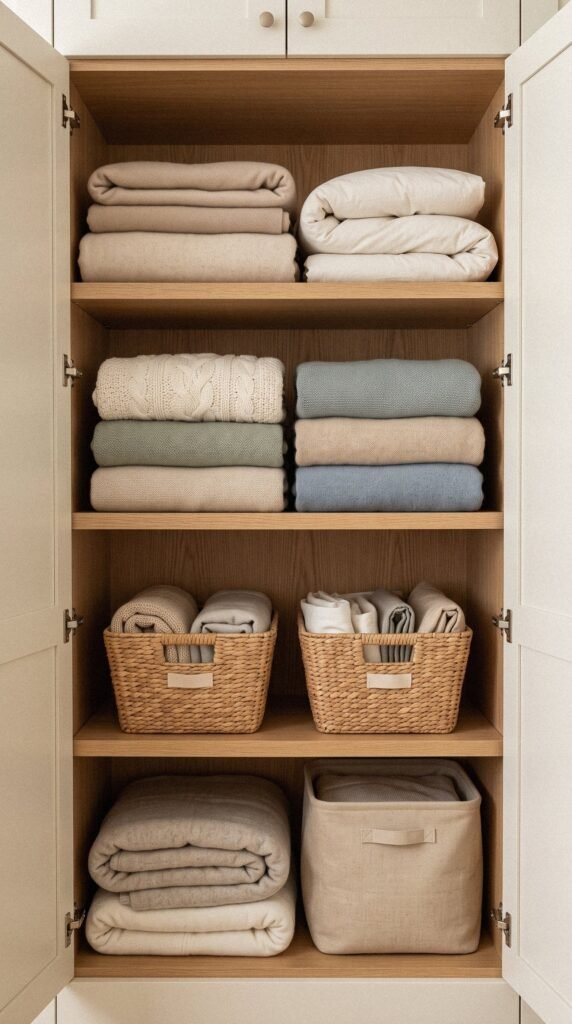
Give everyday blankets an easy-to-reach shelf and place guest bedding higher up. Fold each blanket into a stable rectangle rather than forcing tall stacks that topple when one piece is removed. Avoid compressing delicate lofted or down-filled bedding for long periods; follow its care label and storage guidance.
Best for: homes with a small existing closet. Watch for: overstuffing and poor airflow.
Decorative blanket storage worth showing off
17. Make a curated open-shelf display

A few neatly folded throws can become part of a bookshelf composition. Mix texture instead of piling on colors: a ribbed cream knit beside a flat-weave indigo blanket has enough contrast to read clearly. Leave some empty shelf space so you can remove a throw without disturbing the whole arrangement.
Best for: living rooms with existing shelving. Watch for: direct sunlight on delicate colors.
18. Group baskets in different shapes
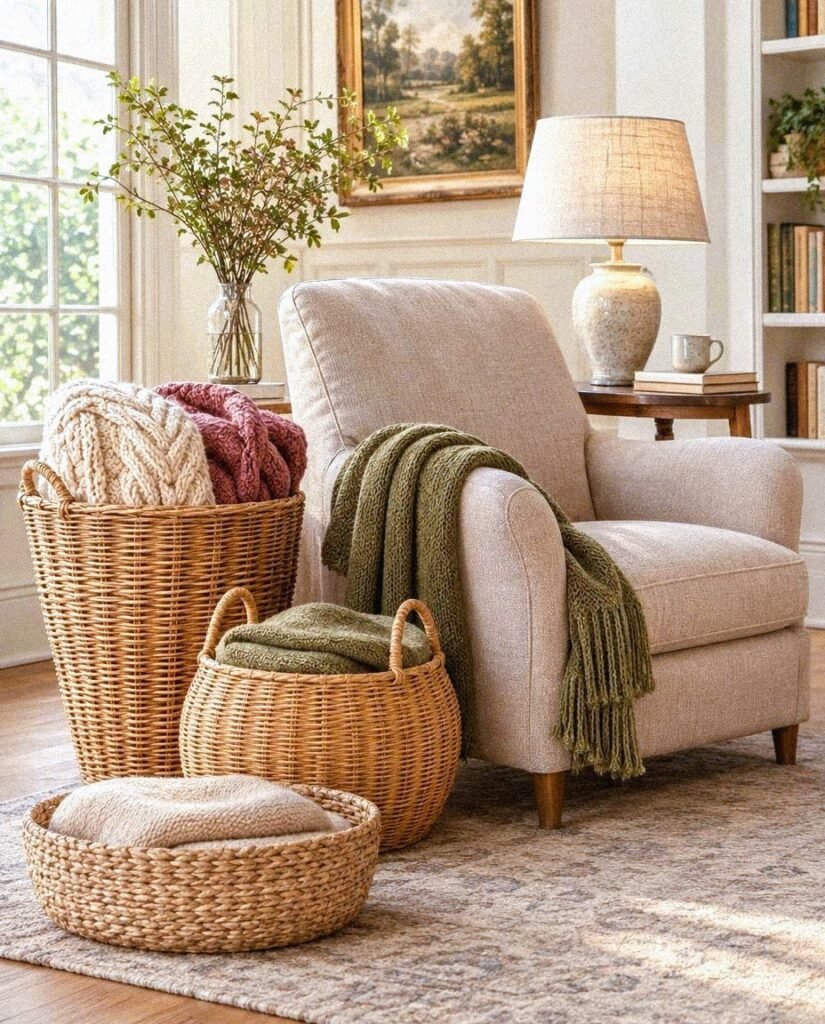
Two or three baskets look more considered when their heights vary and their materials share a tone. Try one shallow basket for the throw used daily and a taller covered basket for spares. This makes a useful decorative grouping near a sofa without arranging blankets on every seat.
Best for: larger living rooms with space beside furniture. Watch for: creating a tripping hazard.
19. Give a vintage armoire a second life

An old wardrobe with attractive doors can hold more bedding than most decorative baskets. Line rough shelves, clean the interior thoroughly and let it air out before bringing in textiles. If the piece is tall or heavy, anchor it correctly. For a maximalist room, a painted armoire can become the most interesting furniture in the space.
Best for: larger blanket collections. Watch for: mildew odors, unstable furniture and rough interiors.
DIY blanket storage ideas with character
20. Build a simple wooden blanket ladder
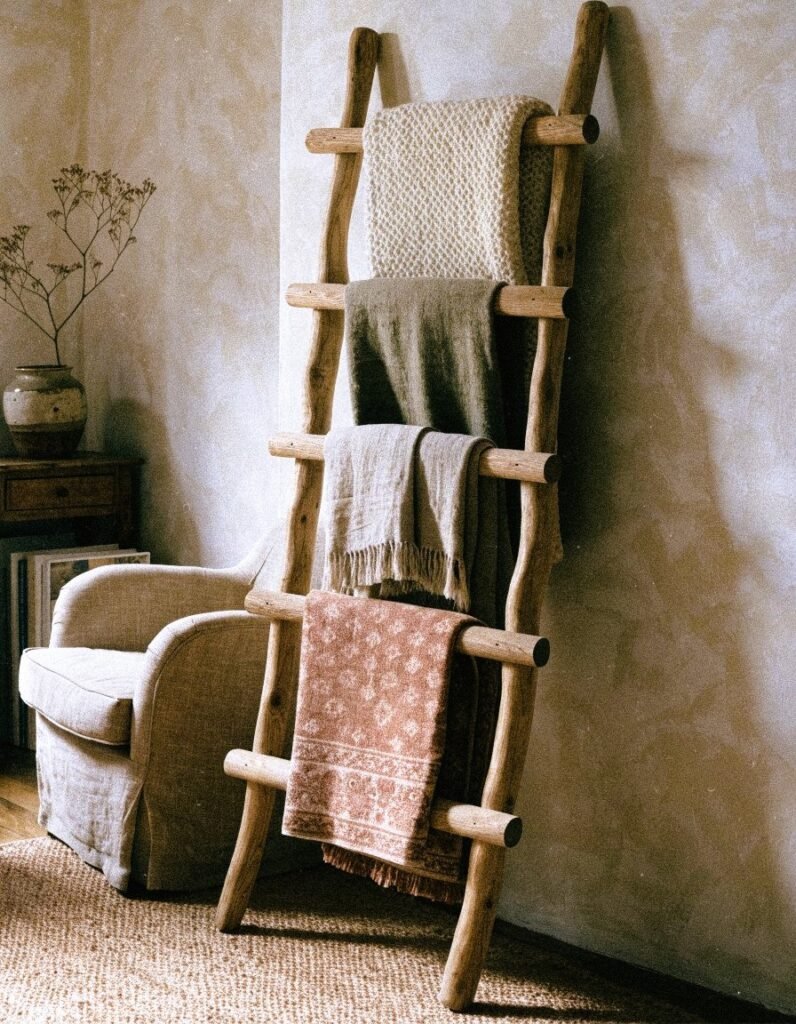
A basic blanket ladder can be assembled with two side rails and evenly spaced rungs. Sand all surfaces thoroughly, round edges that may touch fabric, and use a finish appropriate for indoor furniture. This is a decorative textile holder, not a climbing ladder. Secure or position it to avoid tipping and follow suitable woodworking plans for joinery and fixings.
Best for: a custom color, height or finish. Watch for: exposed screws and snagging wood grain.
21. Turn a vintage crate into a rolling blanket bin
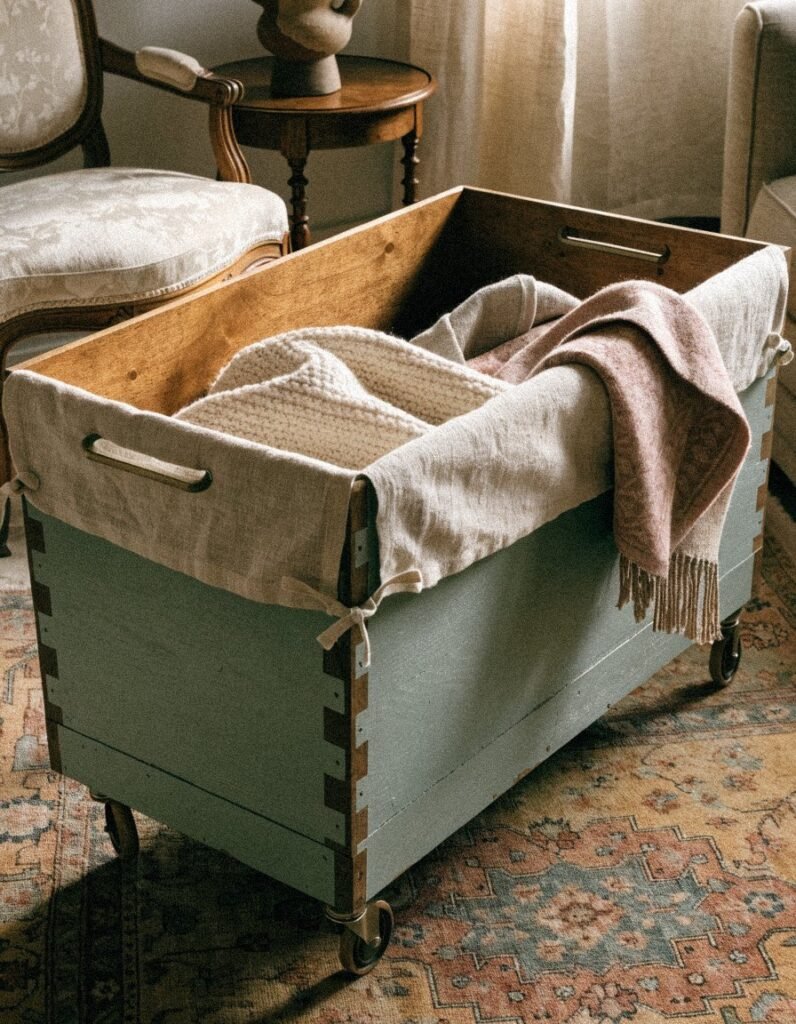
A reclaimed wooden crate can work as mobile blanket storage with smooth interior surfaces and suitable casters. Sand rough patches, inspect for protruding nails and add a washable liner before placing throws inside. Locking casters help it stay put beside the sofa. Avoid crates with unknown chemical contamination or strong persistent odors.
Best for: casual farmhouse or eclectic rooms. Watch for: splinters and wheels that roll unexpectedly.
How to choose blanket storage without buying the wrong size
First, distinguish everyday throws from seasonal bedding. Everyday throws need easy access, ideally within a few steps of where you sit. Spare duvets can go inside a closet, chest or under-bed container.
Measure the usable inside space. A container’s exterior dimensions include its frame, upholstery and wall thickness. Check its opening as well as its interior: a large compartment can still have a narrow entrance. For benches and coffee tables, make sure a lid or drawer can open in the room without hitting other furniture.
Match materials to use. Soft knitted blankets can catch on sharp wicker or unfinished wood. A washable basket liner helps; smooth shelves work for delicate fabrics. If you are storing down-filled, antique or fragile textiles for a long time, prioritize the care instructions and suitable storage conditions over an aggressive space-saving fold.
How to store blankets so they stay fresh
Put away blankets only after they are clean and fully dry. Choose a cool, dry location without major temperature swings. The Smithsonian’s guidance for storing antique textiles stresses clean, cool, dry and dark conditions, while the Textile Museum notes the risks of attic and basement humidity changes. Their conservation guidance is particularly useful for heirloom blankets; ordinary household throws should also follow their own care labels.
If a blanket comes out smelling damp, investigate the storage space before simply adding fragrance. Keep clean textiles away from household cleaners, damp walls and direct heat. For valuable wool or inherited quilts, consider acid-free conservation materials and professional advice rather than an improvised plastic or wooden container.
Frequently asked questions about blanket storage
What is the best way to store blankets in a living room?
For throws used daily, a large basket or storage ottoman beside the sofa is usually the easiest option. A blanket ladder works when you want to display attractive textiles. Choose a closed cabinet or chest for extra blankets you rarely need.
How do you store blankets without a closet?
Use furniture that already earns its place in the room: a storage bench, ottoman, coffee table or under-bed drawer. A narrow console with baskets below can also create storage without adding a bulky cabinet.
Should blankets be stored in plastic bags?
For long-term storage, avoid trapping moisture and check the blanket’s fiber and care instructions. Breathable, clean storage in a dry room is often preferable for delicate textiles. A tightly sealed bag is not a substitute for ensuring the blanket is completely dry.
How do you make a blanket basket look styled?
Use one or two complementary textures and let a single folded or loosely rolled throw show above the rim. A basket that is crammed full tends to look like overflow storage, while a basket that accommodates the blankets comfortably feels intentional.
Can you keep blankets near a fireplace?
Only at a safe distance from the fireplace and other sources of heat or sparks, following the appliance manufacturer’s clearances. Do not put baskets, blankets or wood storage furniture within required clearance zones.
A final styling note
The most useful blanket storage idea is one you will keep using. If everyone drops throws onto the sofa, put an easy-access basket beside it. If you want a quieter-looking room, choose an ottoman or cabinet with a large, accessible compartment. And if you have a collection of colorful or patterned textiles, display a few intentionally and rotate the rest.
For more ways to build a collected room without visual overload, explore our guide to maximalist interior design.
Editorial note: This guide provides decorating and storage ideas, not hands-on product reviews. Furniture dimensions, lid mechanisms and load ratings vary by manufacturer; check specifications and safety instructions before buying or building.