15 Elegant Christmas Tree Ideas for 2026
There is something especially satisfying about decorating a Christmas tree when you stop thinking of it as a collection of ornaments and start treating it as part of the room.
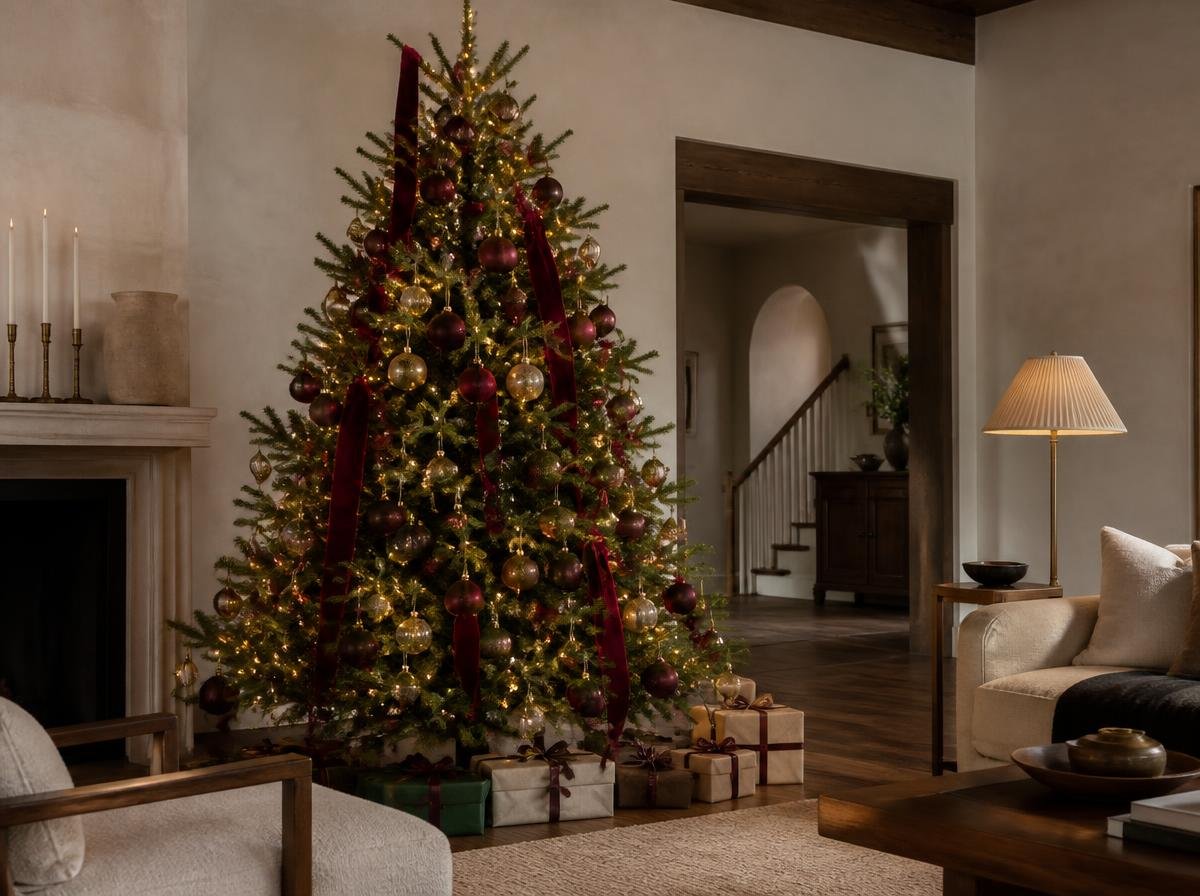
The most beautiful Christmas tree ideas for 2026 feel considered rather than overly coordinated. Rich ribbon, warm lighting, glass ornaments, natural textures and a few unexpected details can give even a simple tree depth and personality.
And you do not need to replace everything you already own. Sometimes the biggest change comes from introducing one stronger color, changing the ribbon, grouping ornaments differently or mixing newer pieces with decorations that have been collected over time.
Whether your style leans traditional, warm and neutral, vintage or slightly moody, these Christmas tree decorating ideas offer plenty of ways to create a tree that feels festive without looking generic.
Christmas Tree Ideas at a Glance
| Style | Best Colors | Key Detail |
|---|---|---|
| Elegant | Burgundy, forest green, antique gold | Velvet ribbon and glass ornaments |
| Warm neutral | Ivory, taupe, champagne | Linen, wood and matte finishes |
| Vintage-inspired | Wine red, aged gold, cream | Collected ornaments and warm lights |
| Moody | Plum, navy, chocolate, brass | Deep color and layered lighting |
| Natural | Green, brown, amber, cream | Pinecones, wood and woven textures |
Disclosure: As an Amazon Associate, GlowNestBlog earns from qualifying purchases.
Before You Start Decorating
- Choose one leading color and one supporting finish before buying anything new.
- Check your existing ornaments first so you can build around pieces you already love.
- Mix at least two ornament sizes to give the tree more depth.
- Use warm white lights for a softer, more inviting glow.
- Leave some greenery visible instead of filling every branch.
1. Use Velvet Ribbon as Part of the Tree
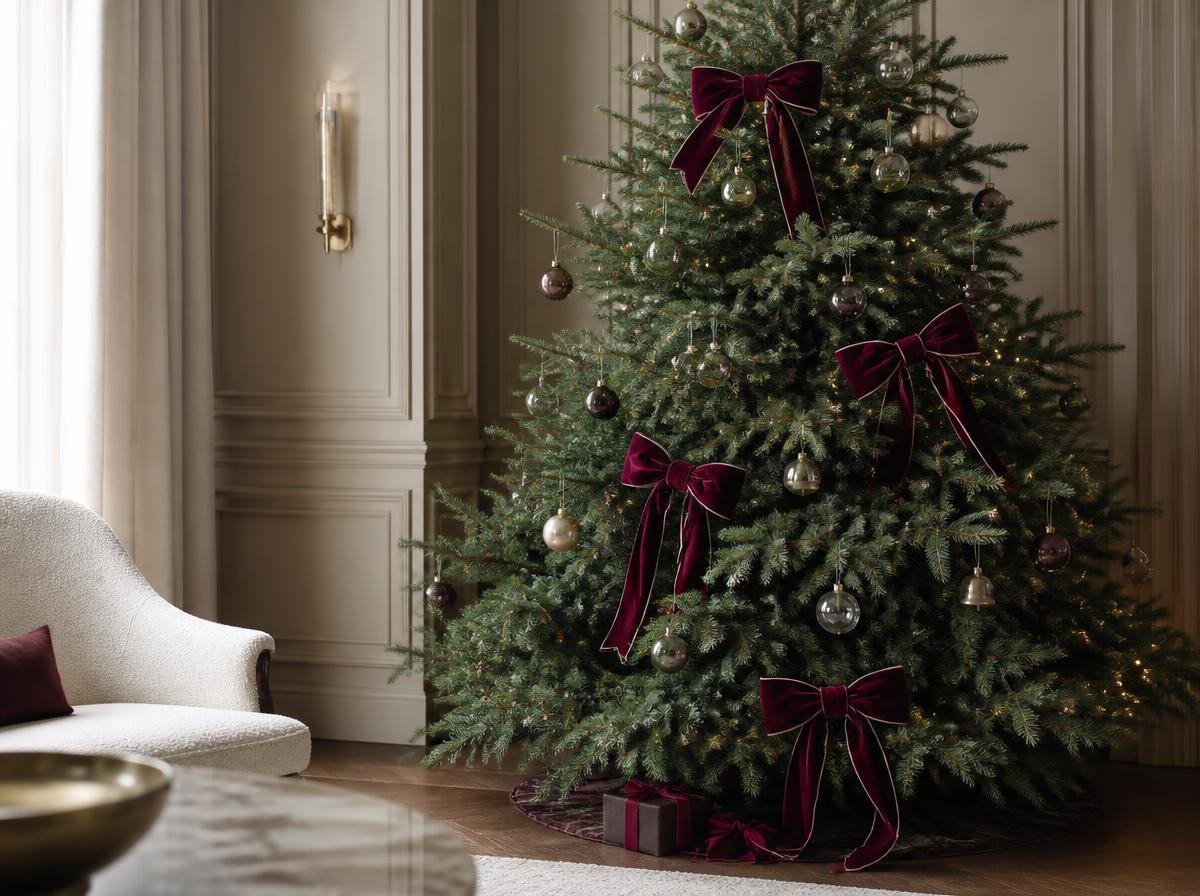
Ribbon can completely change the character of a Christmas tree, especially when it is treated as more than filler. Instead of wrapping narrow ribbon tightly around the tree, try wider velvet ribbon placed in loose vertical folds. Let some sections disappear into the branches and reappear lower down so the fabric feels naturally woven through the tree.
Burgundy, forest green, chocolate brown, antique gold and muted navy all work beautifully against deep green branches. Another option is to skip cascading ribbon altogether and use several generously sized bows. Place them asymmetrically rather than at identical intervals.
Styling tip: Choose one main ribbon color and repeat it elsewhere in the room through gift wrapping, cushions or a small mantel detail. This helps the Christmas tree feel connected to the rest of the space.
Amazon pick: If you want that rich, tailored look without using dozens of different trims, this 1.5-inch burgundy velvet ribbon is a good match for loose vertical folds, oversized bows and coordinated gift wrapping.
2. Try a Burgundy and Deep Red Christmas Tree
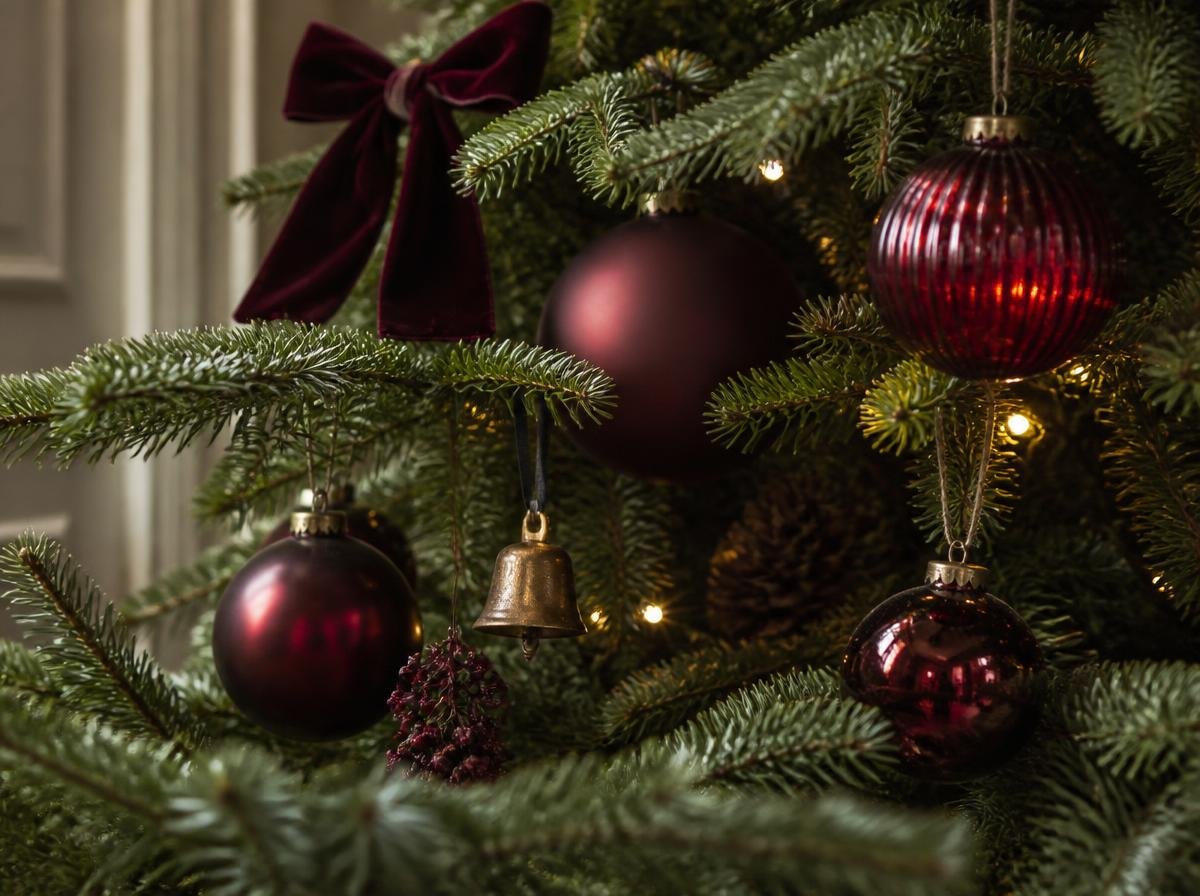
Bright red will always belong at Christmas, but deeper shades can make the palette feel richer. Think burgundy, wine, oxblood and dark cherry mixed with forest green, warm brass and creamy white.
Start with matte burgundy ornaments, then add a smaller number of shiny or translucent pieces so the tree does not feel flat. Dark red velvet bows work especially well because the soft texture catches the light differently from glass baubles. A little antique gold keeps the scheme warm without making it overly glamorous.
For a more relaxed look, add a few dried berries, dark pinecones or small wooden ornaments between the more polished decorations. Leave some visible greenery so the deeper colors have room to stand out.
Amazon pick: For texture rather than just shine, these Liliful burgundy velvet Christmas ball ornaments bring a soft flocked finish that works especially well with brass, cream and dark green.
3. Create an Old-World European Christmas Tree
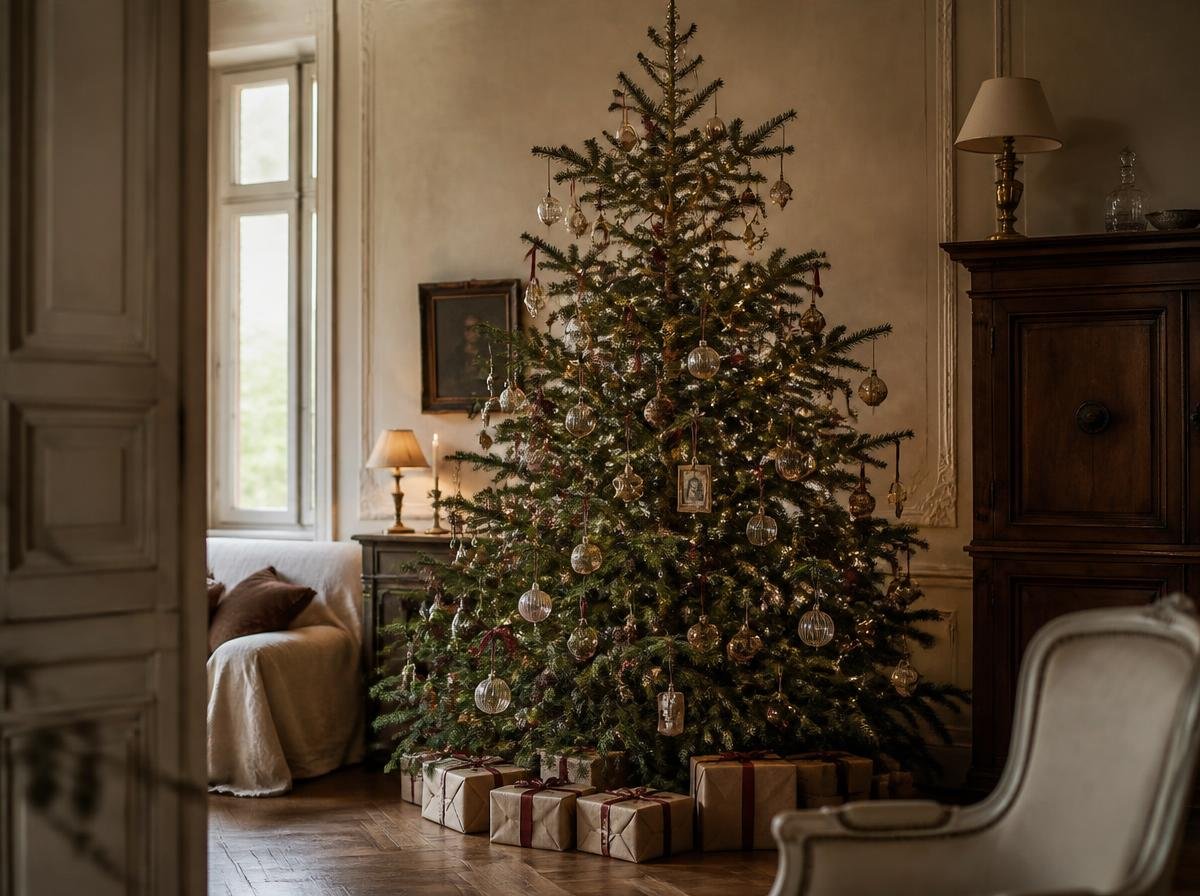
For a Christmas tree that feels as though it has evolved over many years, avoid buying every decoration from the same collection. Mix glass baubles, bells, ribbons, small framed ornaments, paper details and a few pieces that look handmade or inherited.
The color palette can remain restrained: dark green, aged gold, wine red, brown and warm cream work particularly well together. Instead of perfect symmetry, place ornaments according to shape and visual weight. A larger ornament might sit lower on the tree, while a delicate glass piece can hang closer to the tips of the branches.
Finish with warm white lights rather than cool blue-white bulbs. This style works especially well in rooms with wood furniture, antique brass, linen, bookshelves or traditional architectural details.
Amazon pick: A few substantial bells can create that collected old-world detail without overdecorating the tree. These Carfar rustic metal harmony bells have the aged, handcrafted look that suits this style.
4. Decorate with Warm Neutrals Without Making the Tree Bland
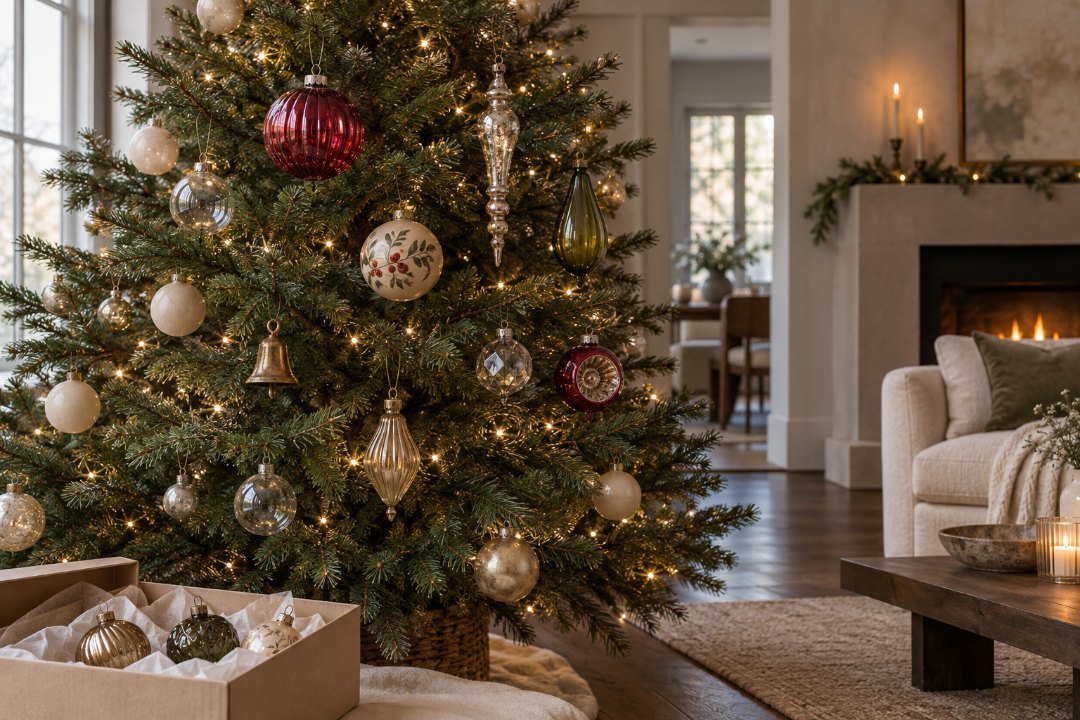
A neutral Christmas tree does not need to mean beige ornaments from top to bottom. The secret is texture.
Combine warm ivory, oatmeal, taupe, soft brown and muted champagne, but vary the materials. Use linen ribbon beside glass ornaments, matte ceramic decorations, small wooden pieces and lightly aged metallic accents. Natural pinecones can provide contrast without introducing another strong color.
If your room is already very pale, keep enough green visible on the tree. The darker branches prevent the neutral decorations from disappearing into the surrounding interior.
5. Bring Back Vintage-Inspired Ornaments
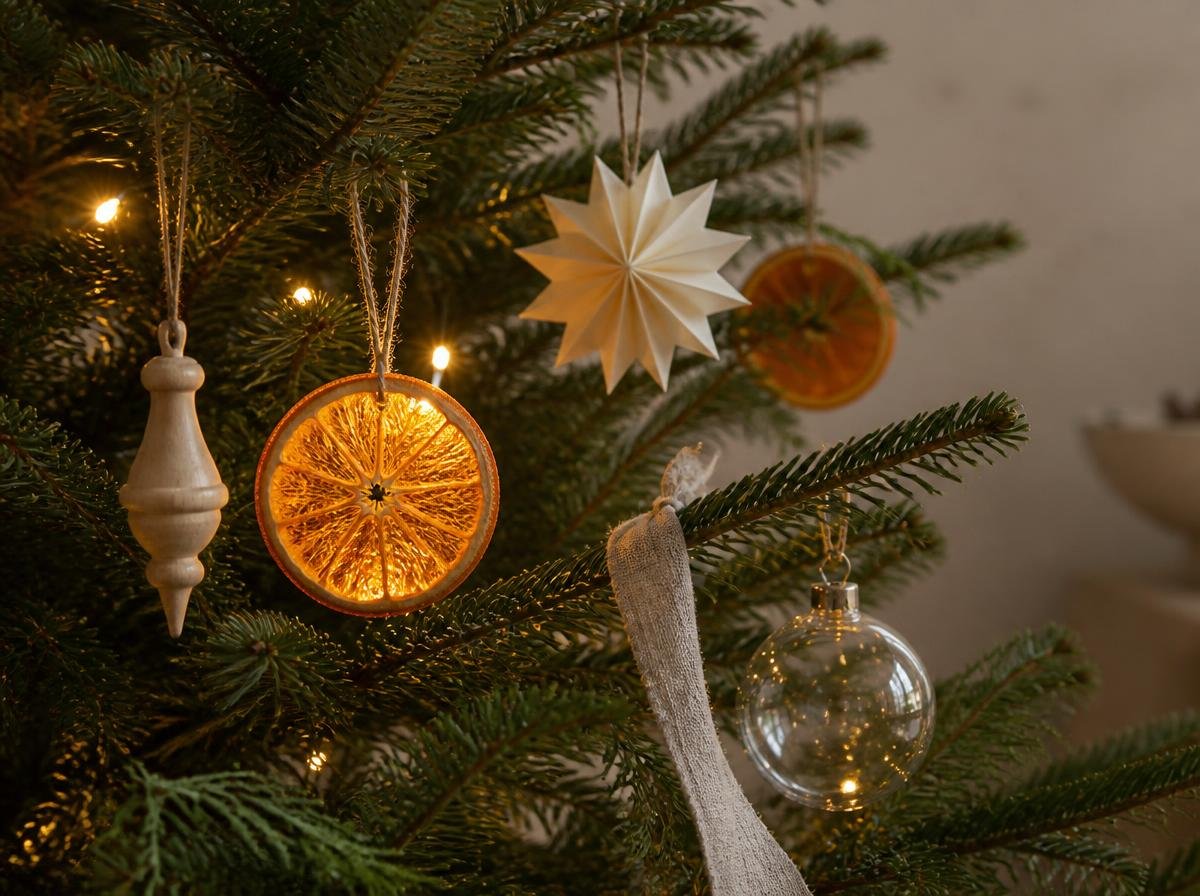
A tree filled entirely with identical baubles can look polished, but a tree with a few unusual pieces is often more memorable. Vintage-inspired ornaments are an easy way to create that collected feeling.
Look for ribbed glass, mercury-style finishes, painted details, traditional shapes, small bells and ornaments that resemble pieces you might have found in an old family Christmas box. You do not need dozens. Even six or eight distinctive decorations mixed into your existing collection can change the overall look.
Keep the rest of the palette relatively controlled so that the individual pieces can be noticed. This approach is also ideal if you like adding one or two special ornaments each year instead of replacing an entire decorating scheme.
6. Use Natural Materials for a Softer Christmas Tree
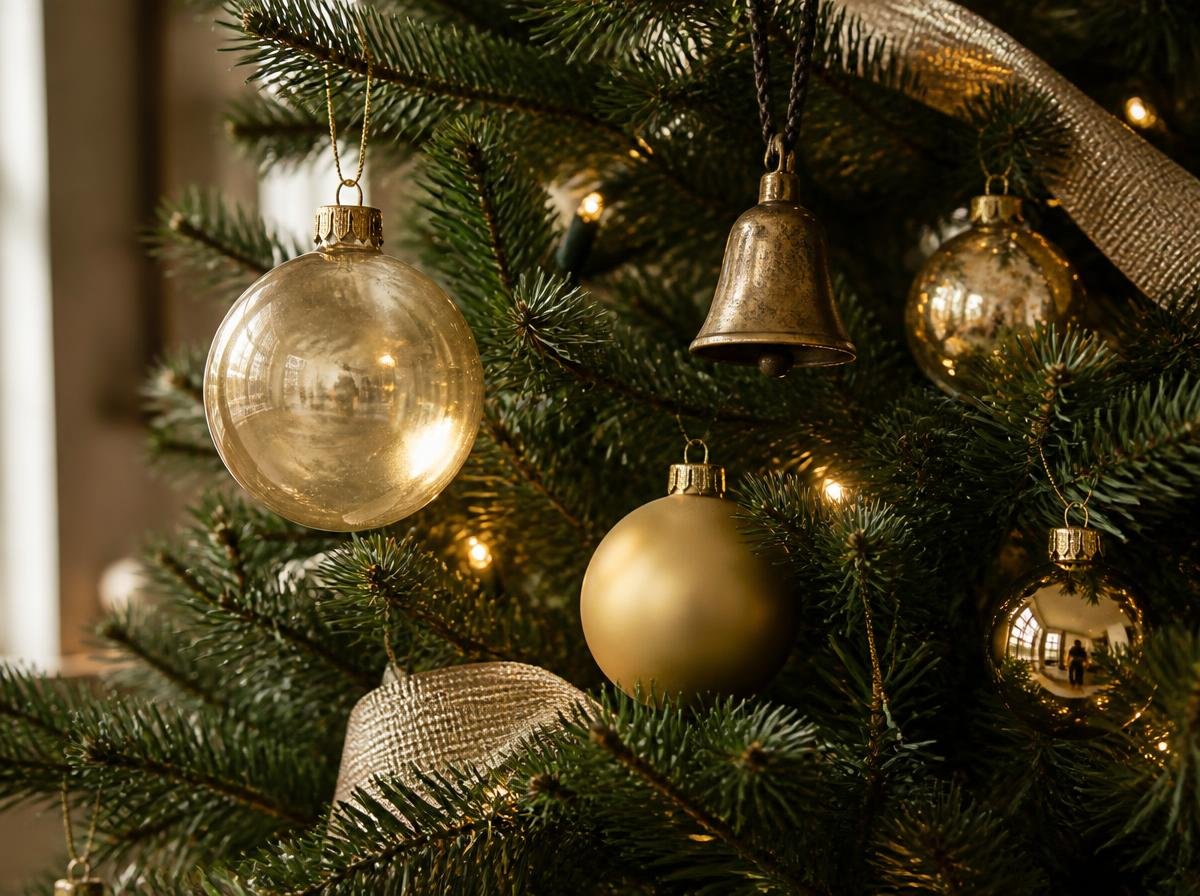
Natural Christmas tree decor works particularly well when you want the room to feel festive but calm. Mix wooden ornaments, pinecones, dried citrus, paper decorations, small woven stars and natural ribbon with simple glass baubles.
Warm white lights are essential here. They bring out the texture of wood and dried materials and keep the tree from feeling too rustic. You can also tuck short branches of eucalyptus, cedar or other greenery between the existing branches to subtly vary the silhouette.
For a sophisticated version of this look, avoid using every natural element at once. Choose two or three and repeat them consistently.
7. Go Rich with Gold and Champagne
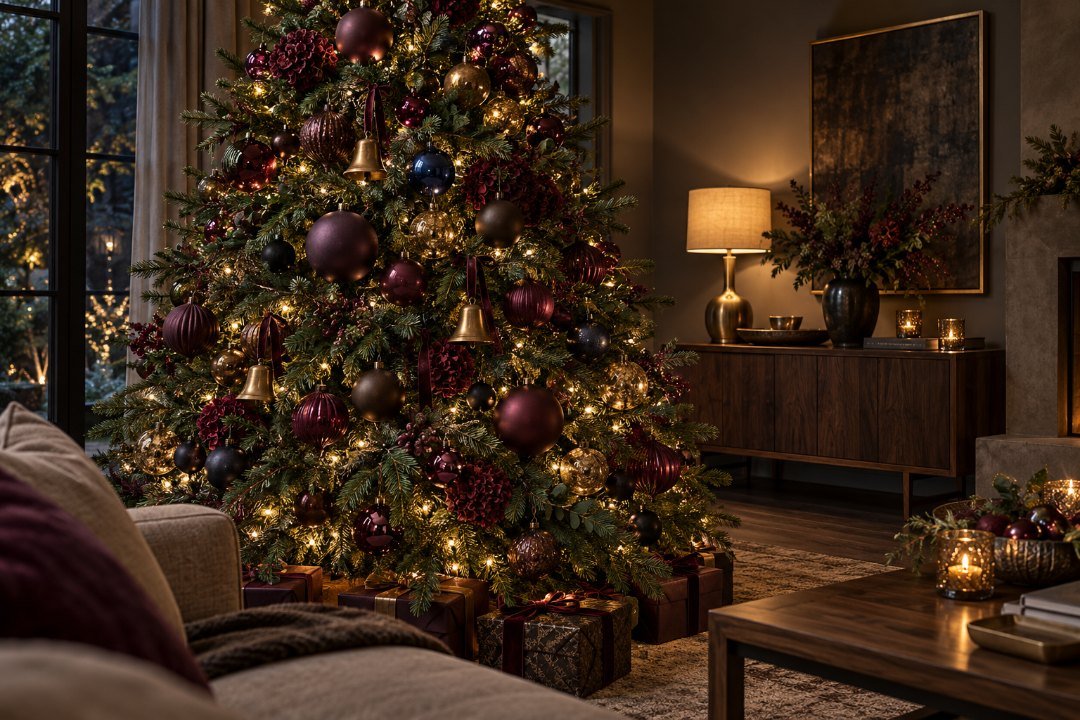
Gold Christmas trees can easily become overly shiny, so use several finishes rather than one metallic tone. Combine aged brass, soft champagne, matte gold and a smaller amount of polished gold.
Glass ornaments with a slightly translucent or antiqued surface work beautifully because they reflect the tree lights without looking overly bright. Pair the metallics with warm ivory ribbon or deep green velvet to soften the effect.
If your tree has a large number of ornaments, keep the gift wrap underneath relatively simple. Kraft paper, cream paper or dark green wrapping with beautiful ribbon can make the entire arrangement feel more intentional.
8. Try Moody Christmas Tree Decor
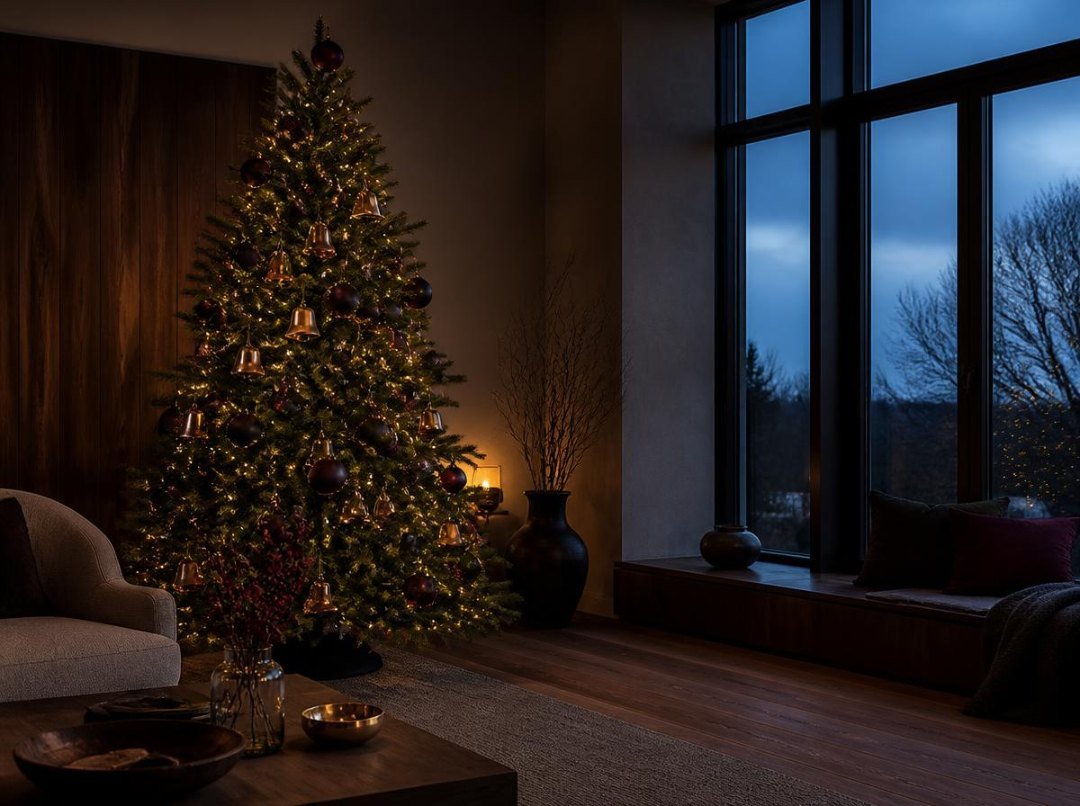
Christmas does not have to be bright to feel festive. A moody tree can look beautiful in a room with darker paint colors, walnut furniture or warm evening lighting.
Start with forest green branches and add deep plum, burgundy, chocolate, navy or even small touches of black. Then introduce warm metallic details through brass bells, antique-gold ornaments or softly reflective glass.
The lighting makes all the difference. Use plenty of tiny warm white lights and position some deeper inside the branches. The tree should glow rather than sparkle aggressively.
Amazon pick: For a warmer glow, the TW SHINE warm white Christmas string lights use a soft warm-white tone that works well with burgundy, brass and darker ornaments.
9. Revisit Classic Red and Green
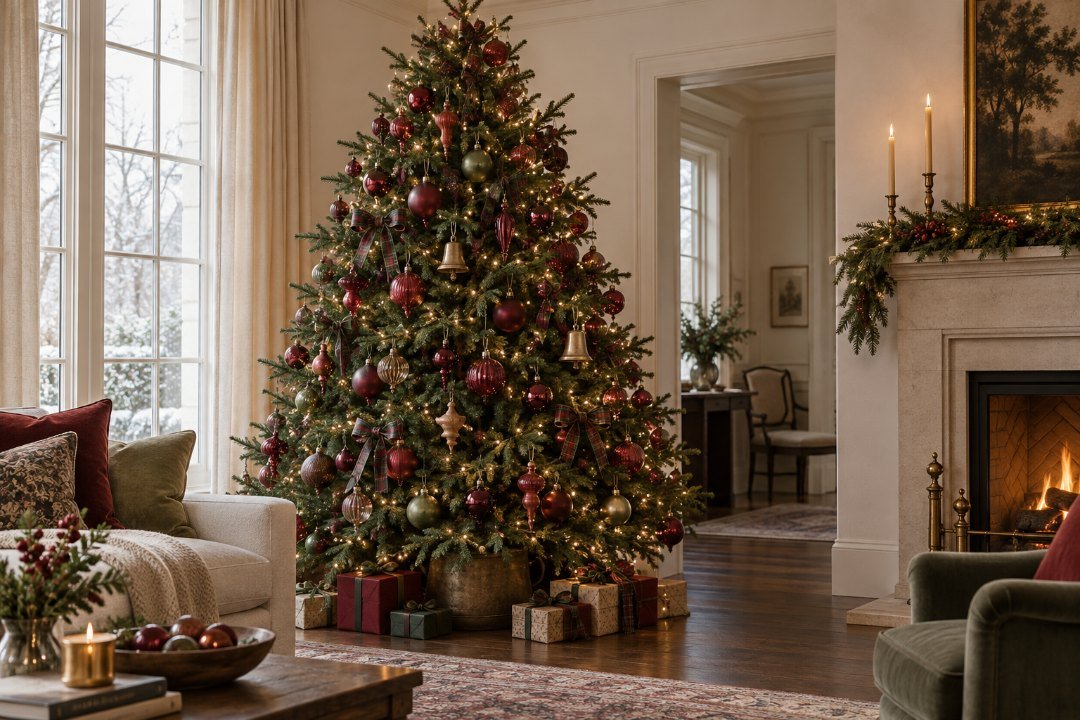
Traditional Christmas colors become interesting again when you stop using the brightest version of every shade. Try combining cranberry red, burgundy and classic red with several greens such as forest, pine and muted olive.
Add warm brass or gold rather than bright silver. Tartan ribbon can work beautifully, but use it selectively. A few bows or ribbon sections are usually enough.
Vintage bells, wooden ornaments and classic glass baubles make the tree feel nostalgic without turning it into a themed display.
10. Make Blue and Silver Feel Warmer
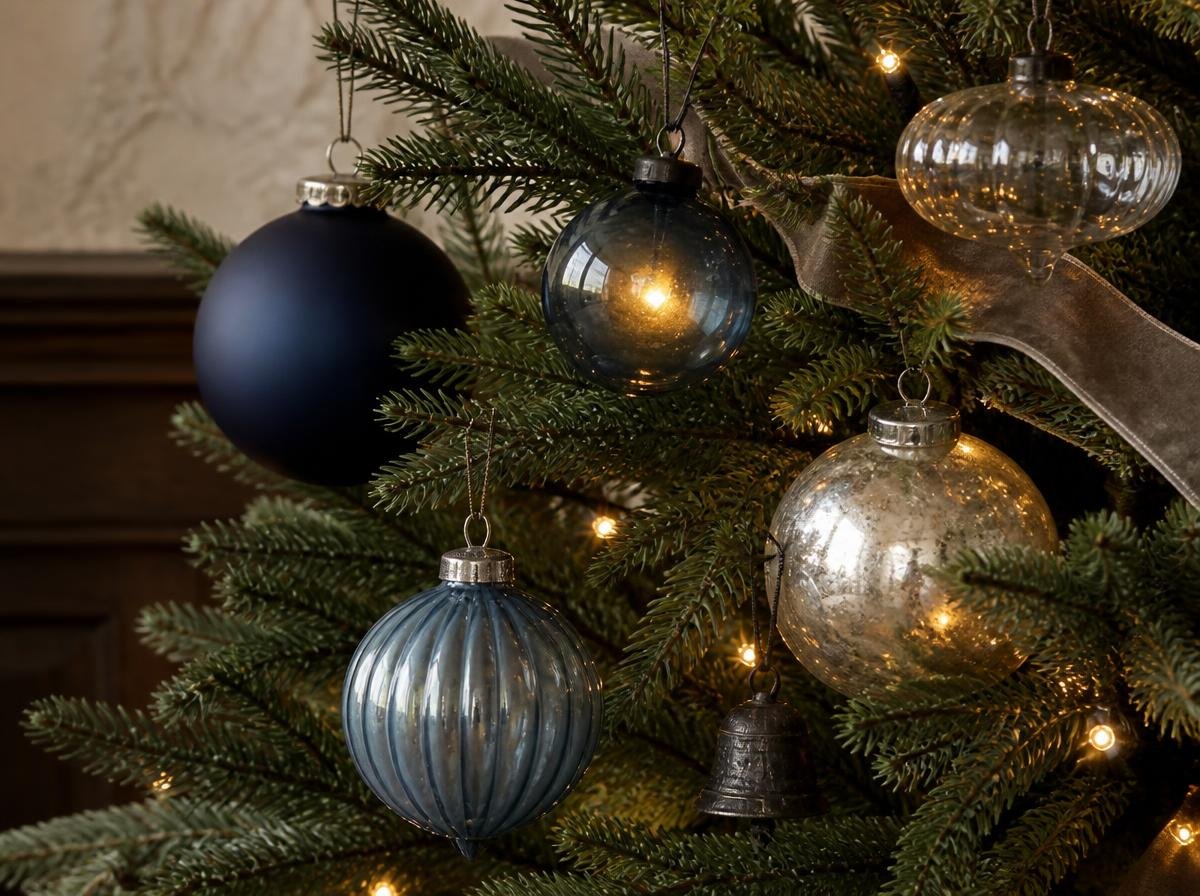
Blue and silver Christmas trees are often associated with icy decorating schemes, but they can also feel sophisticated and inviting. The key is choosing deeper blues.
Use navy, muted indigo or smoky blue instead of only pale icy tones. Mix them with antiqued silver, soft pewter and clear glass. Warm white lights will prevent the palette from feeling cold.
You can also add a small amount of cream or taupe through ribbon or textile ornaments. If your room already contains blue upholstery, artwork or decorative objects, this type of tree can feel especially cohesive.
11. Keep a Minimalist Christmas Tree Interesting
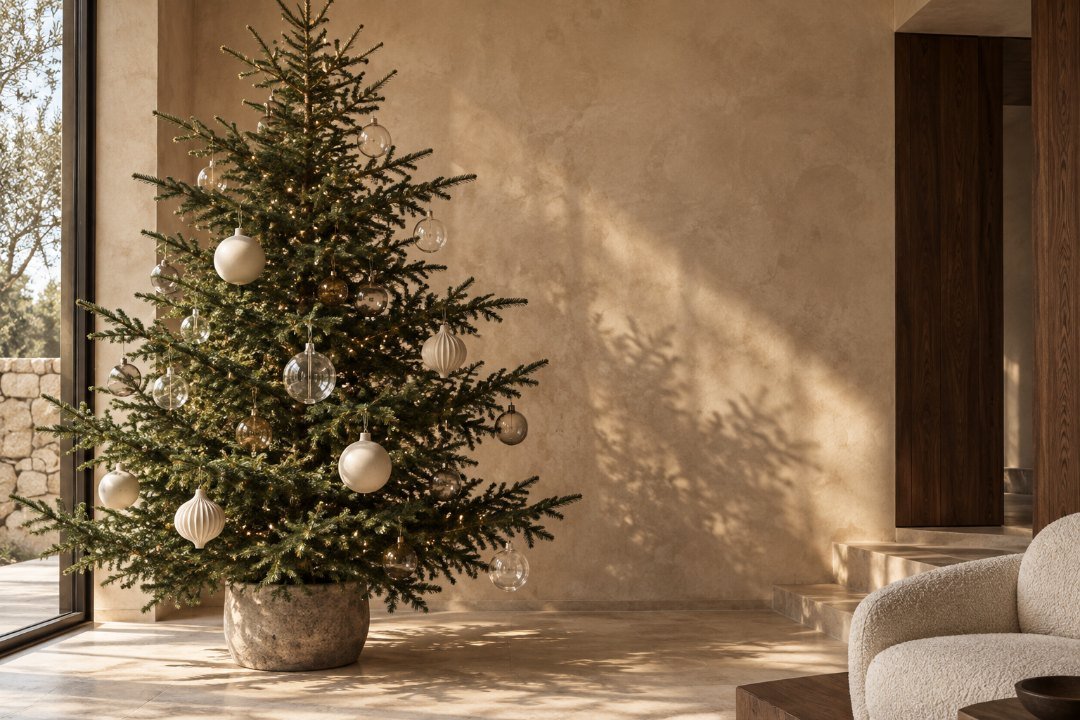
Minimalist does not mean undecorated. The most successful simple Christmas trees usually have one strong idea.
You might use only warm white lights and oversized velvet bows. Or decorate with a small collection of beautiful wooden and glass ornaments spaced generously across the branches. A limited palette helps, but scale is equally important.
If there are fewer decorations, make sure some of them are substantial enough to be noticed from across the room. Visible branches are part of the design.
12. Build a Collected Ornament Tree
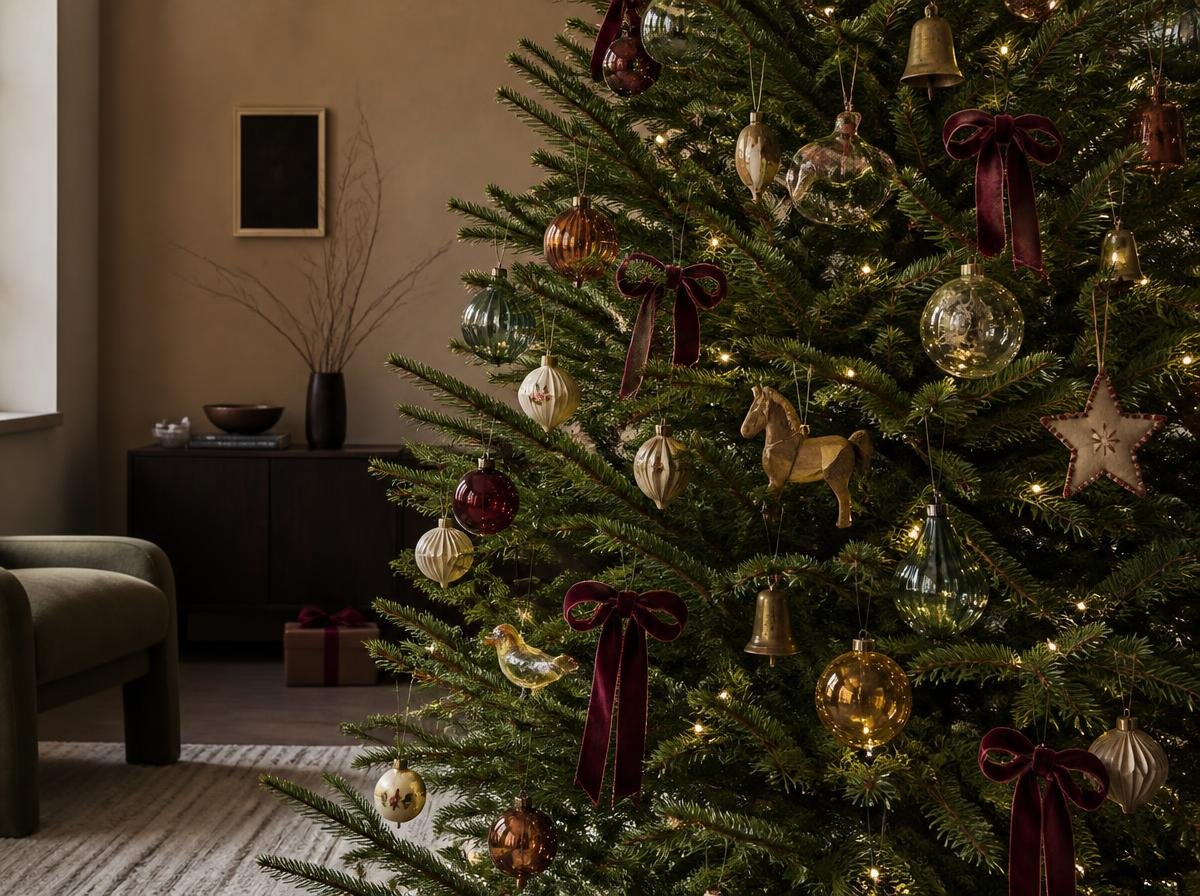
If you have ornaments from different years, travels, gifts or family celebrations, use that variety rather than hiding it. A collected Christmas tree can contain many different styles while still feeling cohesive. If you love this layered look beyond the holidays, our guide to vintage eclectic decor explores the same collected-over-time approach for the rest of the room.
The trick is to establish a visual anchor. That might be one ribbon used throughout the tree, a repeated metallic finish or a consistent lighting temperature. Once that foundation is in place, individual ornaments can be much more varied.
Mix sentimental decorations with beautiful glass pieces and inexpensive finds. Place the most meaningful ornaments at eye level where they can actually be seen.
13. Create a Woodland-Inspired Tree
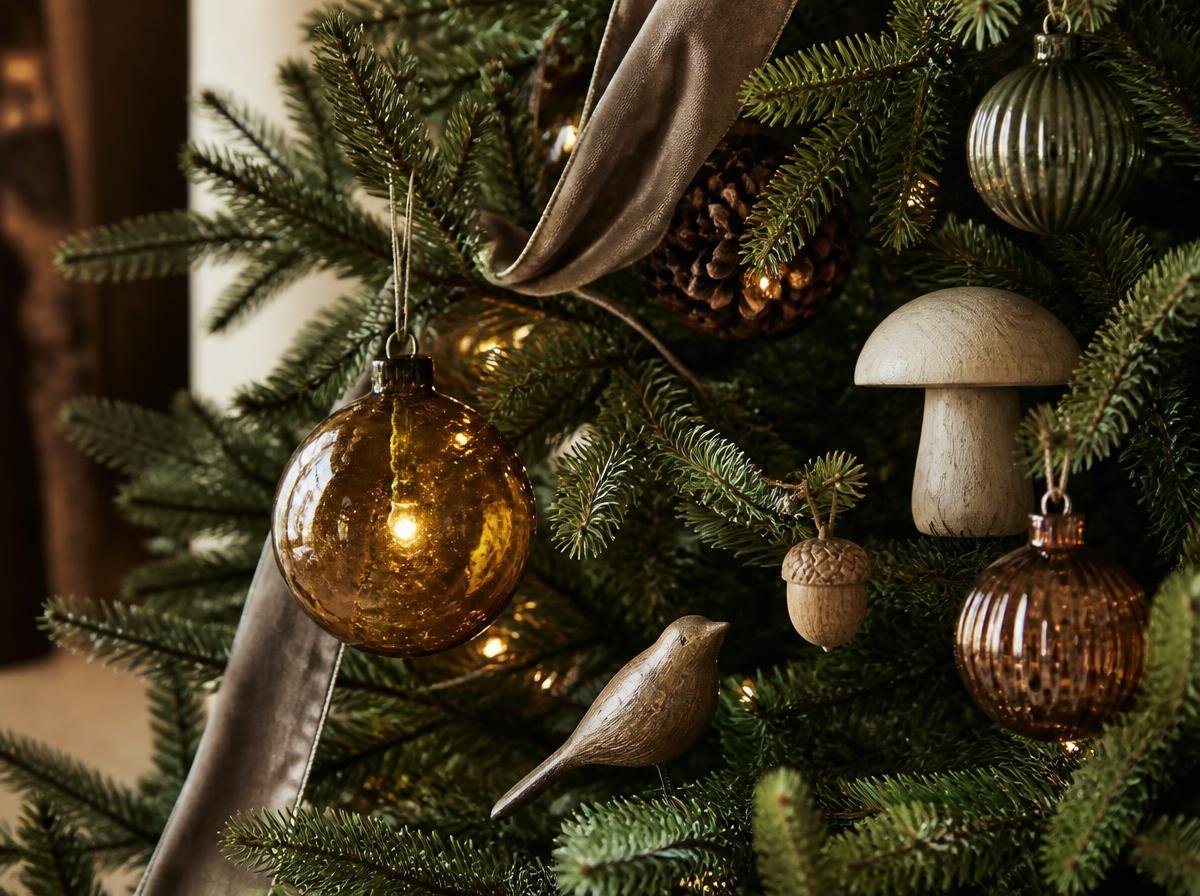
A woodland tree can feel elegant when the theme is suggested rather than overdone. Use pinecones, small birds, wooden ornaments, mushrooms, acorns or subtle botanical shapes, but avoid covering the tree in literal forest characters.
Combine them with glass ornaments in brown, green, amber and cream. Velvet or linen ribbon keeps the natural details from feeling too craft-oriented.
For a particularly beautiful finishing touch, use a woven basket-style tree collar or a softly gathered linen tree skirt.
Amazon pick: The StorageWorks woven Christmas tree collar gives the base a cleaner, more architectural finish while keeping the natural texture of the woodland palette.
14. Make a Small Christmas Tree Feel Intentional
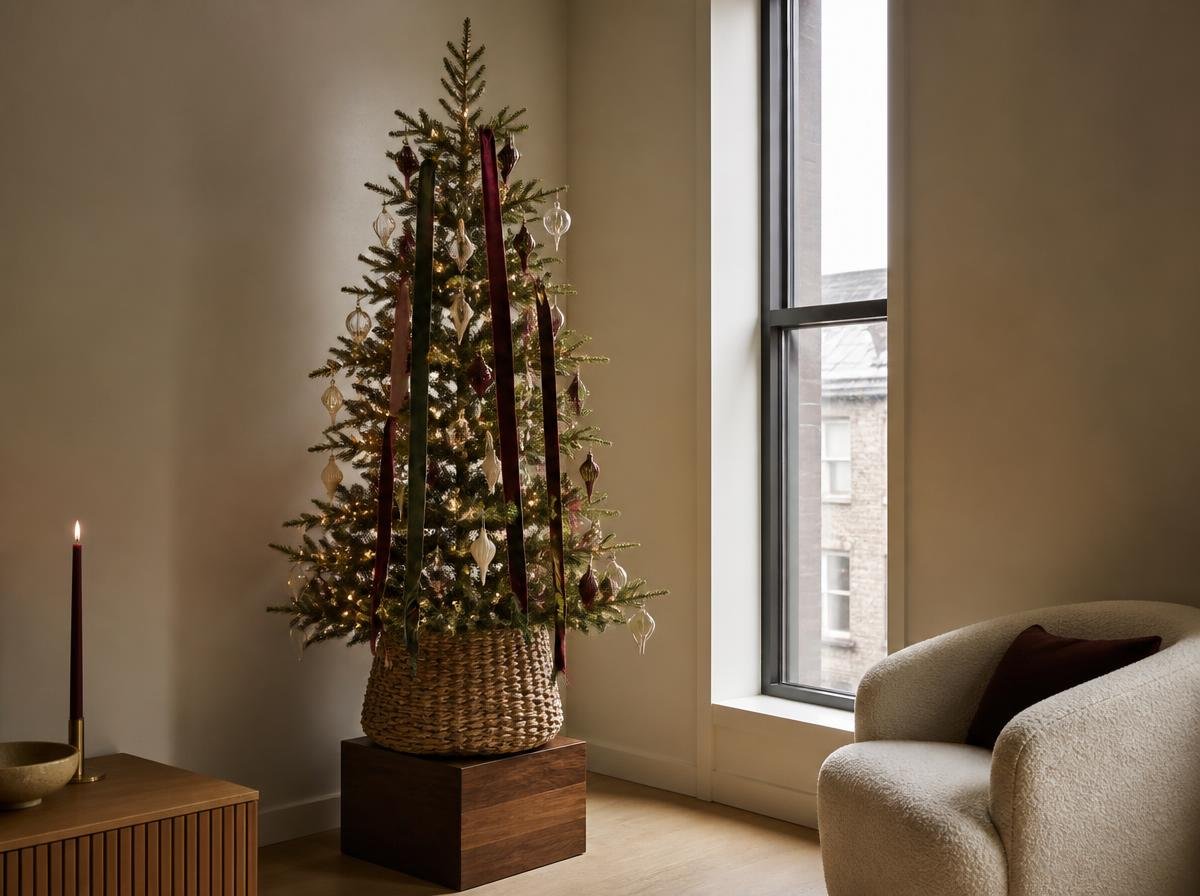
A smaller tree does not need smaller everything. In fact, using a few larger ornaments often makes a compact Christmas tree look more sophisticated.
Choose one clear palette and avoid overcrowding the branches. If floor space is limited, consider placing the tree in a decorative basket or raised planter so it gains a little more height.
Long ribbon tails can visually elongate a smaller tree, while warm lights add depth. In apartments or small living rooms, keep nearby surfaces relatively uncluttered so the tree remains the focal point.
Amazon pick: If floor space is the real limitation, a slim-profile tree can make a bigger difference than downsizing the ornaments. The National Tree Company 7.5-foot Kingswood Fir Slim Tree keeps a full-height look with a narrower footprint.
15. Layer the Tree Instead of Simply Filling It
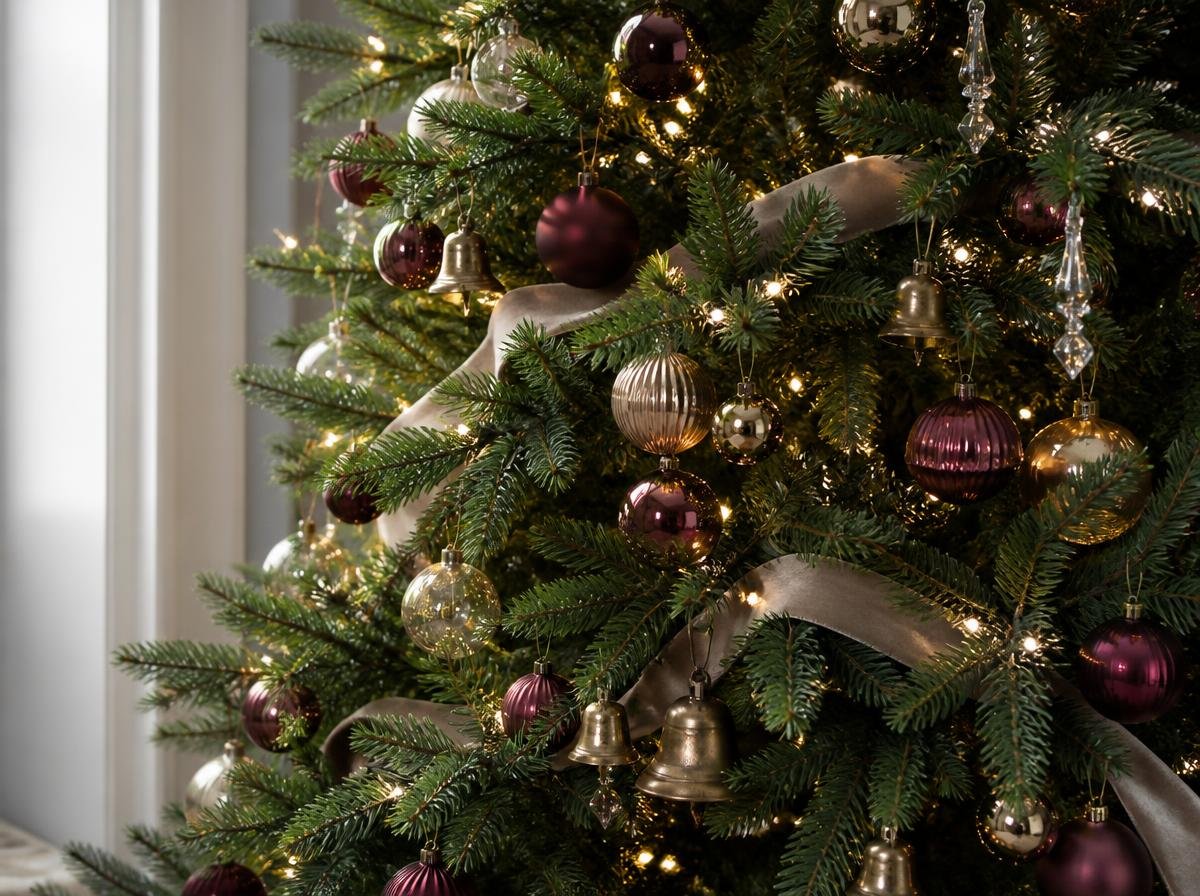
One of the easiest ways to make a Christmas tree look more finished is to think in layers. Begin with the lights. Next add ribbon or the largest decorative elements. Then place your largest ornaments, followed by medium-sized pieces and finally the smaller details.
Do not keep every ornament on the outer edge of the branches. Some should sit deeper inside the tree, while others hang closer to the tips. You can also group two or three ornaments together rather than spacing everything evenly.
When you finish, stand several feet away and look for areas that feel too heavy or too empty. A small amount of editing at the end usually makes a bigger difference than adding another box of ornaments.
How to Choose a Christmas Tree Style for Your Home
Before buying new decorations, look at the room where your Christmas tree will actually stand. What colors are already there? What finishes repeat throughout the space?
A room with warm walnut furniture and brass lighting might work beautifully with burgundy, forest green and antique gold. If you are still choosing the palette for the room itself, these bold color palette ideas can help you see how stronger shades can be balanced with warm neutrals. A pale contemporary living room may suit champagne, natural materials and softer tones.
You do not have to match the room perfectly, but the tree should feel as though it belongs there. It also helps to choose three elements before you begin: one leading color, one supporting color or finish and one repeating texture such as velvet, glass, wood or paper.
A Few Details That Make Any Christmas Tree Look Better
Whatever decorating style you choose, a few principles work almost every time. Use warm lights unless you deliberately want a cool, icy effect. Mix ornament sizes instead of relying on dozens of identical small baubles. Decorate slightly inside the branches as well as on the surface.
Let some greenery remain visible. Repeat important colors or materials in several areas of the tree. And most importantly, stop before the tree feels completely full. A little breathing room makes individual ornaments, ribbons and branches easier to appreciate.
Final Thoughts
The best Christmas tree ideas for 2026 are not about replacing every decoration you already own. They are about using color, texture, scale and lighting more thoughtfully.
A velvet ribbon can update a familiar ornament collection. A few burgundy baubles can deepen a classic red-and-green palette. Vintage-inspired pieces can make a new tree feel collected, while natural materials can soften a highly polished room.
Choose the direction that suits your home, then build it slowly. The result will feel far more personal than a tree copied exactly from a showroom — and much easier to love year after year. If you are also planning seasonal entertaining, see our elegant Thanksgiving table decor ideas for another warm, layered holiday look.
Frequently Asked Questions
What are the Christmas tree colors for 2026?
Rich, warm colors work particularly well for 2026, including burgundy, deep red, forest green, chocolate brown and warm metallics such as antique gold and brass. Neutral palettes, vintage-inspired combinations and classic red and green also remain easy to adapt to different interiors.
How can I make my Christmas tree look elegant?
Start with a limited color palette, use ornaments in different sizes and textures, and place some decorations deeper inside the branches. Wide ribbon, warm lighting and a few larger statement ornaments can make a tree look more layered without making it feel overcrowded.
What is the easiest way to update last year’s Christmas tree?
Change one major element rather than buying an entirely new collection. New ribbon, a deeper accent color, several oversized ornaments or a group of vintage-inspired decorations can noticeably change the tree while allowing you to reuse most of what you already own.
Should Christmas tree ornaments all match?
No. A tree often looks more interesting when ornaments vary in shape, finish and age. To keep the result cohesive, repeat one or two colors, materials or ribbon styles throughout the tree.
When should I start decorating for Christmas?
There is no single rule. Some people decorate in November, while others wait until December. If you enjoy planning your decor early, deciding on your color palette and gathering decorations ahead of time can make the actual decorating process much easier.